

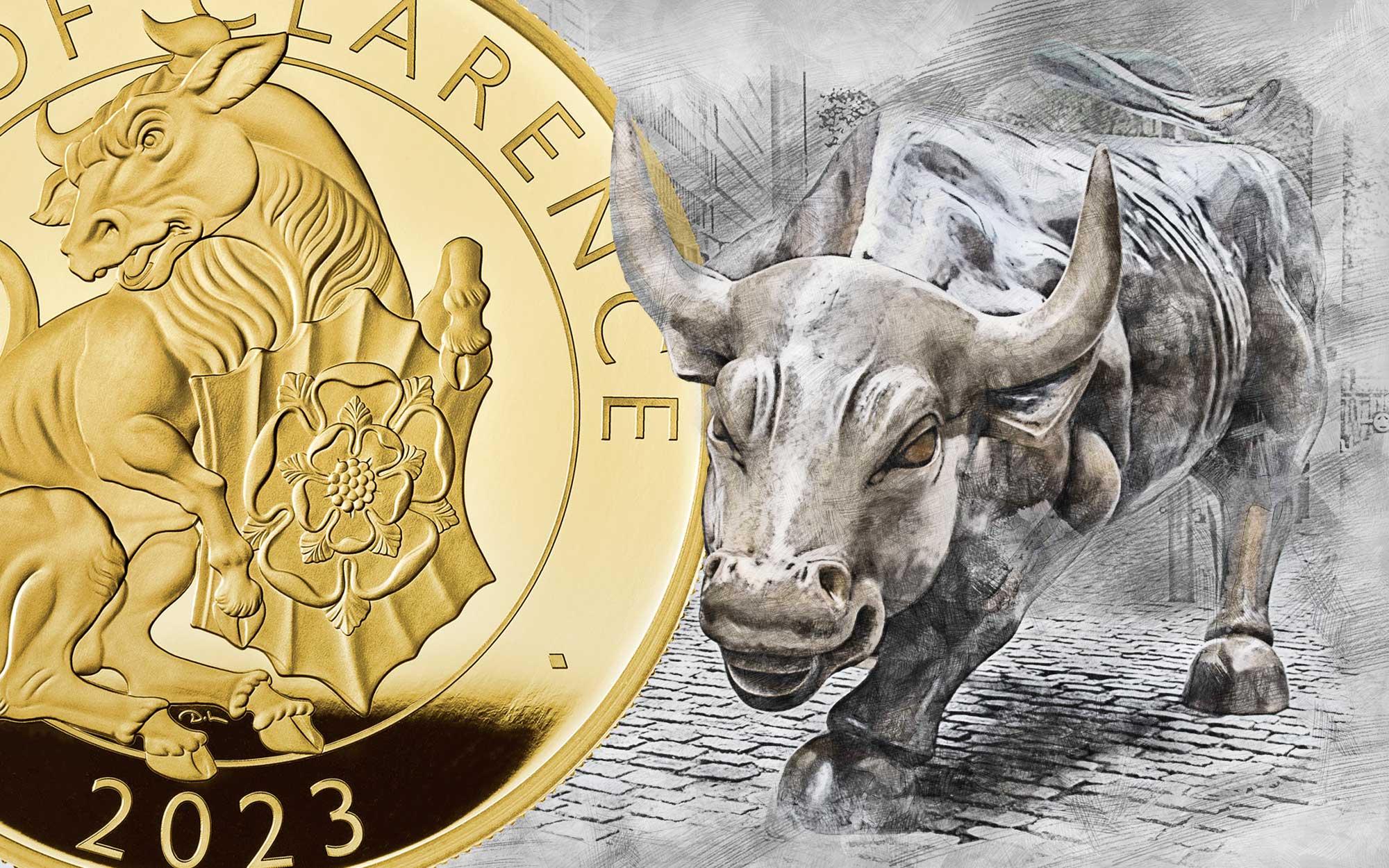
TUDOR BEASTS (2022-2026) by The Royal Mint
We think it’s fair to say that the Royal Mint’s ‘Queen’s beasts’ series has been one of the most popular and admired coin series in recent years, especially in the bullion realm. Tudor Beast’s has an identical base concept. Take ten of the most powerful and iconic heraldic beasts from history, and then have a talented coin designer reinterpret them for a numismatic canvas. The Queen’s Beasts dipped back in time just a few decades, but for this series we’re going back half a millennium for inspiration. Let’s be honest, if it’s iconic British history and imagery you’re looking for, the reign of King Henry VIII is a great place to head to.
This will, again, be a ten coin series, released over five years with designs taken from statues (King’s Beasts) on the Moat Bridge of Hampton Court Palace, a beautiful building put up by Cardinal Thomas Wolseley from 1514, and gifted to Henry VIII as an attempt to regain his favour. The palace remains in royal hands to this day. It’s a fantastic material source for the series.
The coin designs this time are by Royal Mint regular, David Lawrence. It’s good to see a change, to differentiate from Jody Clark’s style and keep some variety. They remain similar, of course, as they’re both heraldic, but with a different flavour.
The range is quite wide, but in true Royal Mint style, with not every format available for every release, and with varying mintages. Bullion coins are available each time, and in five formats, and there’s a pretty two-coin silver set with one of them reverse-frosted for something unique. Again, mintages are all over the place. Another superb, quintessentially British series from one of the world’s oldest mints.
SEYMOUR PANTHER (2022)
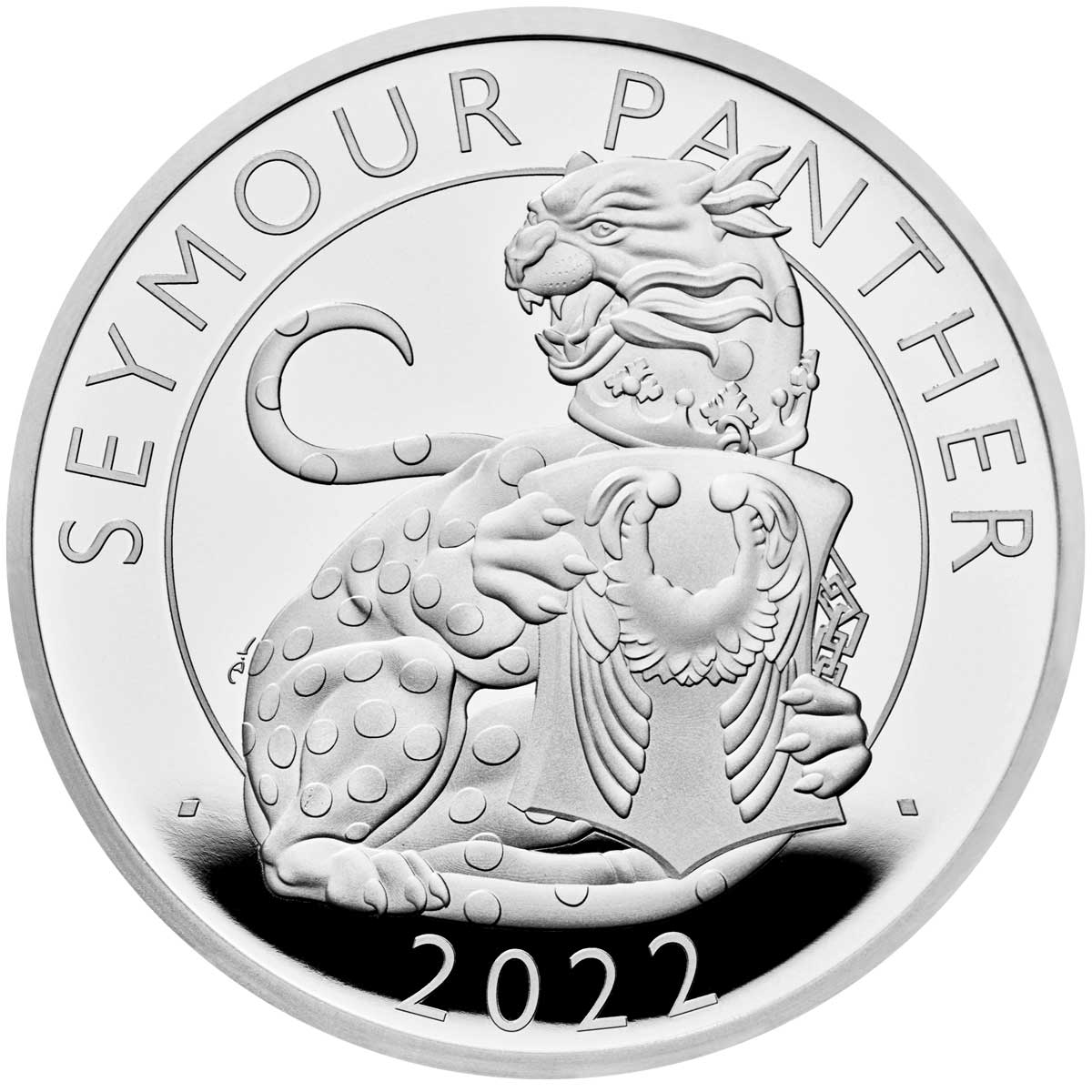
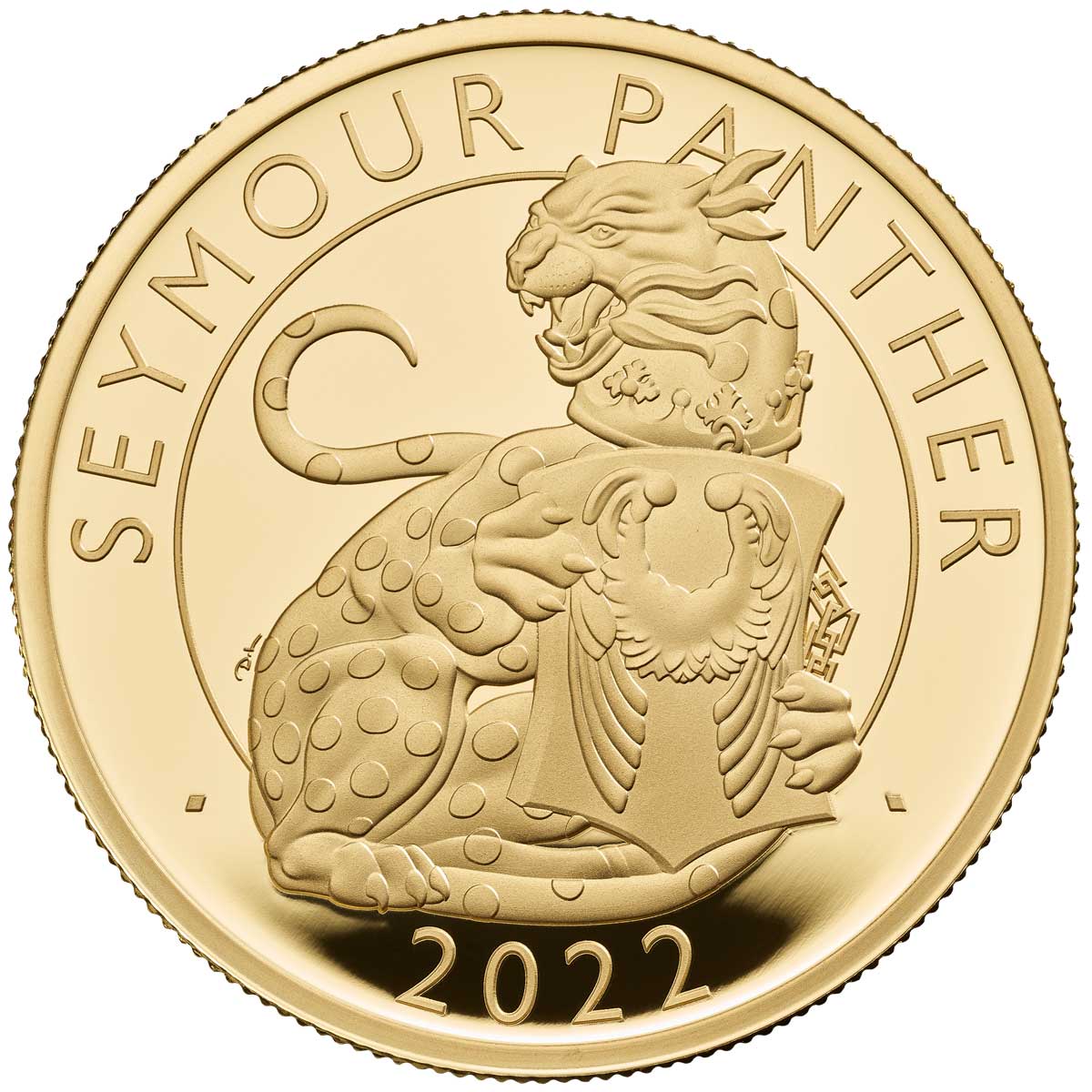
The Seymour Panther was a heraldic symbol belonging to Jane Seymour, Henry VIII’s third wife. Given to her by the king from the treasury of royal beasts, it is thought that a panther had been part of the collection since the reign of Henry IV. As Henry VII’s mother, Margaret, was a Beaufort and a panther also appeared on the Duke of Beaufort’s arms, both Henry VII and Henry VIII used the beast as a symbol of their lineage.
| METAL | 2 kg | 1 kg | 10 oz | 5 oz | 2 oz | 1 oz | ¼ oz |
| GOLD | 5 | 14 | 31 | 131 | 356 | 560 | 1,010 |
| SILVER | 56 | 72 | 156 | 306 | 2,006 | 7,010 | – |
LION OF ENGLAND (2022)
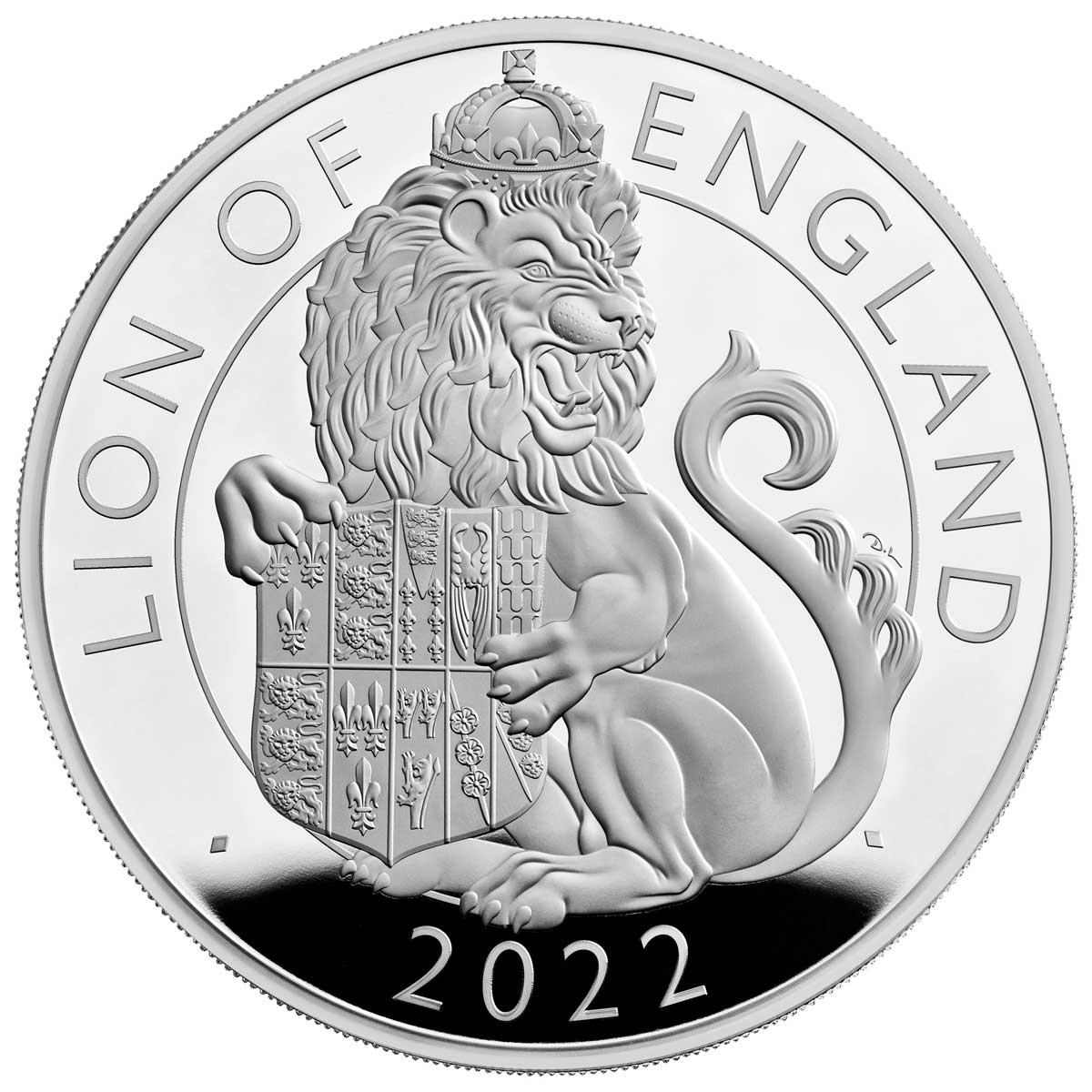
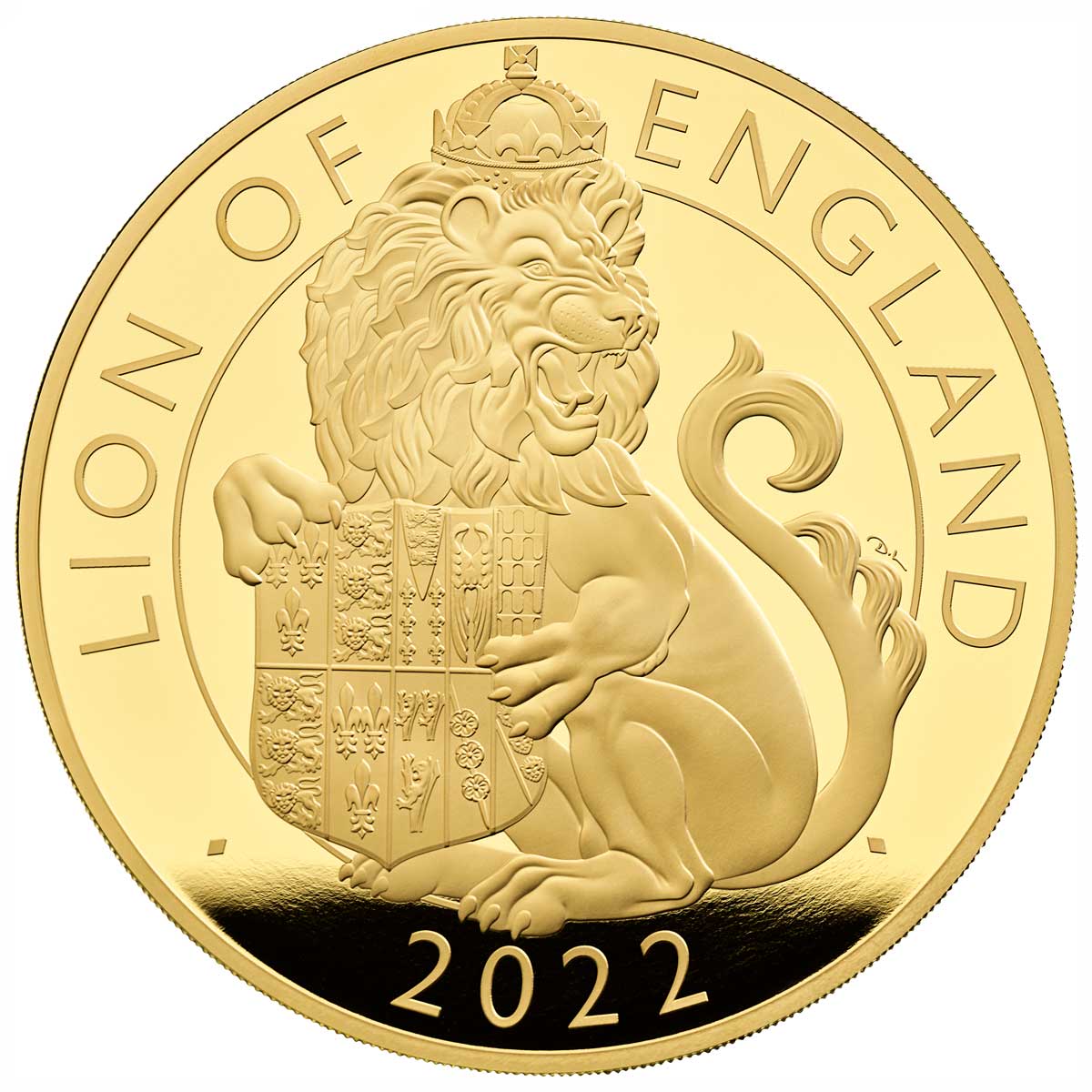
Historically known as the ‘king of the beasts’, the Lion of England is one of the oldest and most iconic beasts in heraldic art and is a traditional symbol of bravery, strength and valour. Used on the shield of England for as long as one has existed, the lion first appeared in heraldry in the twelfth century. Chosen to represent pride and courage, the Lion of England on the Moat Bridge at Hampton Court Palace held a shield bearing the impaled – or combined – arms of Henry VIII and Jane Seymour, symbolising the strength of the couple’s union.
| METAL | 2 kg | 1 kg | 10 oz | 5 oz | 2 oz | 1 oz | ¼ oz |
| GOLD | 2* | 3* | 10* | 70* | 181 | 410 | 1,010 |
| SILVER | 55* | 72 | 156 | 306 | 2,006 | 7,010 | - |
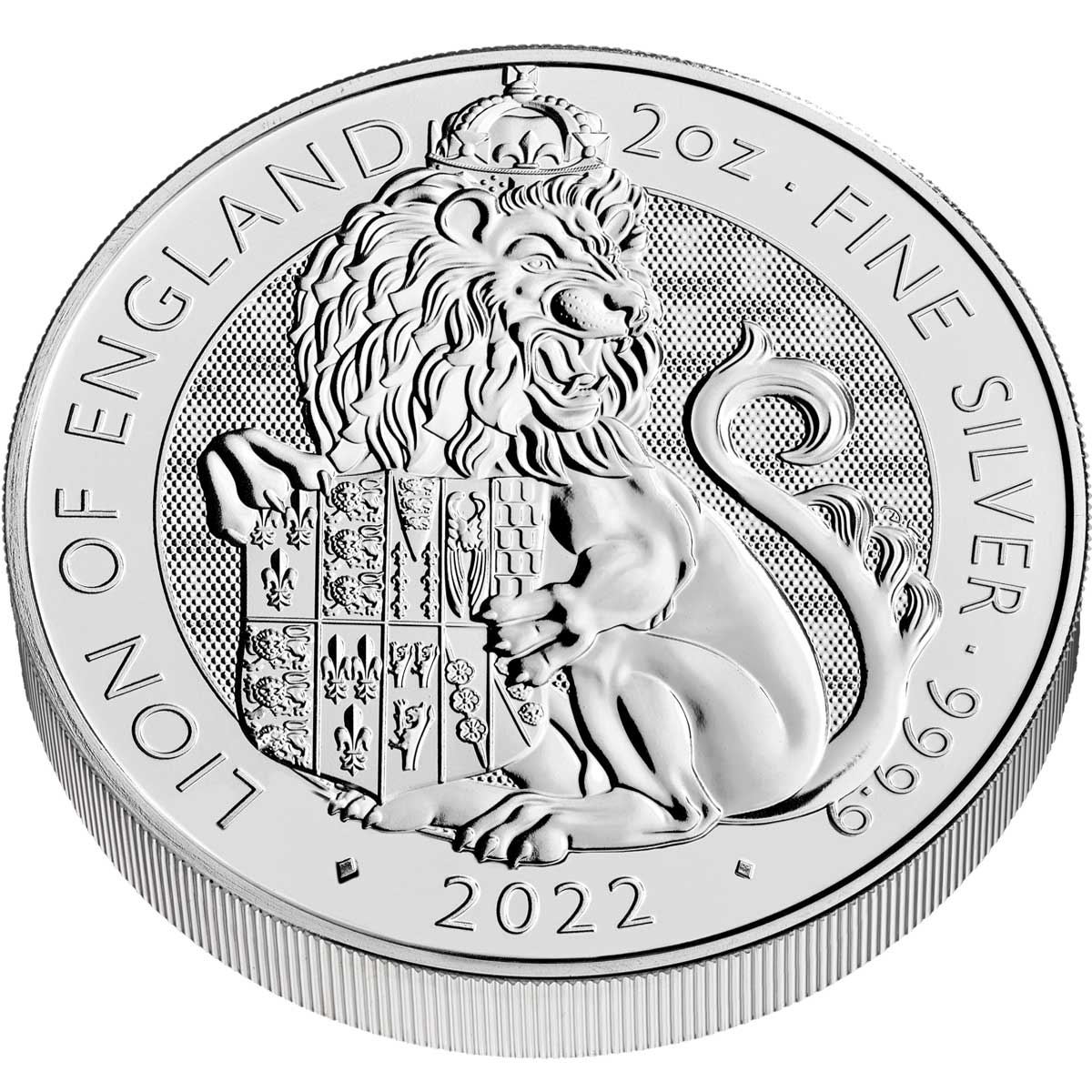
BULLION SILVER

BULLION GOLD
YALE OF BEAUFORT (2023)
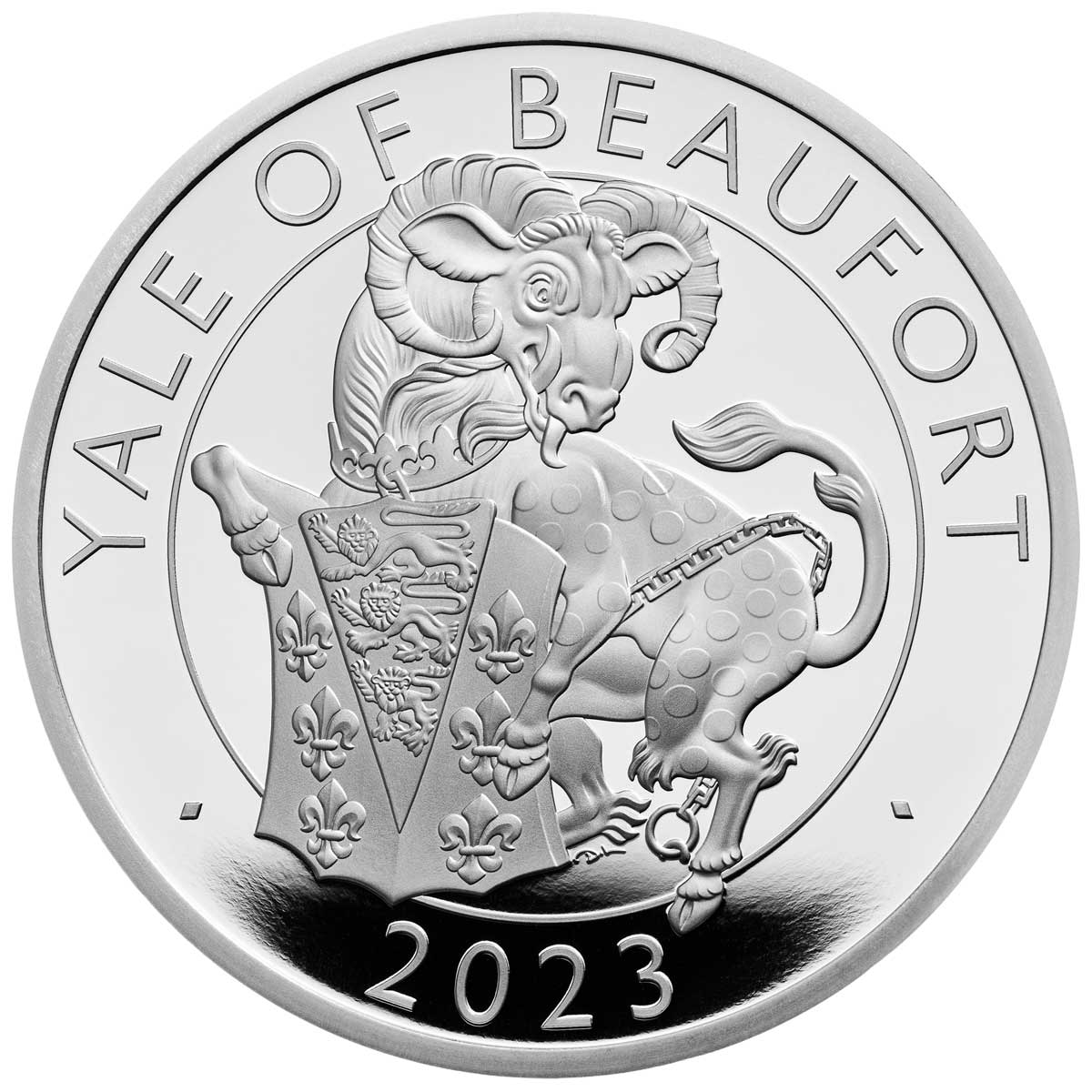
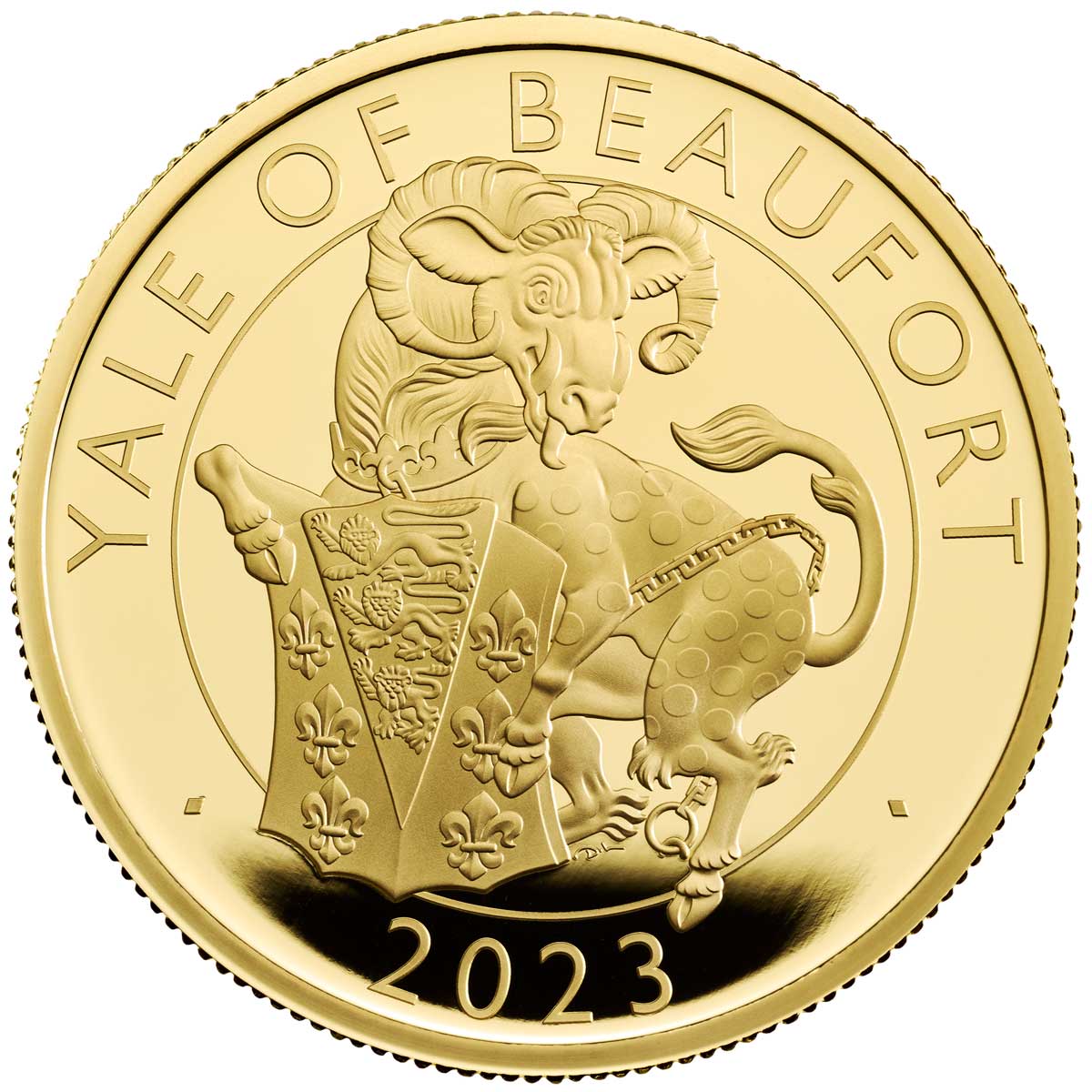
On choosing the Yale as a Royal Beast, Henry VIII sought to add credibility to his position on the throne by emphasising his family connection to the powerful Beaufort family. Known as a Beaufort beast ever since, it appears on the Moat Bridge as a Royal Beast for Jane Seymour, supporting a shield featuring her Coat of Augmentation. As Queen, Jane had no direct link to Beaufort heraldry herself, it is likely that Henry VIII transferred the Yale of Beaufort to his new wife.
| MINTAGES | 2 kg | 1 kg | 10 oz | 5 oz | 2 oz | 1 oz | ¼ oz |
| GOLD | 1 | - | - | 56 | 106 | 445 | 1,000 |
| SILVER | - | 72 | 106 | 306 | 1,256 | 5,510 | - |
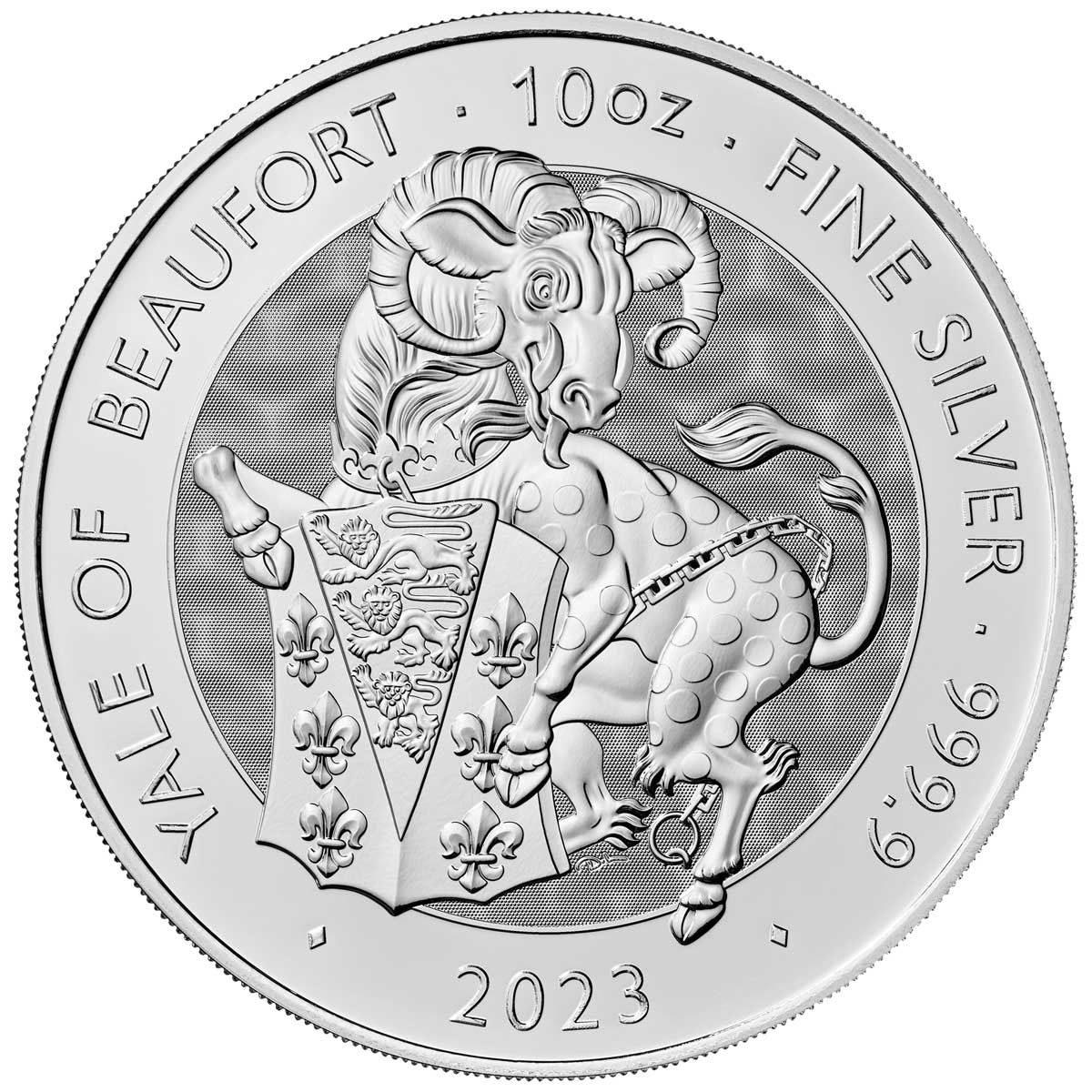
BULLION SILVER
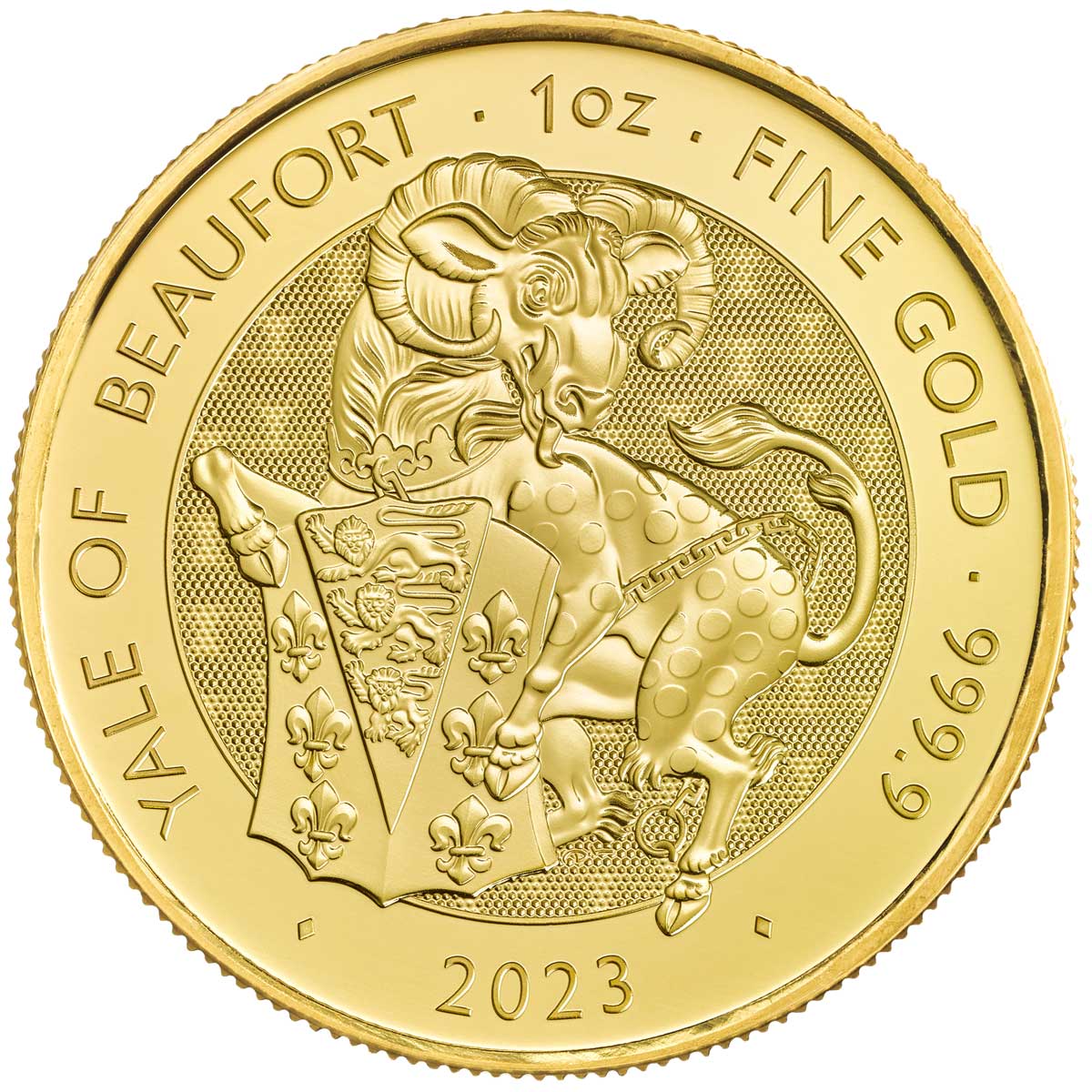
BULLION GOLD
BULL OF CLARENCE (2023)


Known for its representation of strength, power and wealth, the bull is one of the oldest animal symbols in the world. The Bull of Clarence was a mighty symbol associated with the House of York and is one of the noble beasts chosen by Henry VIII to flank the Moat Bridge at Hampton Court Palace.
| MINTAGES | 2 kg | 1 kg | 10 oz | 5 oz | 2 oz | 1 oz | ¼ oz |
| GOLD | - | - | - | 26 | 66 | 310 | 660 |
| SILVER | - | - | 106 | 256 | 1,256 | 5,510 | - |

BULLION SILVER

BULLION GOLD
SEYMOUR UNICORN (2024)


Before being chosen by Henry VIII to guard the Moat Bridge, the mythical unicorn wasn’t really known as a royal heraldic beast. Wild and untamed, the unicorn was believed to be the strongest of all creatures, so to have one set in stone outside the palace was a clear display of royal dominance. Many believed the unicorn also represented purity and fertility, and so by giving the beast to Jane Seymour, the king was perhaps hoping their marriage would be blessed with a son and heir.
| MINTAGES | 2 kg | 1 kg | 10 oz | 5 oz | 2 oz | 1 oz | ¼ oz |
| GOLD | - | - | - | 26 | 56 | 260 | 660 |
| SILVER | - | - | 106 | 256 | 1,256 | 6,260 | - |


TUDOR DRAGON (2024)


This release portrays the fiery Tudor Dragon, which was adopted by the House of Tudor to highlight its royal Welsh heritage, dating back to the 7th century. The Red Dragon was a prominent emblem of Owen Tudor, Henry VIII’s great-grandfather.
| MINTAGES | 2 kg | 1 kg | 10 oz | 5 oz | 2 oz | 1 oz | ¼ oz |
| GOLD | - | - | - | 26 | 56 | 260 | 500 |
| SILVER | - | - | 75 | 200 | 1,250 | 5,000 | - |
FROSTED TWO-COIN SILVER SET
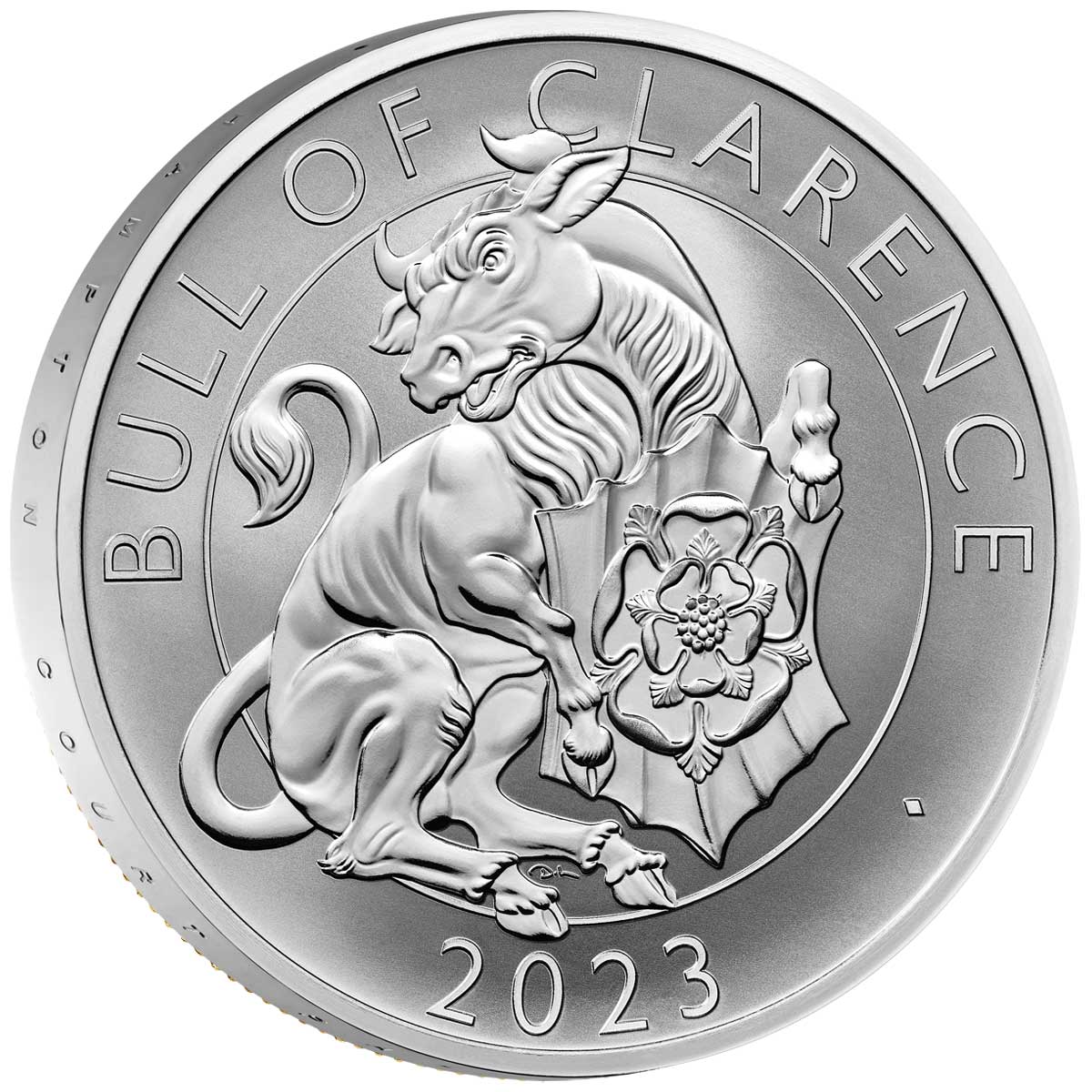
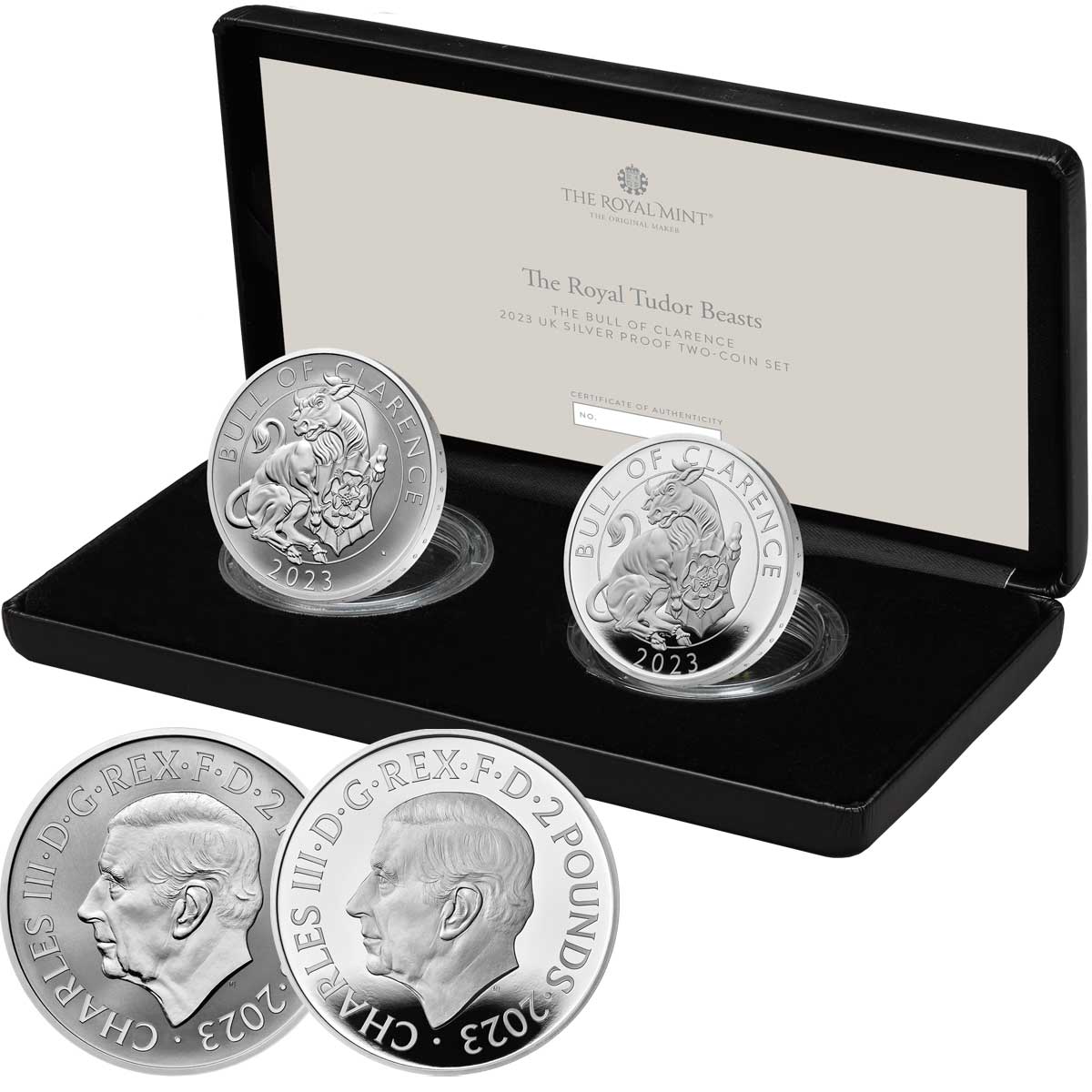
Every release also includes this special, limited variant, which has a one-ounce proof silver variant within it, alongside a unique reverse-frosted finish version. This is the only way to obtain this finish, and generally, just 500 of these sets are produced each time. We've yet to see one in hand, but it looks good in the renders.
| MINTAGE | PANTHER | LION | YALE | BULL | UNICORN | ||
| SETS | 1,000 | 1,000 | 500 | 500 | 750 |
PLATINUM 0.9995 BULLION


Along with gold and silver bullion variants, the mint also produces one struck in an ounce of 0.9995 fineness platinum. It carries over the guilloche patterned background field, and, apart from the inscriptions, is very close in appearance to the silver coin.
COMMON OBVERSE

FIRST THREE ISSUES
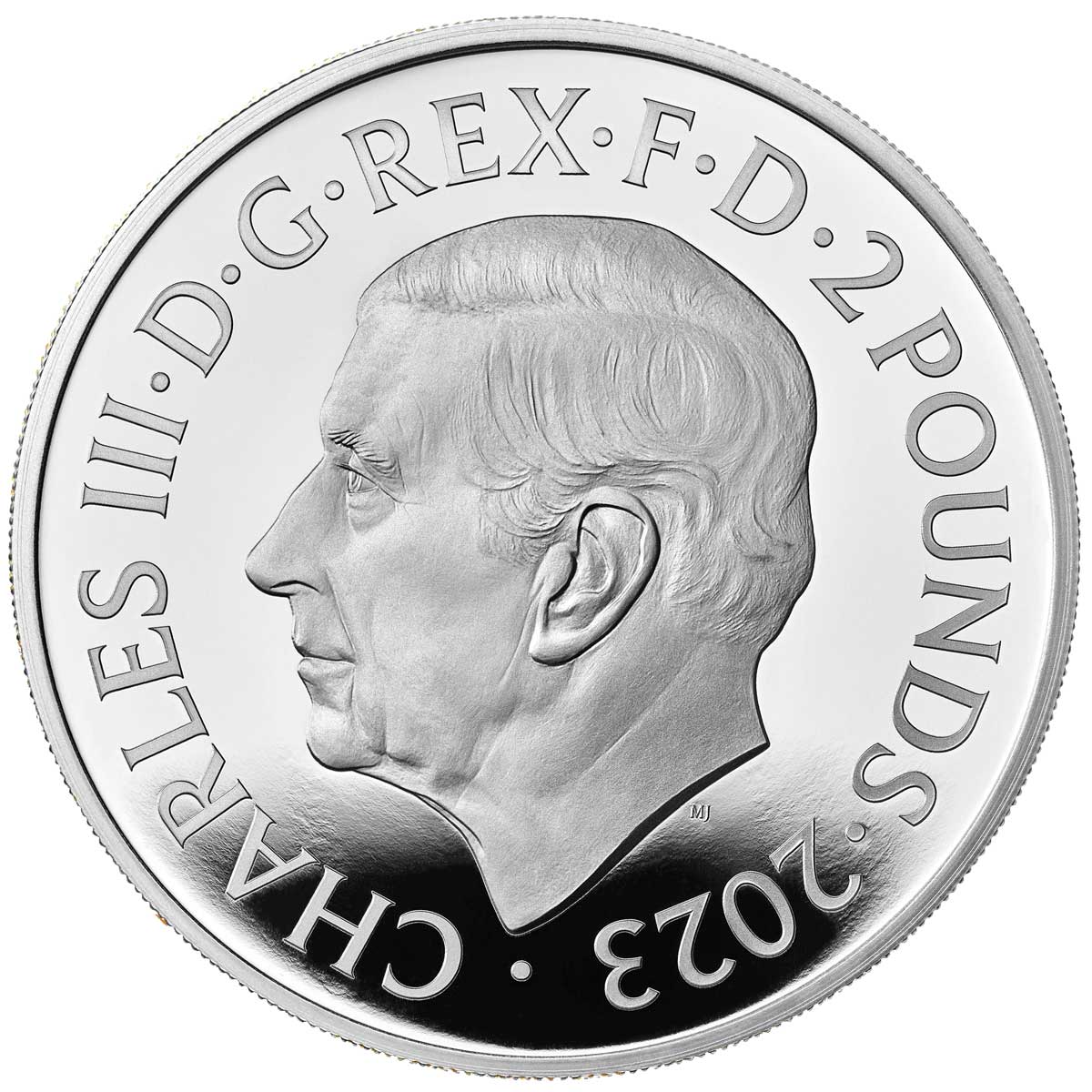
FROM 2023 BULL OF CLARENCE
Quite standard fare for the Royal Mint, this obverse design is common amongst their various ranges. The right-facing effigy of Queen Elizabeth II, by Jody Clark, gave way to the left-facing Martin Jennings effigy of King Charles III after the death of the former. The change in orientation is a British numismatic tradition, and not anything specific to this changeover.

FIRST THREE ISSUES
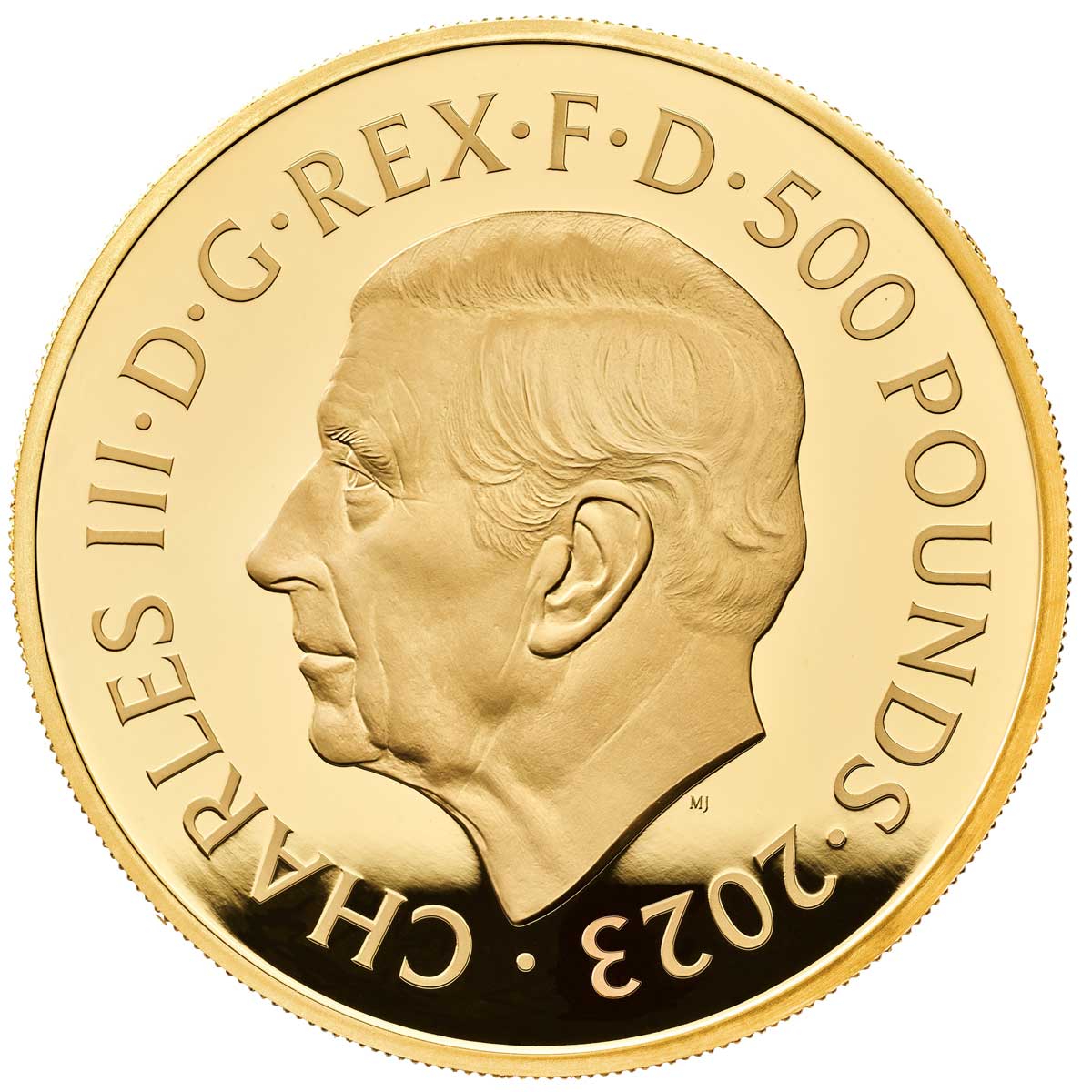
FROM 2023 BULL OF CLARENCE
The bullion versions of the coins use fundamentally the same design, but with a guilloche patterned background, as on the background field of the reverse face, and is primarily to make the coins more difficult to counterfeit. We show an example of each effigy, and the metal we don't show is exactly as you'd expect.
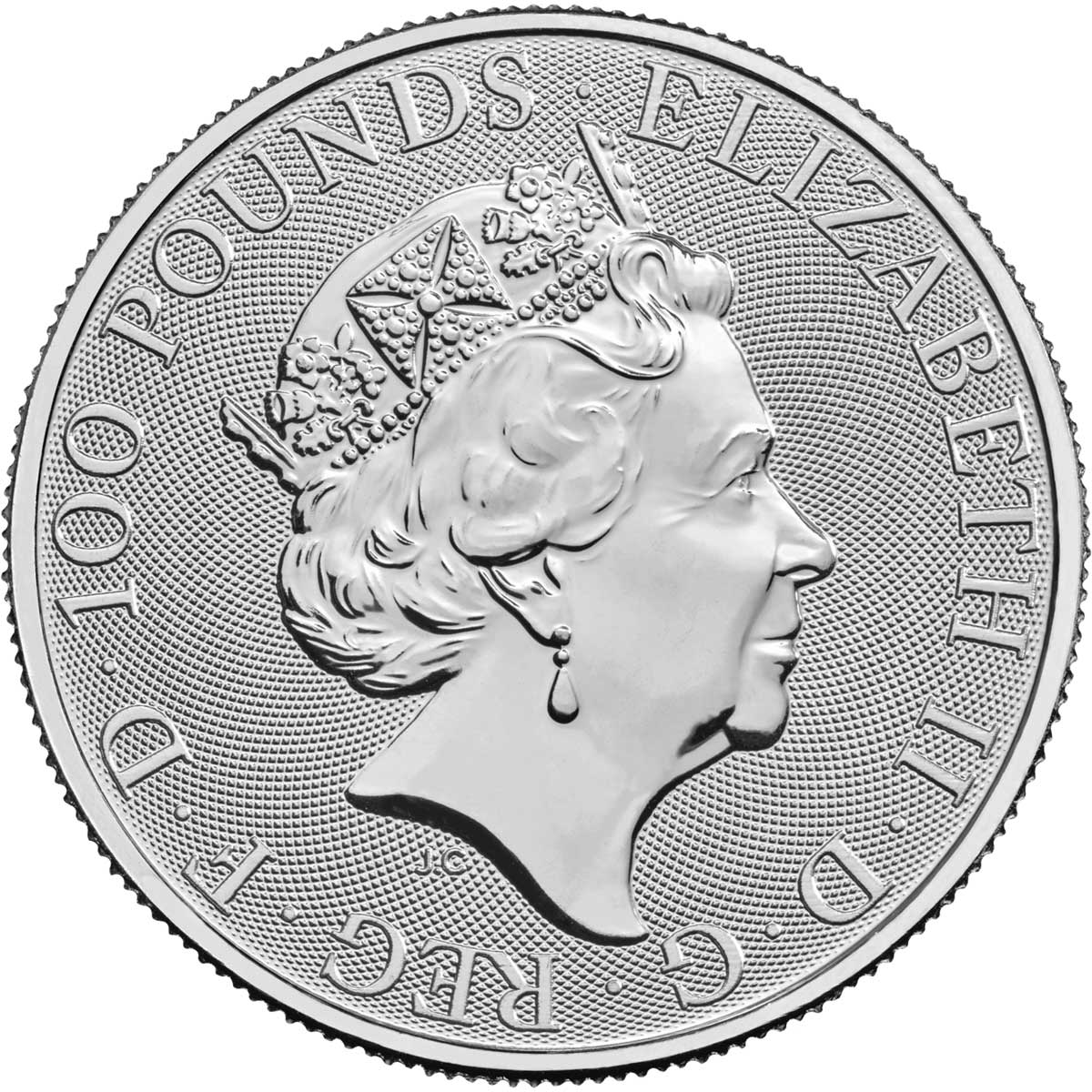
EXAMPLE QEII BULLION OBVERSE
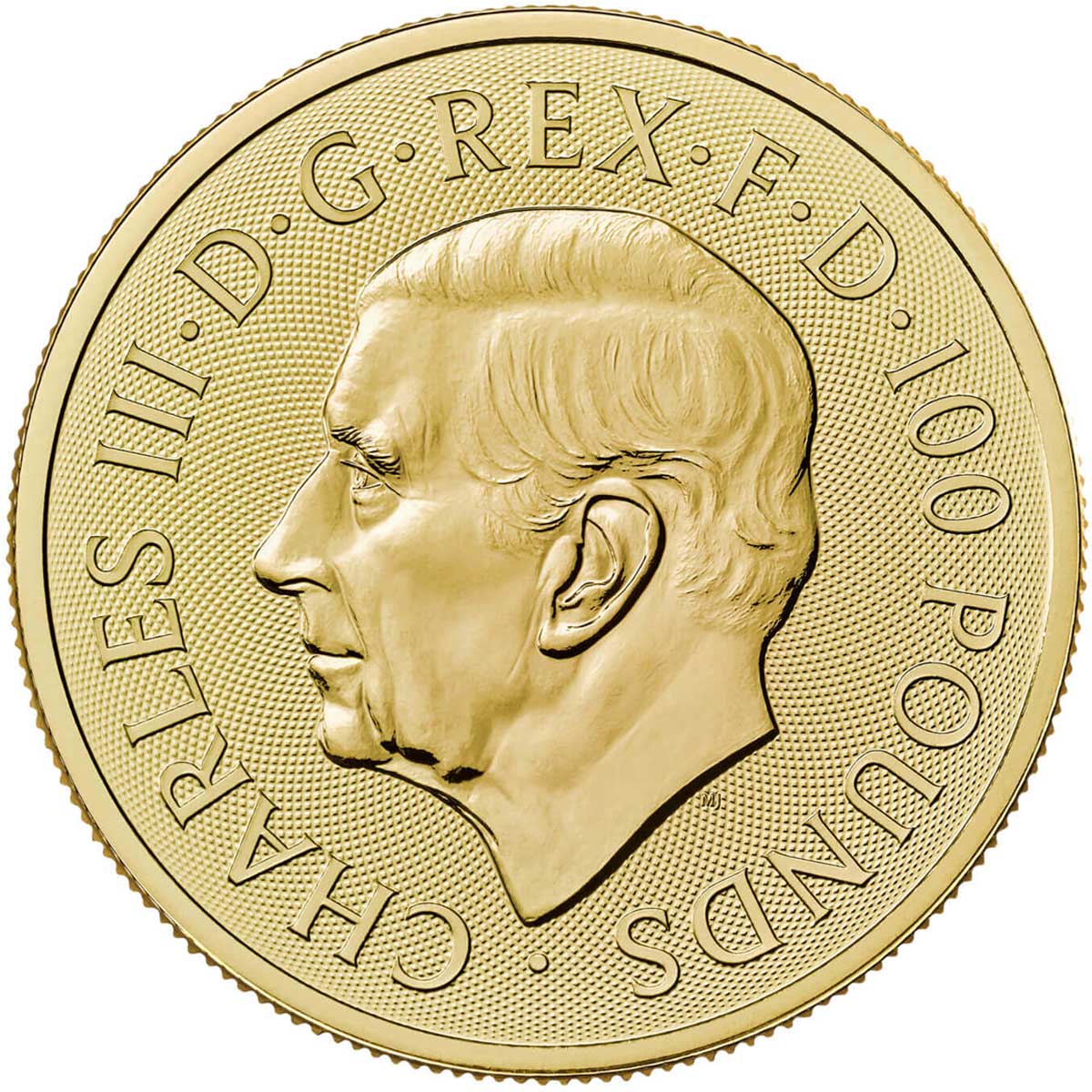
EXAMPLE KCIII BULLION OBVERSE
PROOF PACKAGING
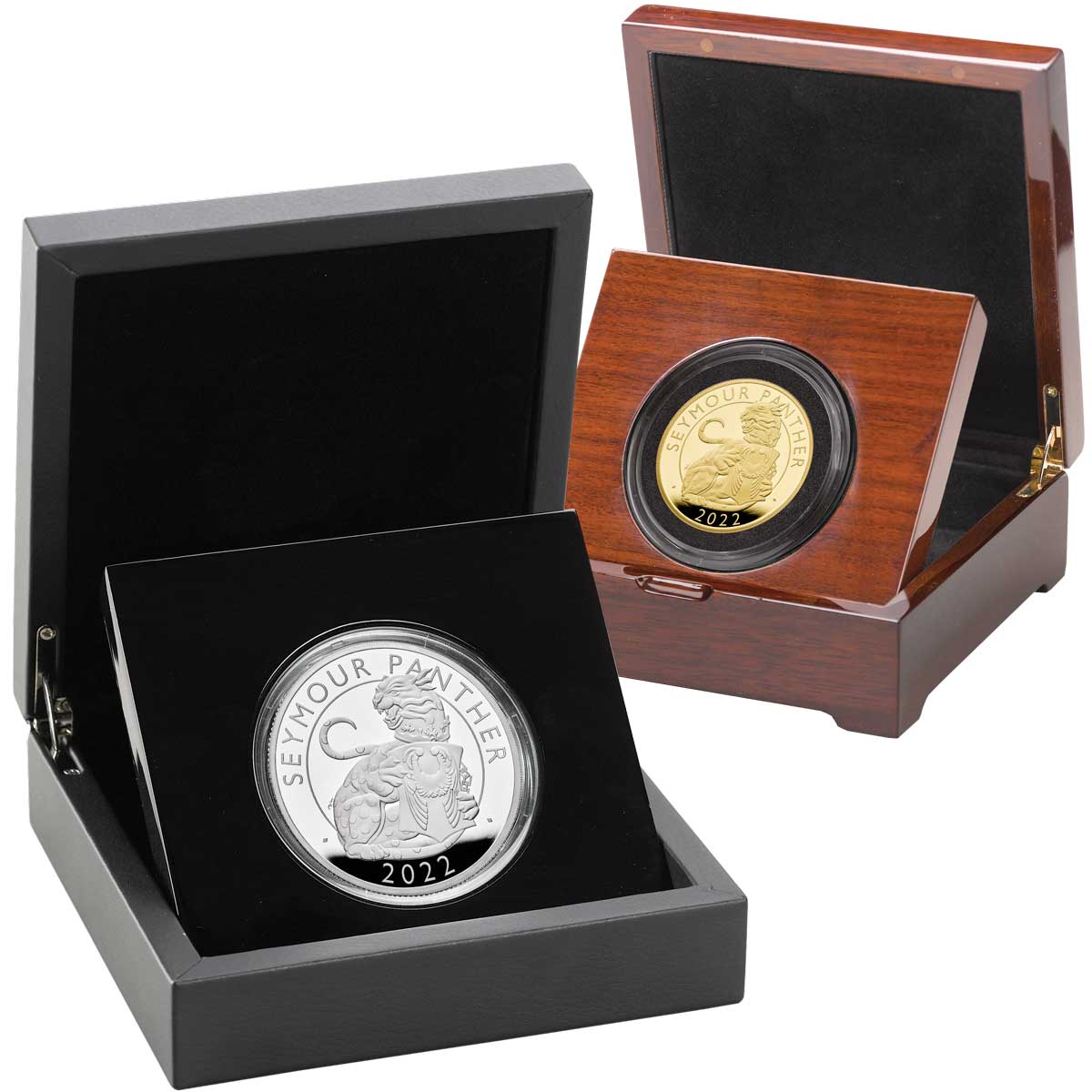
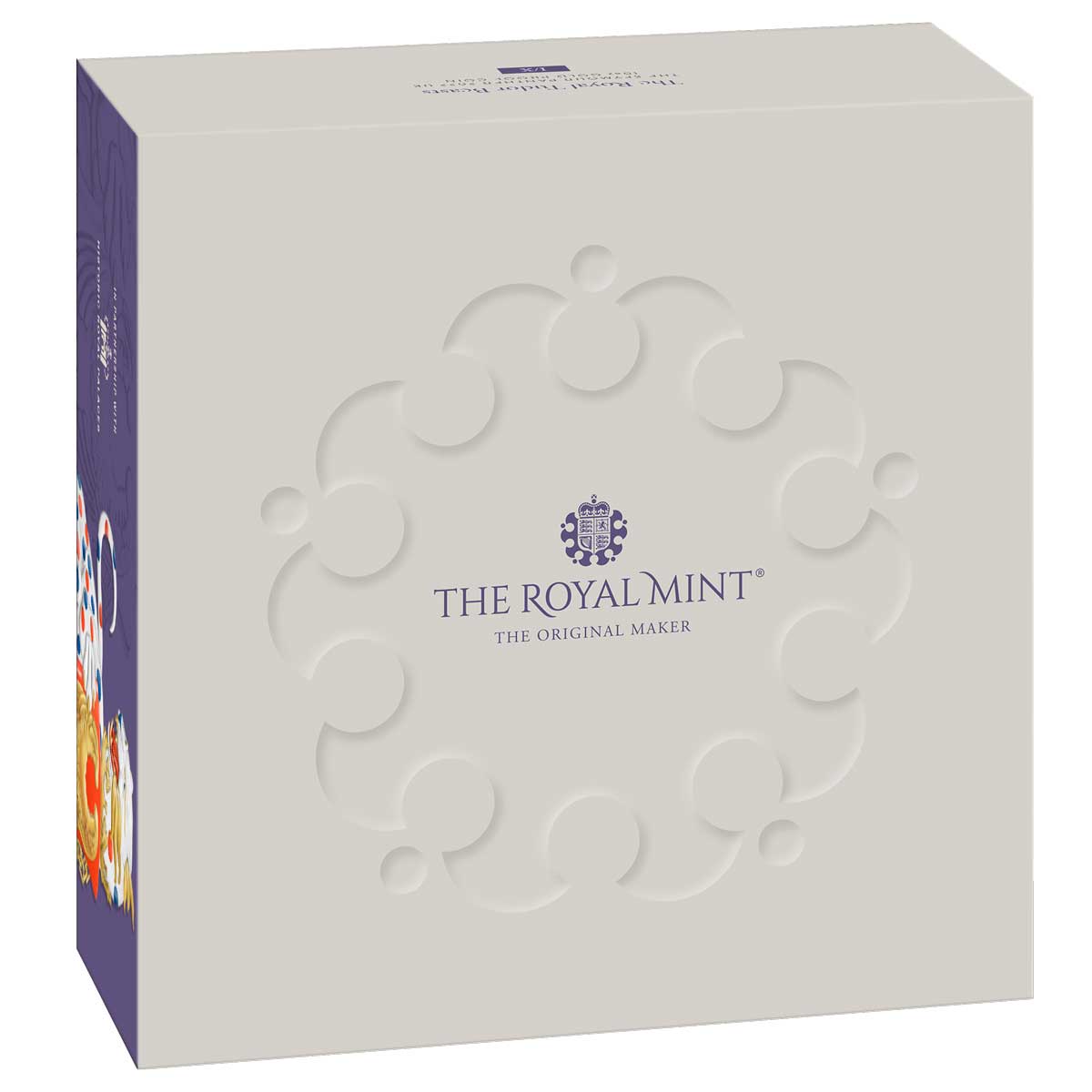
Typical Royal Mint packaging, used across their range, which is understated, and of a high quality. The biggest coins have some exceptional presentation. The outer shipper is consistent for all weights, we believe. Bullion coins are supplied encapsulated only.
SPECIFICATION
| DENOMINATION | COMPOSITION | WEIGHT | DIAMETER | FINISH |
|---|---|---|---|---|
| £2 UKP | 0.999 SILVER | 31.21 g | 38.61 mm | PROOF |
| £5 UKP | 0.999 SILVER | 62.42 g | 38.61 mm | PROOF |
| £10 UKP | 0.999 SILVER | 156.295 g | 65.00 mm | PROOF |
| £10 UKP | 0.999 SILVER | 312.59 g | 65.00 mm | PROOF |
| £500 UKP | 0.999 SILVER | 1'005.00 g | 100.00 mm | PROOF |
| £1,000 UKP | 0.999 SILVER | 2,010.00 g | 100.00 mm | PROOF |
| £25 UKP | 0.9999 GOLD | 7.80 g | 22.0 mm | PROOF |
| £100 UKP | 0.9999 GOLD | 31.21 g | 32.69 mm | PROOF |
| £200 UKP | 0.9999 GOLD | 62.42 g | 40.00 mm | PROOF |
| £500 UKP | 0.9999 GOLD | 156.295 g | 50.00 mm | PROOF |
| £500 UKP | 0.999 GOLD | 312.521 g | 65.00 mm | PROOF |
| £1,000 UKP | 0.999 GOLD | 1005.00 g | 100.00 mm | PROOF |
| £2,000 UKP | 0.999 GOLD | 2010.00 g | 150.00 mm | PROOF |
| DENOMINATION | COMPOSITION | WEIGHT | DIAMETER | FINISH |
|---|---|---|---|---|
| £5 UKP | 0.9999 SILVER | 62.42 g | 38.61 mm | BULLION |
| £10 UKP | 0.9999 SILVER | 312.59 g | 89.0 mm | BULLION |
| £25 UKP | 0.9999 GOLD | 7.80 g | 22.00 mm | BULLION |
| £100 UKP | 0.9999 GOLD | 31.21 g | 32.69 mm | BULLION |
| £100 UKP | 0.9995 PLATINUM | 31.21 g | 32.69 mm | BULLION |