


PREHISTORIC LIFE S2 (2024-2027) by Emporium Hamburg
Prehistoric Life was a series of twelve coins, issued three-per-year over a four-year period from 2020-2023. Each issue came in three variants, with the primary one being the classic one-ounce silver bullion coin. The others were a coloured version of that, and a half-gram minigold struck to a proof finish. It was popular, no doubt due to a high level of design, and some great subject picks.
In 2024, Emporium Hamburg embarked on a second series, called Prehistoric Life II, and it’s a direct continuation, carrying over the choice of formats, and the design ethos that worked so well. At the time of writing, we’ve seen nine of the twelve coins, and the choice of subjects continues with a mix of well-known, and more esoteric animals.
There are no changes to the mintages either, with the base bullion coin at 10,000 pieces, and the other pair at 2,000 each. The release schedule also remains the same, so clearly a system that works well for them, and one we like here. Another fine series. Check out the first series in its own Bullion Profile.
TABLE OF CONTENTS
2024 TRICERATOPS


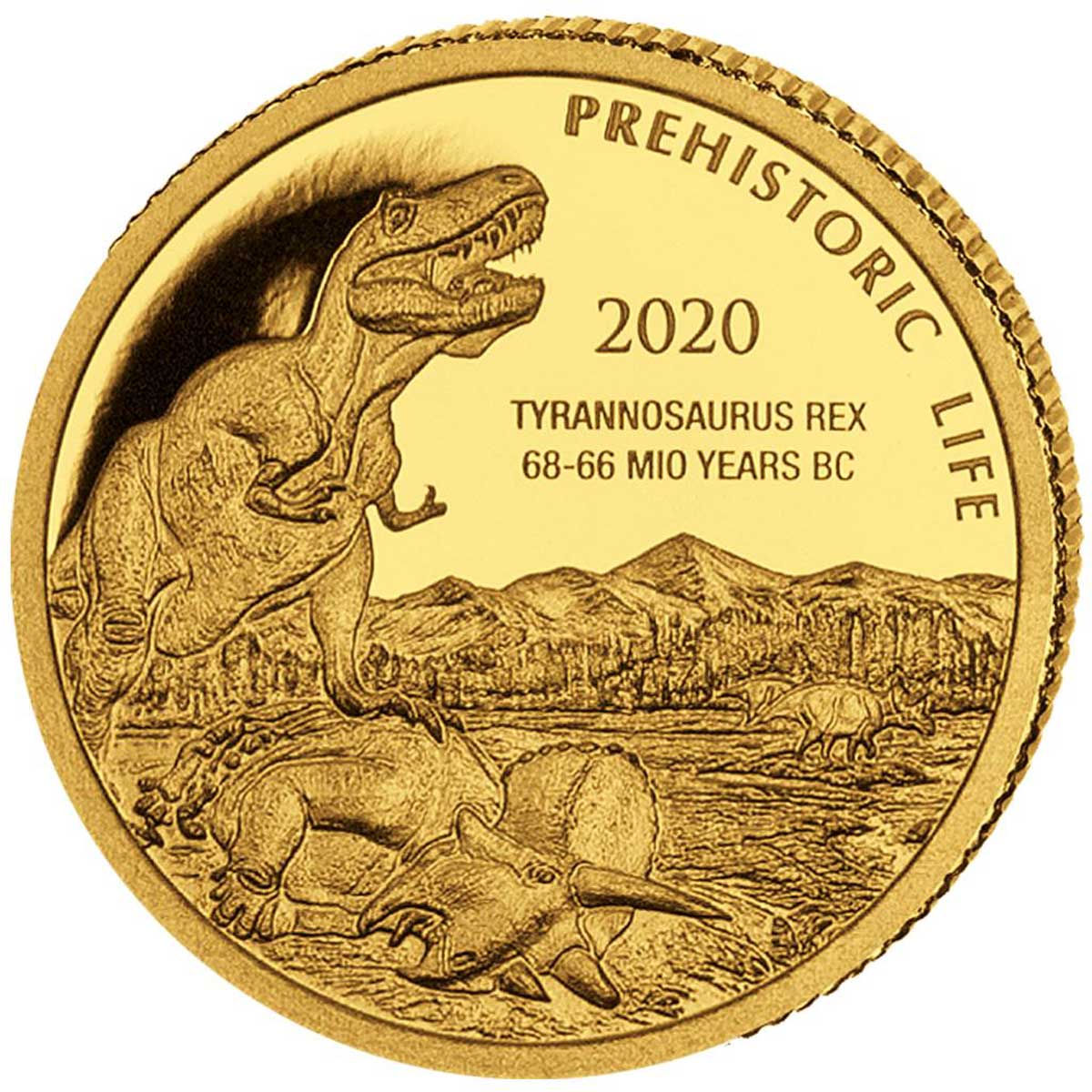
Triceratops is an extinct genus of herbivorous ceratopsid dinosaur that first appeared during the Late Cretaceous period, about 68 million years ago, in what is now North America. It is one of the last-known non-avian dinosaur genera, and became extinct in the Cretaceous–Paleogene extinction event 66 million years ago.
Bearing a large bony frill, three horns on the skull, and a large four-legged body, exhibiting convergent evolution with rhinoceroses and bovines, Triceratops is one of the most recognizable of all dinosaurs. It was also one of the largest, up to 9 meters long and 12 metric tons in weight. It shared the landscape with and was possibly preyed upon by Tyrannosaurus.
The functions of the frills and three distinctive facial horns on its head have long inspired debate. Traditionally, these have been viewed as defensive weapons against predators. More recent interpretations find it probable that these features were primarily used in species identification, courtship, and dominance display, much like the antlers and horns of modern ungulates.
Two species, T. horridus and T. prorsus, are considered valid today, from the seventeen species that have ever been named. Research published in 2010 concluded that the contemporaneous Torosaurus, a ceratopsid long regarded as a separate genus, represents Triceratops in its mature form. This view has been disputed; further data is needed to settle the debate.
Triceratops has been documented by numerous remains collected since the genus was first described in 1889 by American palaeontologist Othniel Charles Marsh. Specimens representing life stages from hatchling to adult have been found. (Source: Wikipedia)
2024 SUCHOMIMUS


Suchomimus was a large spinosaurid theropod dinosaur that lived in what is now Niger during the Early Cretaceous period, 112 million years ago. The only known species is S. tenerensis, originally described in 1998 by paleontologist Paul Sereno and colleagues from several fossils discovered one year earlier in the Elrhaz Formation. The animal’s generic name, which means “crocodile mimic”, alludes to its elongated skull and piscivorous adaptations, while the specific name refers to the Ténéré Desert, where the fossils were discovered.
With an estimated length of 9.5–11 metres and a body mass ranging from 2.5–3.8 metric tons, Suchomimus was a particularly large theropod. The animal’s skull was elongated, low, and narrow, resembling that of crocodilians. The tip of the snout flared laterally to form a rosette, and the jaws bore numerous finely serrated conical teeth, with the largest ones positioned near the front. The neck of Suchomimus was relatively short, while its powerfully built forelimbs bore a large, curved claw on each thumb. Along the midline of the animal’s back ran a low dorsal sail, built from the long neural spines of its vertebrae. Its cranial and limb features indicate that it was primarily a fish predator adapted for hunting in shallow waters.
According to the fossil record of the Elrhaz Formation, Suchomimus lived and hunted in a fluvial environment of vast floodplains alongside many other dinosaurs, in addition to pterosaurs, crocodylomorphs, bony fishes, turtles, and bivalves. (Adapted from Wikipedia)
2024 UTAHRAPTOR


Utahraptor (“Utah’s predator”) is a genus of large Dromaeosaurs (a group of feathered carnivorous theropods) that lived during the Early Cretaceous period from around 139 to 135 million years ago, in what is now the United States. It was described in 1993 by palaeontologist James Kirkland and colleagues based on fossils unearthed from the Cedar Mountain Formation of Utah.
It is the largest known member of the family Dromaeosauridae, measuring about 6–7 metres in length and typically weighing around 500 kilograms. The jaws of Utahraptor were lined with small, serrated teeth that were used in conjunction with a large “killing claw” on its second toe to dispatch its prey. Its skull was boxy and elongated, akin to other dromaeosaurids like Dromaeosaurus and Velociraptor.
Being a carnivore, Utahraptor was adapted to hunt the other animals of the Cedar Mountain Formation ecosystem such as ankylosaurs and iguanodonts. Evidence from the leg physiology supports the idea of Utahraptor being an ambush predator, in contrast to other dromaeosaurs that were pursuit predators. Fossil remains of several individuals of various ages have been found together, suggesting that Utahraptor was gregarious (social) and practiced degrees of post nestling care. (Adapted from Wikipedia)
2025 CARNOTAURUS


Carnotaurus sastrei was a bipedal theropod dinosaur that inhabited what is now Argentina during the Late Cretaceous period, approximately 72 to 69 million years ago. Its name, meaning “meat-eating bull,” refers to the two prominent, horn-like structures positioned above its eyes, a feature unique among known carnivorous dinosaurs. A big beast, it filled the apex predator niche there. This predator measured approximately 7.5 to 9 metres in length and weighed an estimated 1.3 to 2.1 metric tons.
Carnotaurus possessed a deep skull and a robust neck, although its forelimbs were remarkably short and vestigial, even more so than those of T. rex, with fused, immobile digits lacking claws. In contrast, its hind limbs were long and muscular, suggesting adaptations for swift running. Fossilized skin impressions indicate that Carnotaurus had a scaly hide, characterized by a mosaic of small, non-overlapping scales and larger, irregularly spaced bumps along its body, with no evidence of feathers.
Analysis of its skull suggests a kinetic jaw system and forward-facing eyes, indicating stereoscopic vision. Its bite force was weaker than other large theropods, but its anatomy supports a rapid biting action, potentially for quickly injuring prey.
2025 MEGALODON
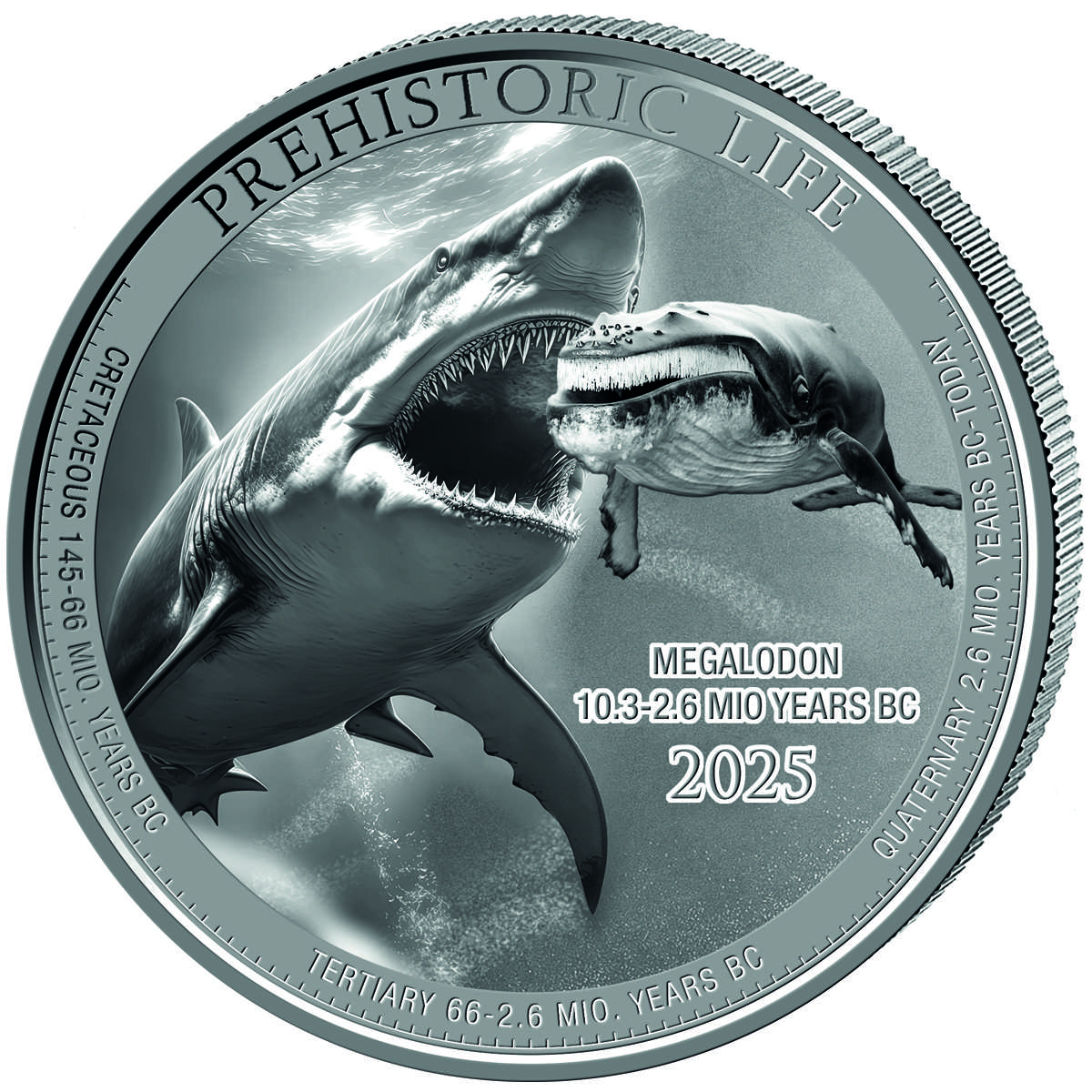
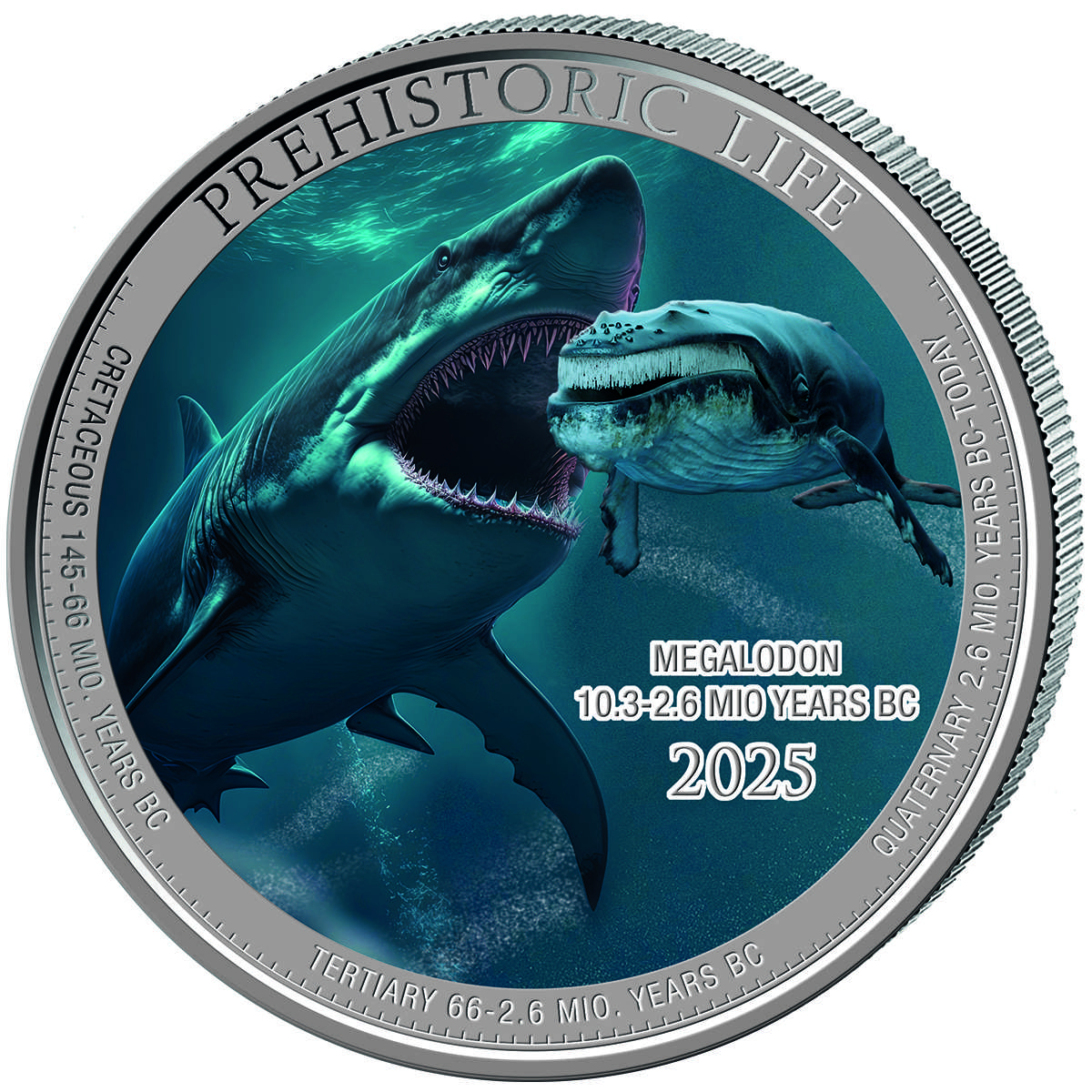
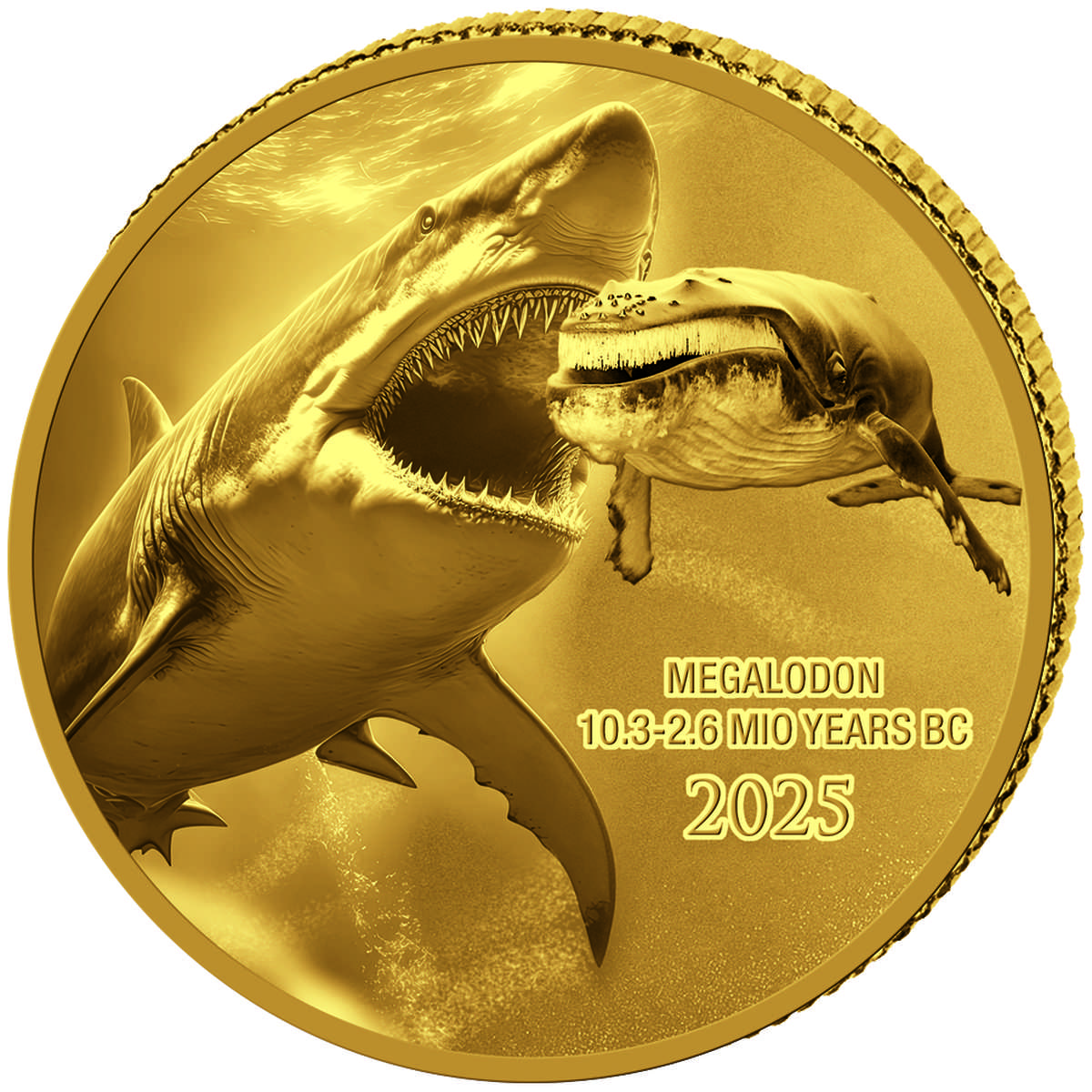
With a name that literally means ‘Big Tooth’, Megalodon is considered one of the biggest predators in the planets’ history. It lived approximately 23 to 3.6 million years ago (MYA), during the Early Miocene to the Pliocene
Most estimates, extrapolated from teeth, put the maximum length at 14.2–16 meters and average length at 10.5 meters. It’s suggested their jaws could exert a bite force of up to 108,500 to 182,200 newtons (24,400 to 41,000 LBF). Their teeth were thick and robust, built for grabbing prey and breaking bone. The fossil record indicates that it had a cosmopolitan distribution. It probably targeted large prey, such as whales, seals and sea turtles.
Juveniles inhabited warm coastal waters and fed on fish and small whales. Unlike the great white, which attacks prey from the soft underside, Megalodon probably used its strong jaws to break through the chest cavity and puncture the heart and lungs of its prey.
2025 VELOCIRAPTOR
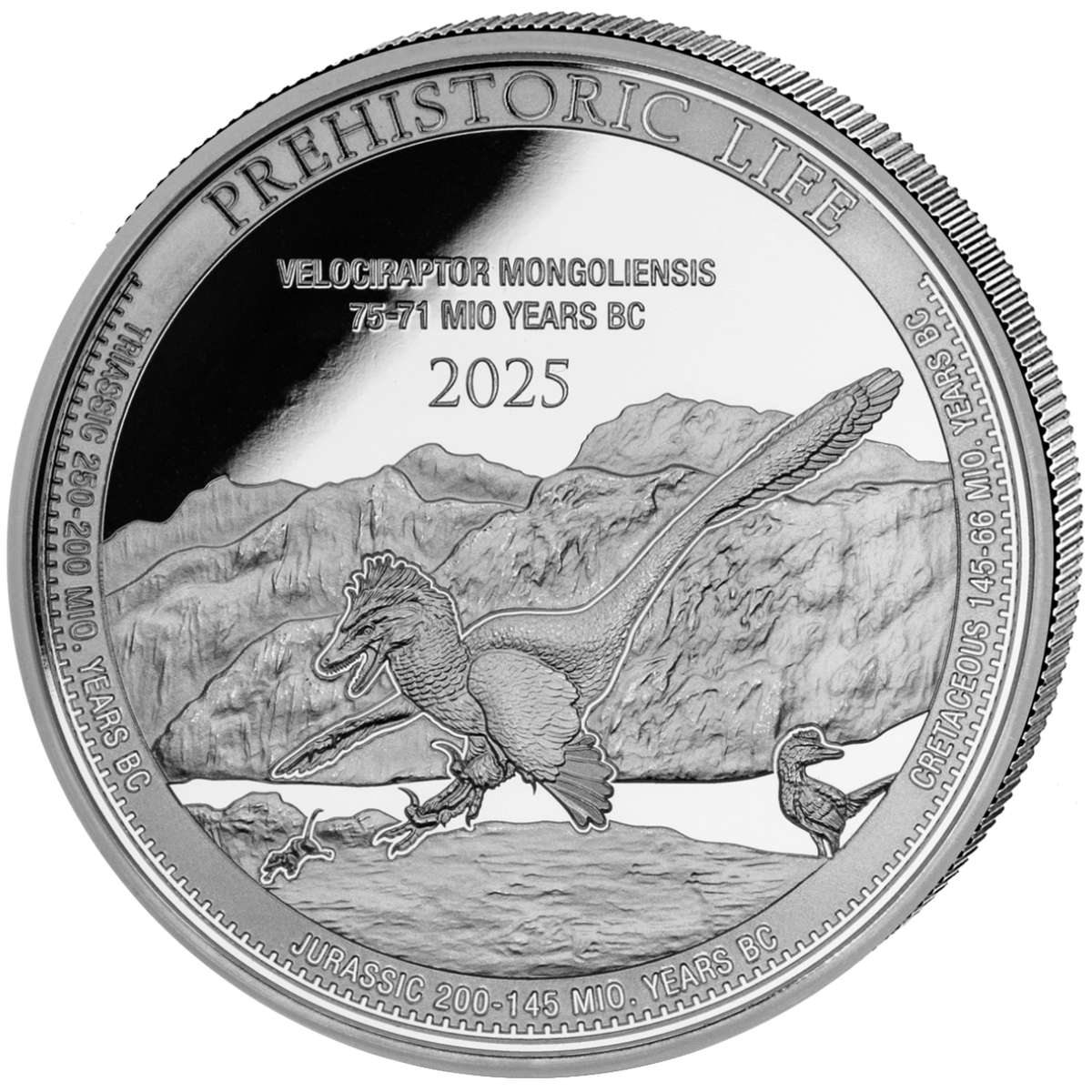
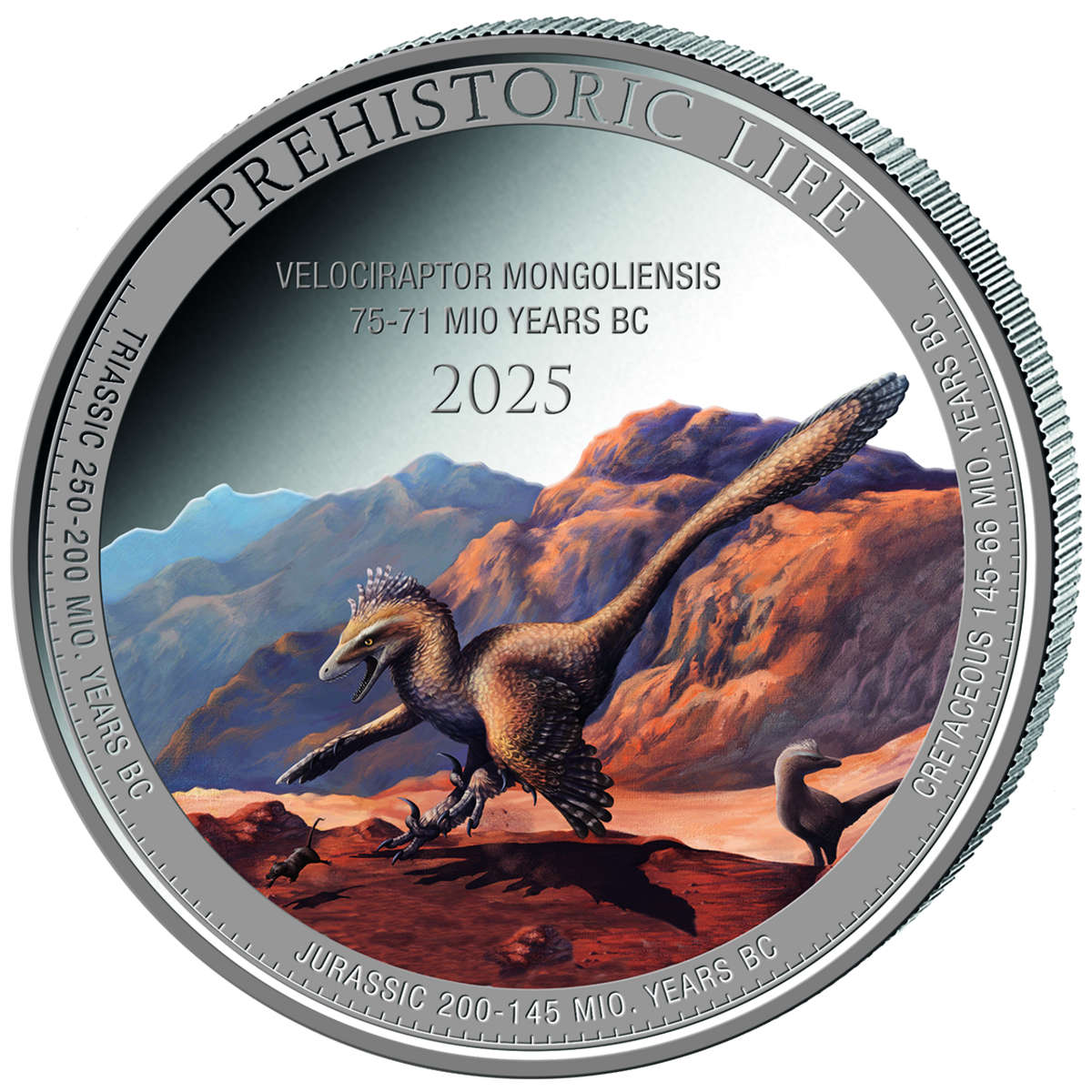
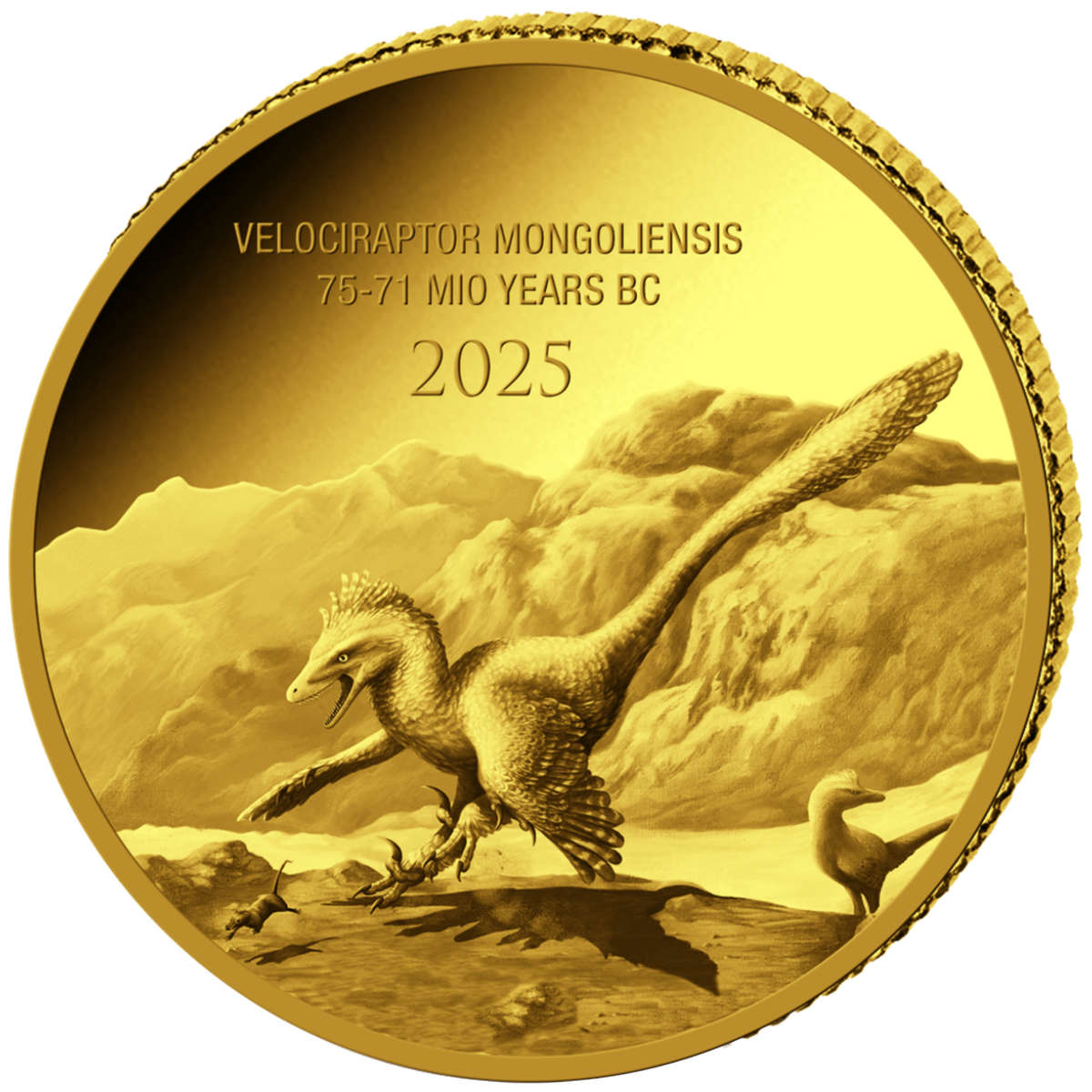
Velociraptor (‘swift thief’) is a genus of small dromaeosaurid dinosaurs that lived in Asia during the Late Cretaceous epoch, about 75 million to 71 million years ago. Two species are currently recognized, although others have been assigned in the past. The type species is V. mongoliensis, named and described in 1924. Fossils of this species have been discovered in the Djadochta Formation, Mongolia. A second species, V. osmolskae, was named in 2008 for skull material from the Bayan Mandahu Formation, China.
Smaller than other dromaeosaurs like Deinonychus, Velociraptor was only 1.5–2.07 m long with a body mass of around 14.1–19.7 kg. It nevertheless shared many of the same anatomical features, being a bipedal, feathered carnivore with a long tail and an enlarged sickle-shaped claw on each hindfoot, which is thought to have been used to tackle and restrain prey. Velociraptor can be distinguished from other dromaeosaurids by its long and low skull, with an upturned snout.
Velociraptor (commonly referred to as “raptor”) is one of the dinosaur genera most familiar to the general public due to its prominent role in the Jurassic Park films. In reality, Velociraptor was roughly the size of a turkey, considerably smaller than the approximately 2 m long and 90 kg reptiles seen in the films (which were based on Deinonychus). Today, Velociraptor is well known to paleontologists, with over a dozen described fossil skeletons. One particularly famous specimen preserves a Velociraptor locked in combat with a Protoceratops. (Adapted from Wikipedia)
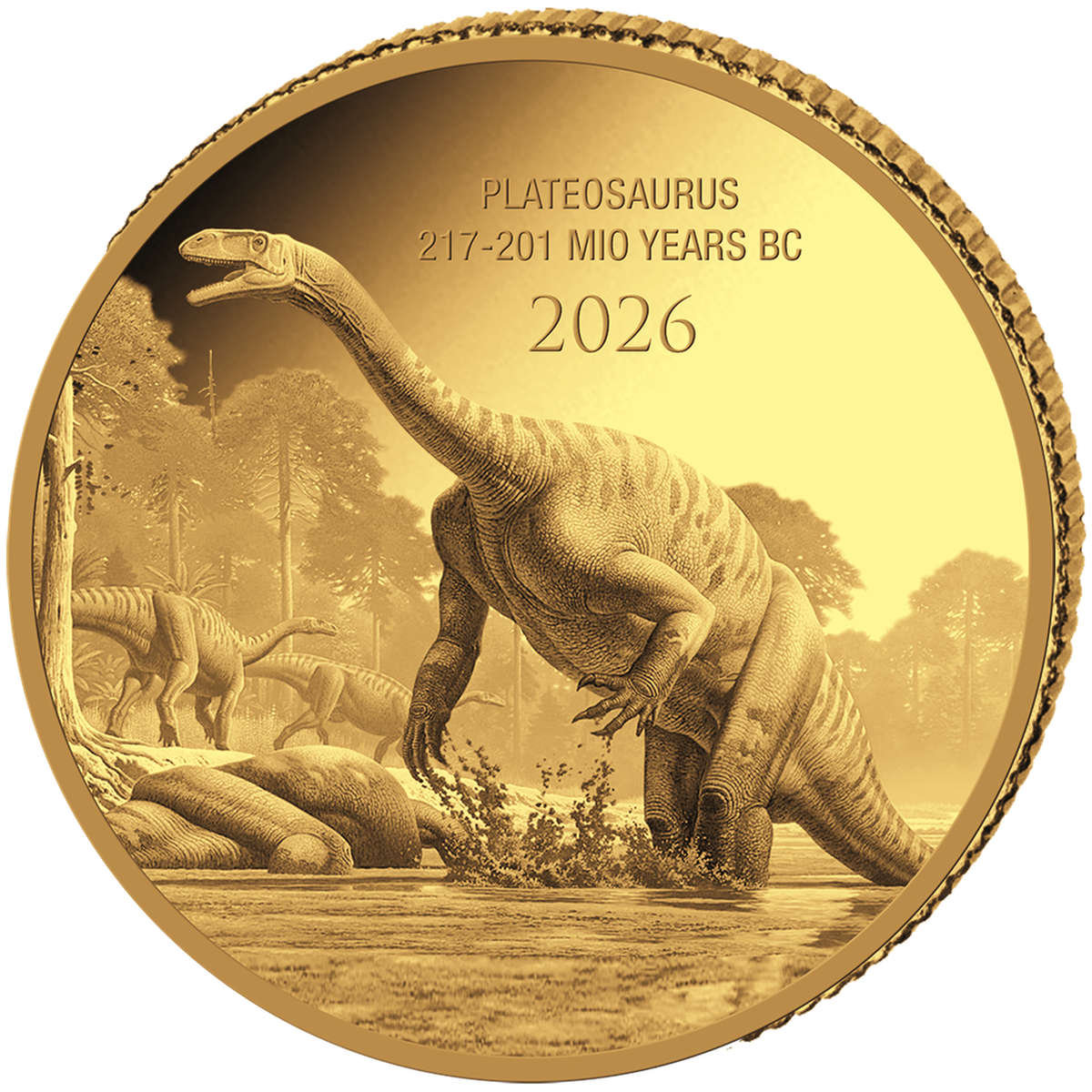
2026 PLATEOSAURUS
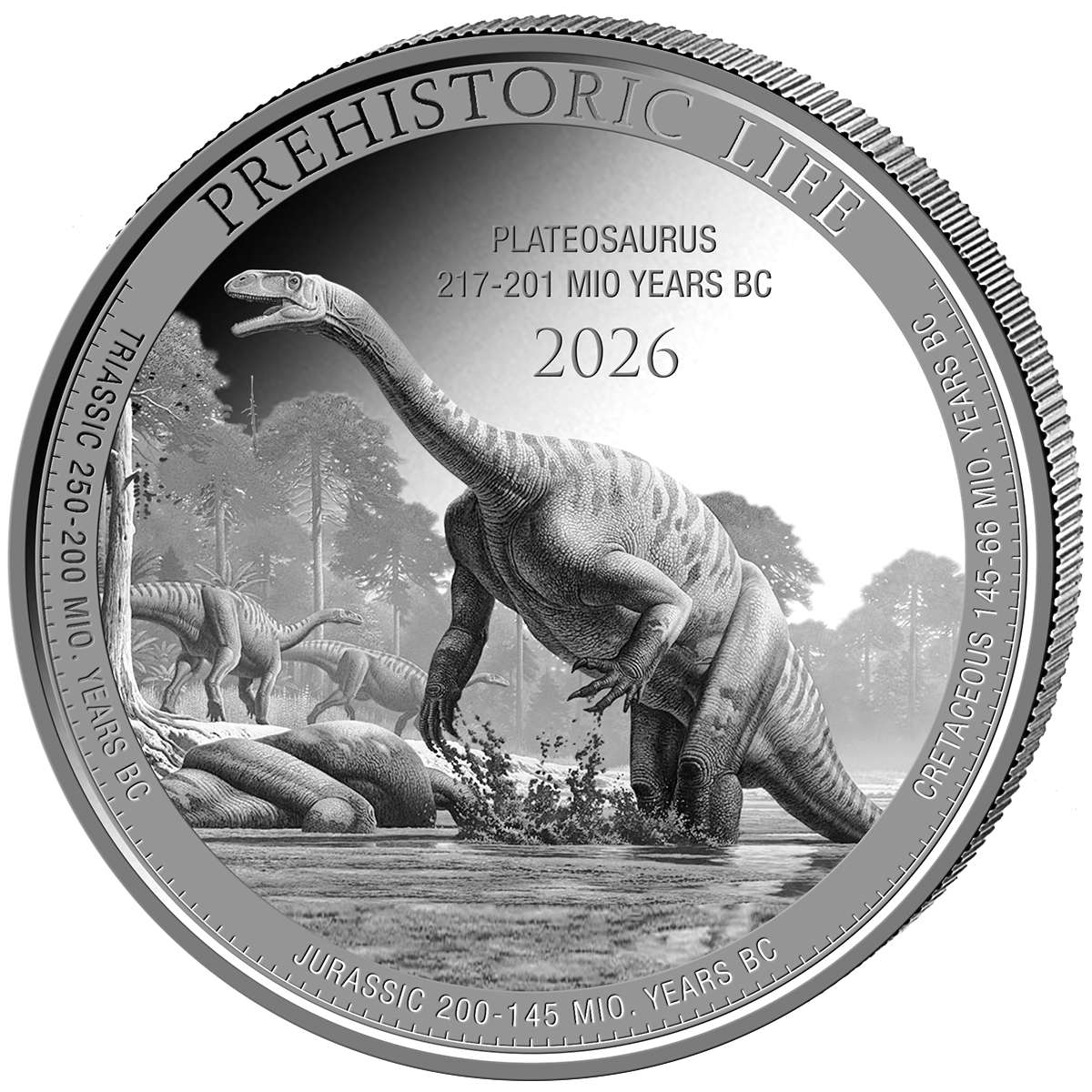
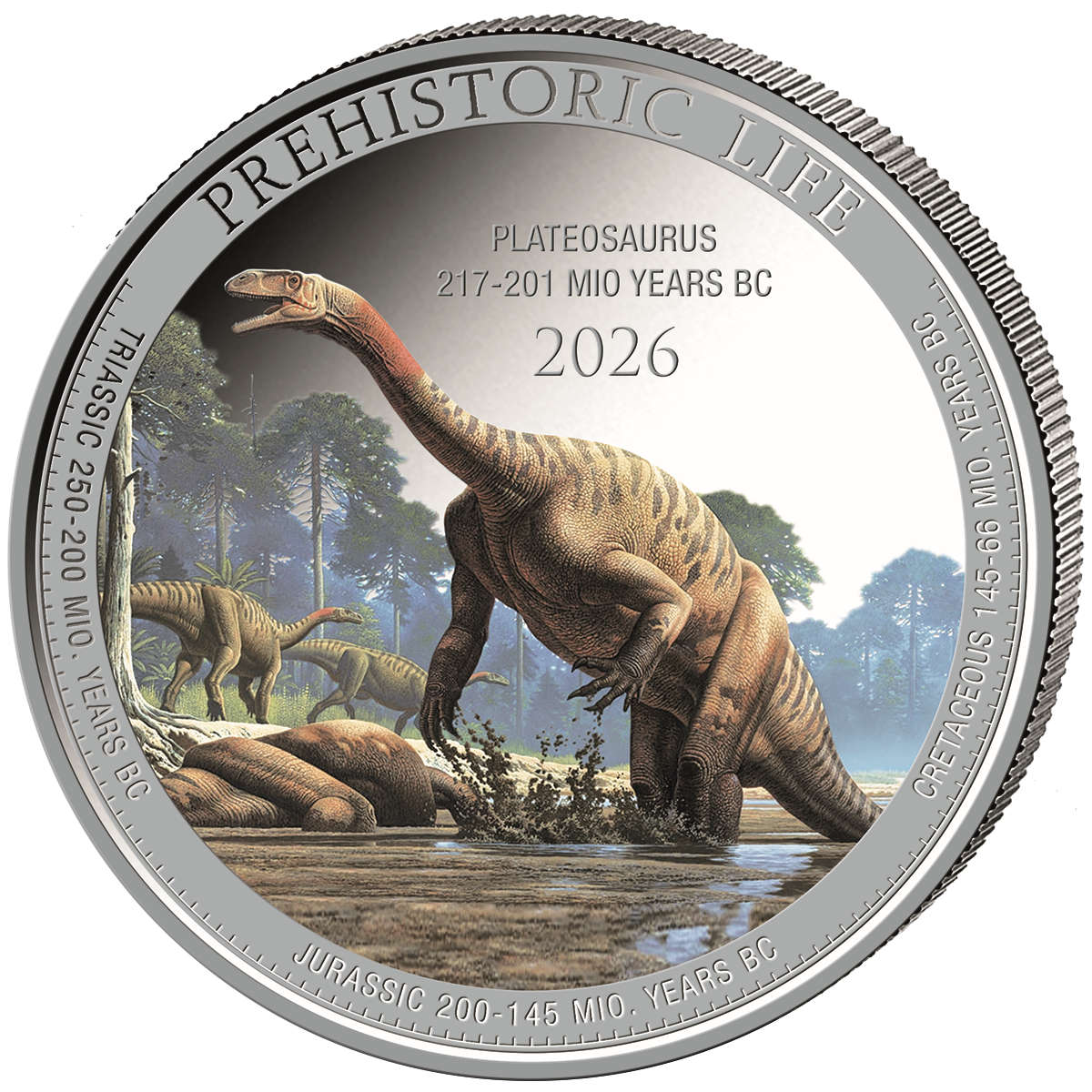
Plateosaurus lived in the Late Triassic period, around 214 to 204 million years ago, in what is now Central and Northern Europe. Currently, there are three valid species; in addition to P. trossingensis, P. longiceps and P. gracilis are also known.
Discovered in 1834 by Johann Friedrich Engelhardt and described three years later by Hermann von Meyer, Plateosaurus was the fifth named dinosaur genus that is still considered valid. It is now among the dinosaurs best known to science: over 100 skeletons have been found, some of them nearly complete. The abundance of its fossils in Swabia, Germany, has led to the nickname Schwäbischer Lindwurm (Swabian lindworm).
Plateosaurus was a bipedal herbivore with a small skull on a long, flexible neck, sharp but plump plant-crushing teeth, powerful hind limbs, short but muscular arms and grasping hands with large claws on three fingers, possibly used for defence and feeding.
Unusually for a dinosaur, Plateosaurus showed a wide range of adult sizes, with fully grown individuals between 4.8 and 10 metres, weighing between 600 and 4,000 kilograms (1,300 and 8,800 lb). Commonly, the animals lived for at least 12 to 20 years, but the maximum life span is not known. (Adapted from WIkipedia)
2026 Clue – It flies! (Due Sept)
2026 Clue - It grazes! (Due Nov)
COMMON OBVERSE


A typical Congo obverse there's a border that holds the inscribed issuing country, and the denomination of 20 Francs, although in this case, the coin composition is also inscribed here.The coat of arms of the Democratic Republic of the Congo is one that has changed quite a few times, with the latest version having its origins in 2006 under the rule of President Joseph Kabila.
It depicts a leopard head, surrounded by an elephant tusk to the left and a spear to the right. Below are the three words which make up the national motto: Justice, Paix, Travail (Justice, Peace, Work in French).
SPECIFICATIONS
| DENOMINATION | COMPOSITION | DIMENSION | FINISH | MINTAGE |
| 20 Francs (Congo) | 31.1 g of 0.9999 silver | 38.6 mm | B/Unc. | 10,000 |
| 20 Francs (Congo) | 31.1 g of 0.9999 silver | 38.6 mm | B/Unc., Colour | 2,000 |
| 100 Francs (Congo) | 0.5 g of 0.9999 gold | 11.0 mm | Proof | 2,000 |
Leave A Comment