

Dinosaurs are back at the Royal Canadian Mint, along with butterfly and native turtle coins, just like July at the Perth Mint
Like the Perth Mint yesterday, it’s also been a while since we featured new coins from the Royal Canadian Mint, but again, they’re back on the AgAuRadar moving forward. In a quirk of coin scheduling, two of the coins have incredibly similar themes to the Perth mint coins we looked at yesterday, with an aboriginal art take on the turtle, and a blue butterfly.
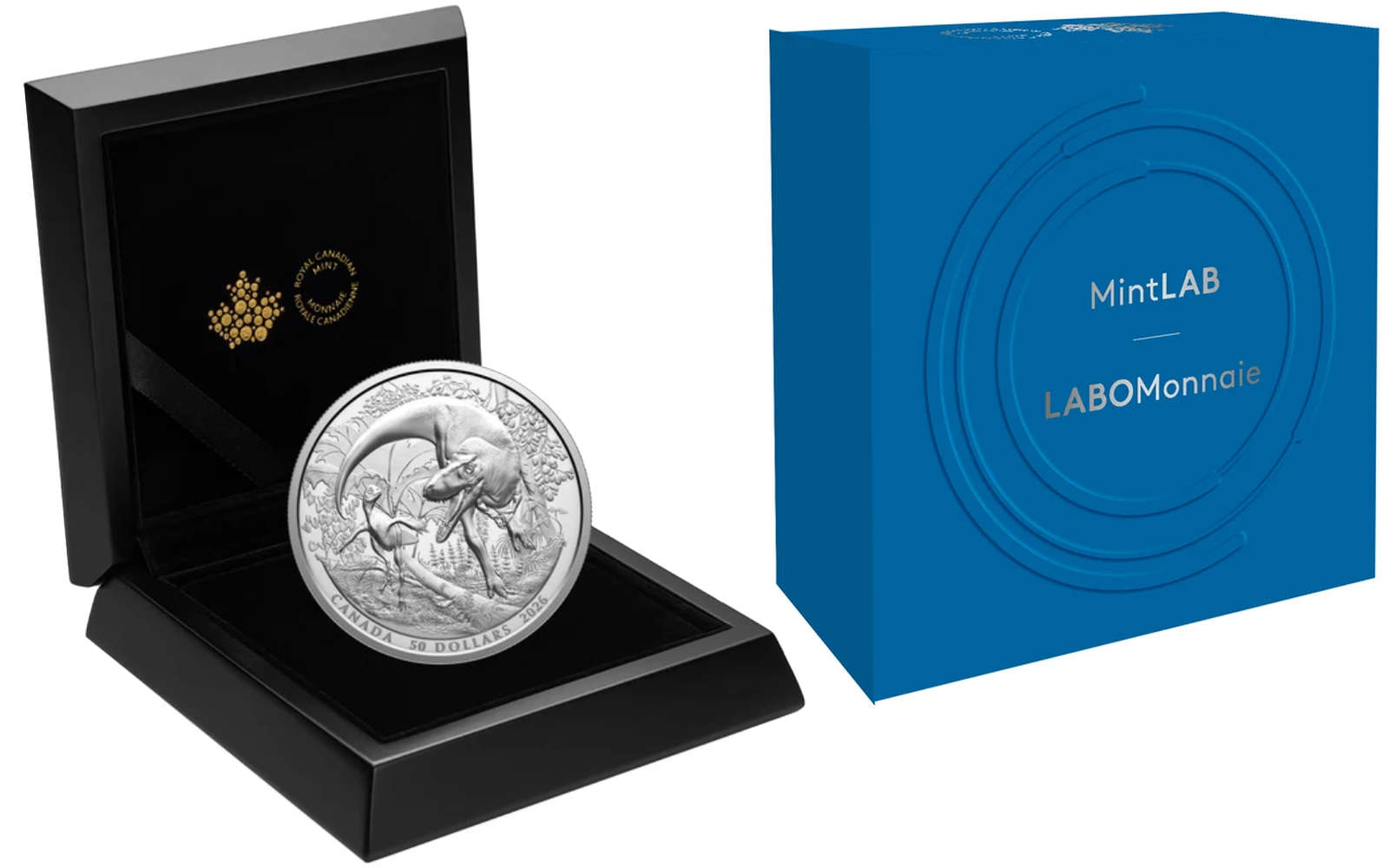
Both of the RCM coins are different in their implementation to those, however, which makes for an interesting comparison in their styles. There’s an extra coin here though, and it has a dinosaur on it, so you know why it’s here! Fortunately, it’s a stunner, being a product of the RCM’s MintLAB program, which aims to bring experimental techniques to their range. Here, we have a mix of high-relief on the reverse face, with a deep incuse strike on the obverse. Throw in some real experts in the dino field, and you have a gem.
All the coins are available to order now, and come boxed with a certificate of authenticity.
EXCEPTIONAL DISCOVERIES: DINOSAURS OF CANADA
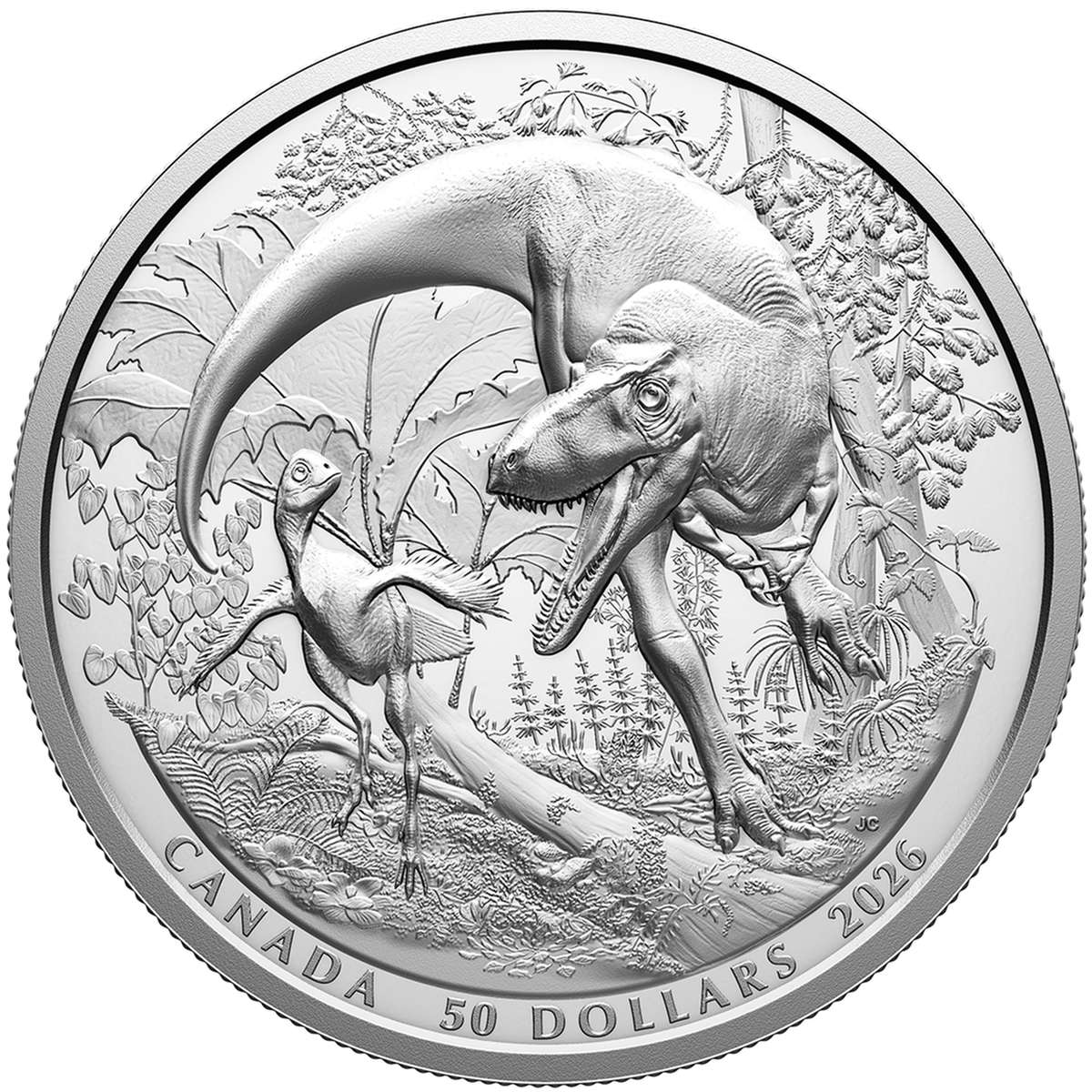
It doesn’t take much more than a dinosaur coin to get us running over to see what it’s all about, and when I see the name Julius Csotonyi attached to it, we’re at warp speed. Csotonyi is a much respected Canadian paleo artist, someone who takes an informed look at the available information and current opinions on prehistoric life, and then creates art depicting them naturally. I actually have books of his art here, it’s really first class, and highly recommended to those with an interest in the subject.
Canada has a phenomenal fossil record, from the incredible early life preserved in the Burgess Shale, to the many dinosaur species discovered in places like Alberta, which gave its name to the Tyrannosaur, Albertosaurus. Another from the family Tyrannosauridae is Gorgosaurus, which was also smaller than Tyrannosaurus Rex, but still a real beast at 8–9 metres in length, and weighing 2–3 tons. Like its contemporary cousin, Daspletosaurus, they sat at the top of the food chain in the Late Cretaceous.
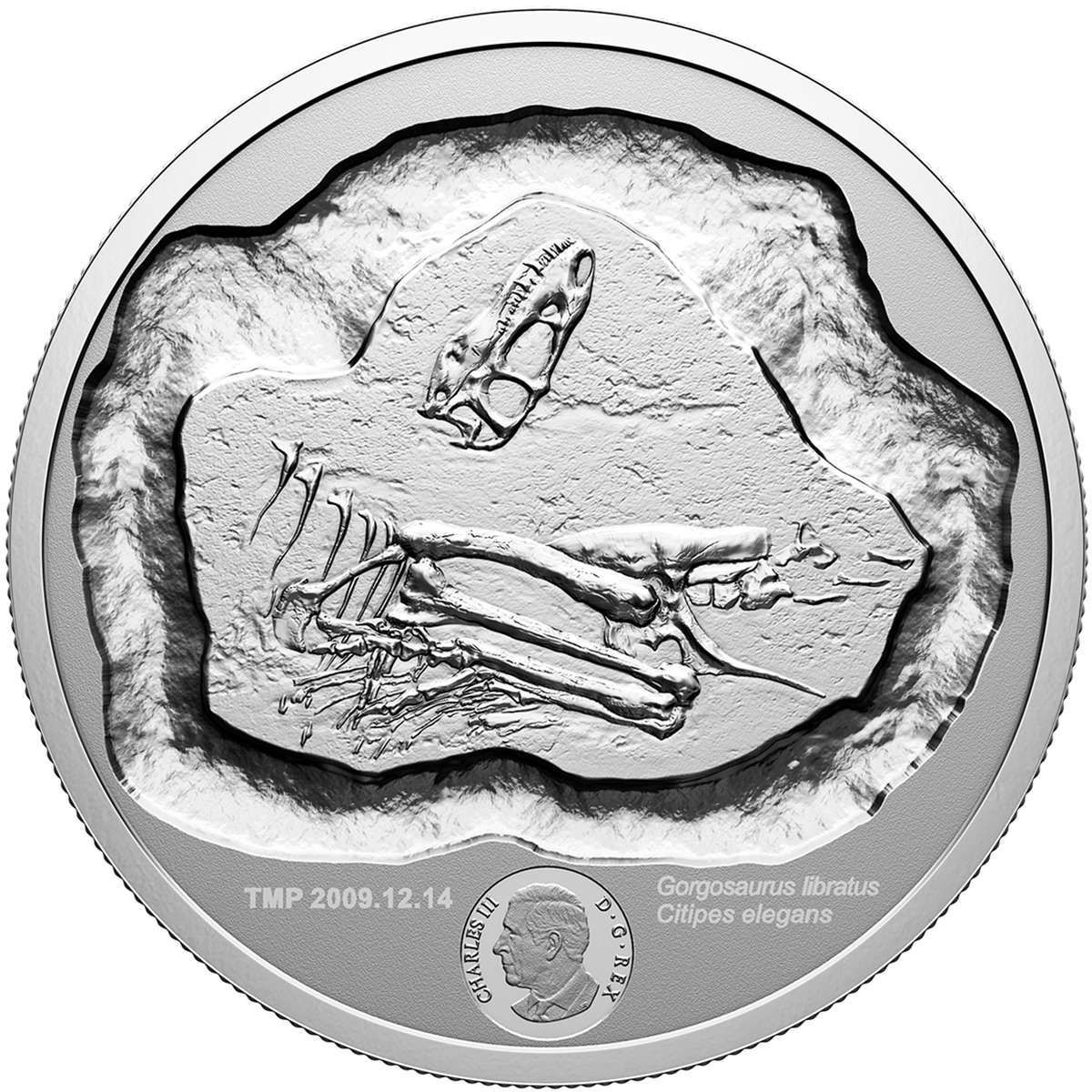
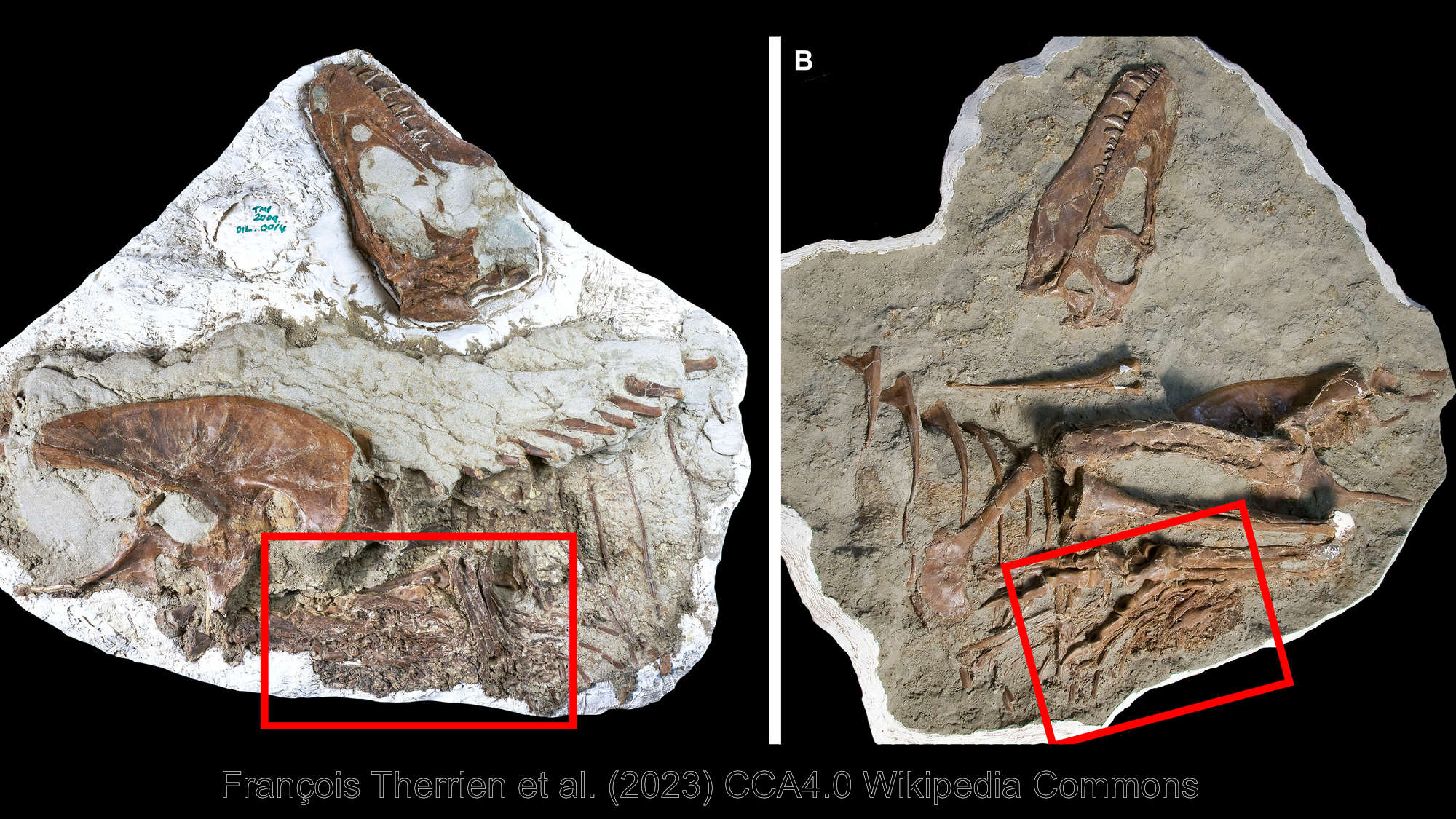
Gorgosaurus fossils are not uncommon, known from dozens of specimens, and one of the most interesting has inspired this new coin. Discovered in 2009, with details published about it in late 2023, the fossil was of an immature specimen, not in itself unusual. However, it was found with the remains of its last meal still in its stomach, which turned out to be a pair of Citipes juveniles. These are small oviraptors, about 10kg, and would likely have been a common site in the region. The fossil is a fascinating look at the diet of smaller Tyrannosaurs, something still generating lots of debate to this day. The fossil is held at the Royal Tyrrell Museum of Palaeontology.
The coin depicts the chasing down of a Citipes by the Gorgosaurus in a lush jungle environment. It’s a very dynamic, beautifully posed image, which shows the talented Csotonyi at his best. It’s struck in high-relief up to 2 mm. The obverse is very interesting, showing the original fossil, but here it is incused into the coin, as if being excavated from the surrounding bedrock. Frosting is used to generate contrast, and below it are the fossil designation, and the two species names. I know I’m biased to the subject, but this is an awesome coin, with only the $1830 CAD price limiting its appeal. The five ounces of silver have been well utilised to give us an impressive 65.25 mm diameter to go with the relief, so the price is an unavoidable consequence of that. If you have the money (I don’t) and like the theme (I do), this one is a no-brainer for me.
MURANO SILVERY BLUE BUTTERFLY
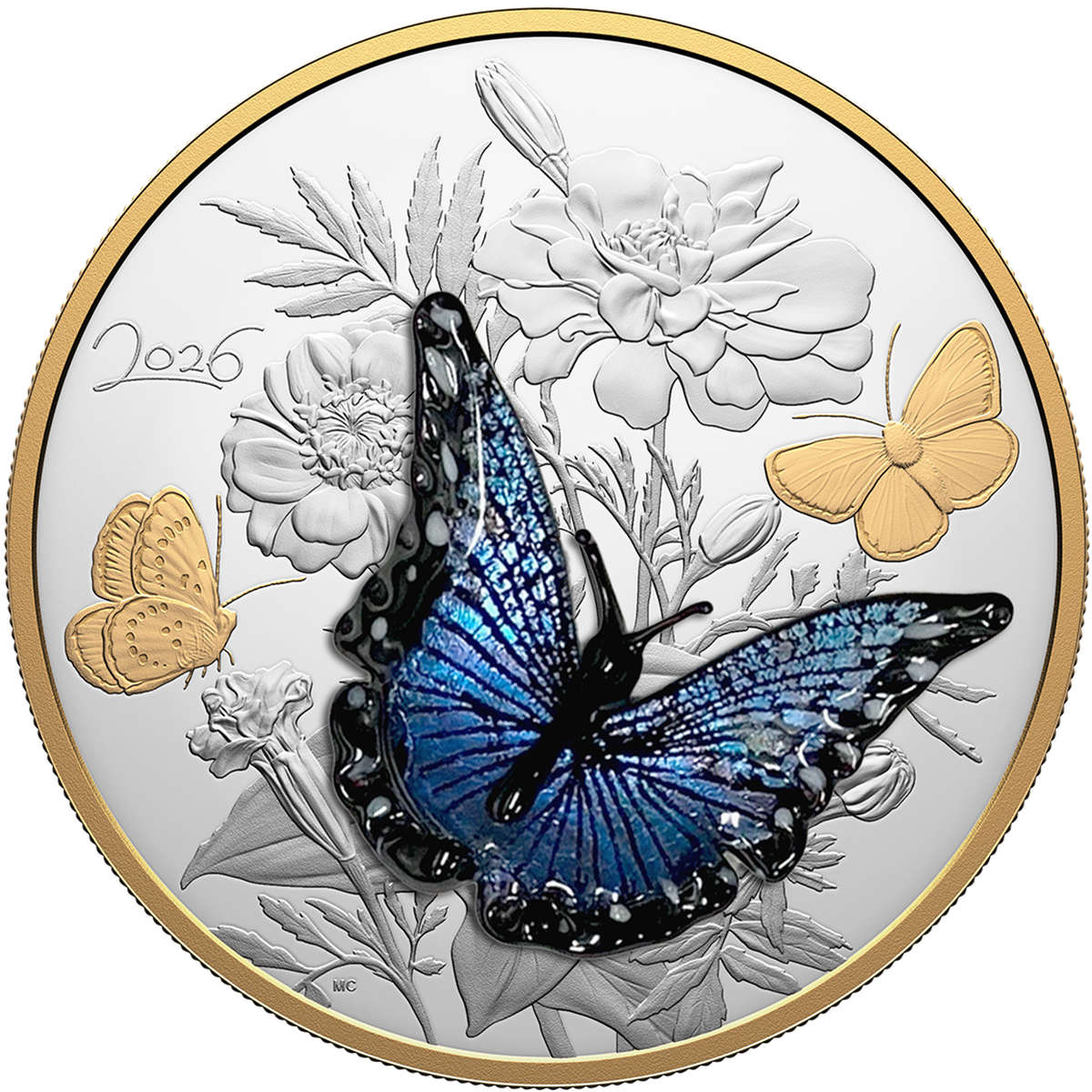
Considerably different, and more expensive than the Perth Mint butterfly coin, this one is struck in half a kilo of silver, but with one of those Murano glass objects attached, which the mint has had great success with in the past. The base design is pretty enough, with a gorgeous flower blossoms scene, populated with a pair of gilded butterflies. The main attraction here is a large, blue, Murano glass butterfly standing proud of the coin.
While the glass objects were a huge hit when they first appeared on the scene back in 2011, it isn’t something we’ve remained fans off, and that remains the case. It’s a striking piece, which will find many fans, but a little gimmicky for me. The coin itself is beautiful, and would have been even more so with that blue butterfly struck into it in a traditional way. However, we do like things a little different here, and we’re sure many of you do to.
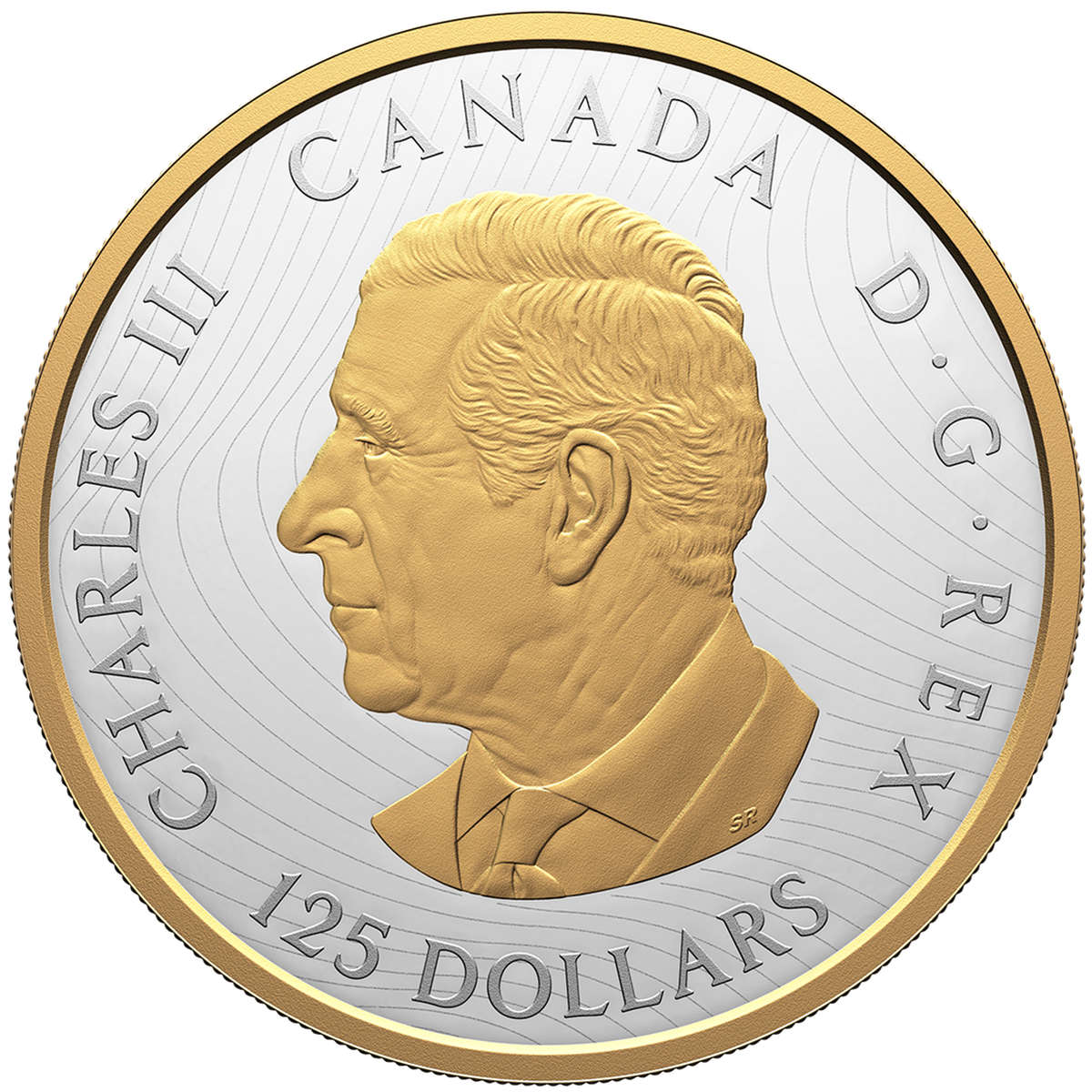
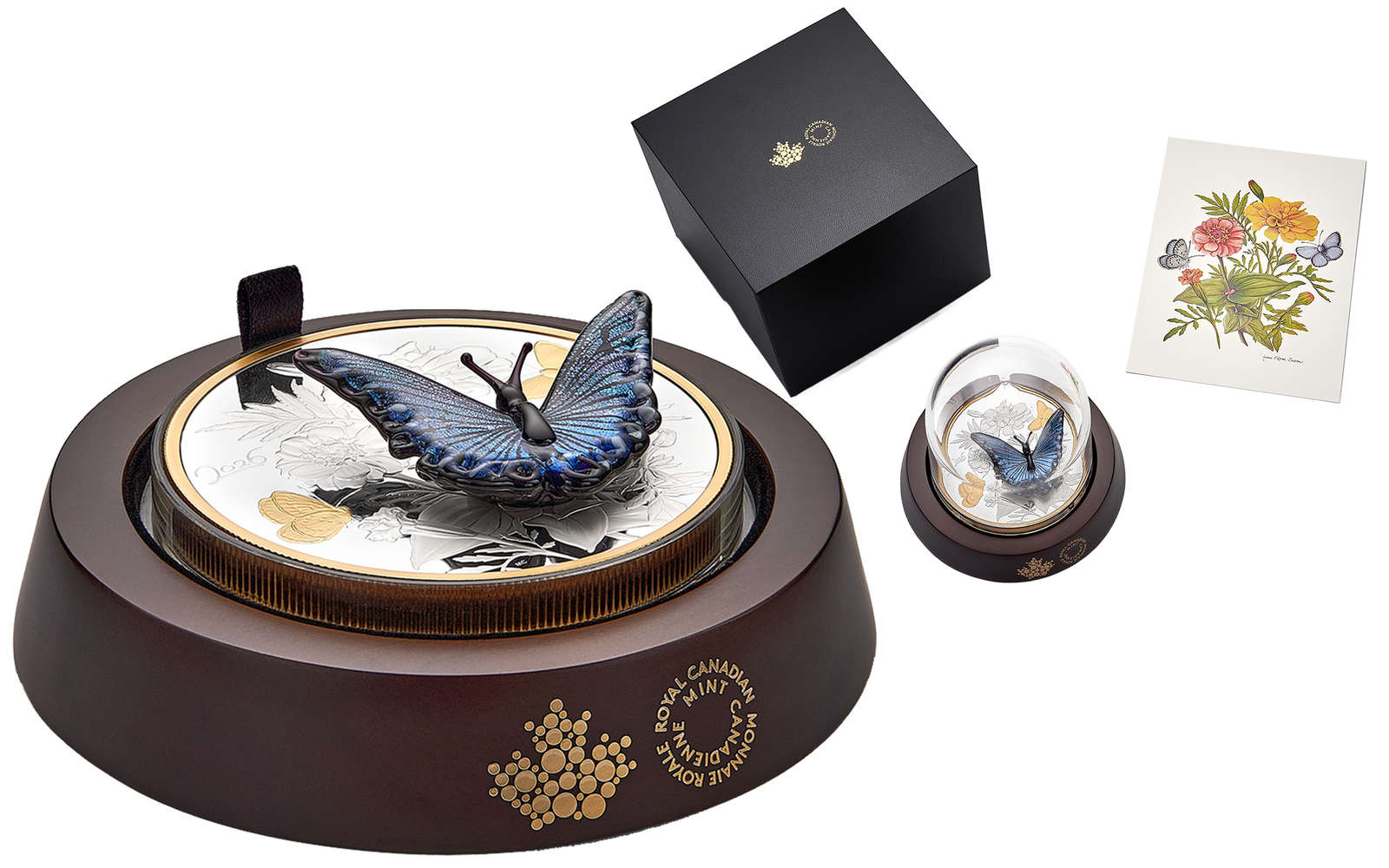
The effigy of King Charles III, along with both borders, are also gilded. The coin comes in a domed box, so this will be an impressive display piece for many collectors. At half a kilo, this isn’t an impulse purchase, but with a mintage of 800, the RCM must be confident that Murano glass remains a popular attraction.
TURTLE ISLAND
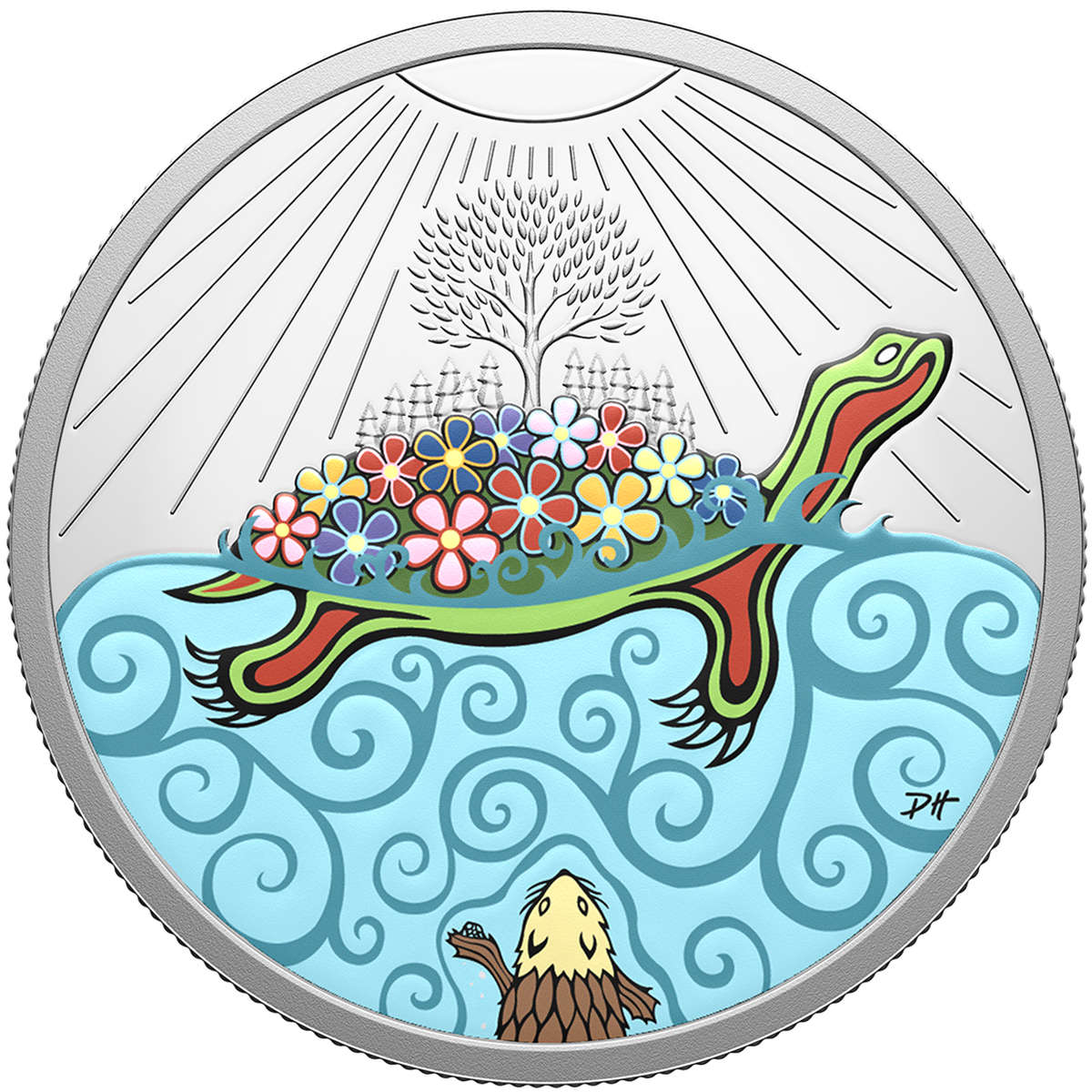
The turtle seems to have a prominent place in many aboriginal cultures and only yesterday we looked at an Australian coin that featured one depicted in a traditional tribal style. Canada has its own aboriginal people, and the turtle has a place in their creation myths, in this case the Ojibwe people, and is described by the artist, Patrick Hunter, as “Similar to most creation stories, ours begins with a great flood. Creator saw that those in power were corrupt, only seeking more power for themselves, so the rains were sent. To us, water is life; it can be soft and comforting, but it can also move mountains and take life away.
After the water had settled, many of Earth’s creatures sought refuge upon a giant turtle’s back. If they could just retrieve soil from the bottom of the water, they could create a home again on the turtle. Many animals tried, but none could do it—the depth was just too much. Finally, the muskrat said he would try. He was gone a long time, until the creatures noticed his body float to the surface, but in his paw was the soil needed to begin again. It was placed on the turtle’s back and land began to form in all directions, becoming a refuge for all.”
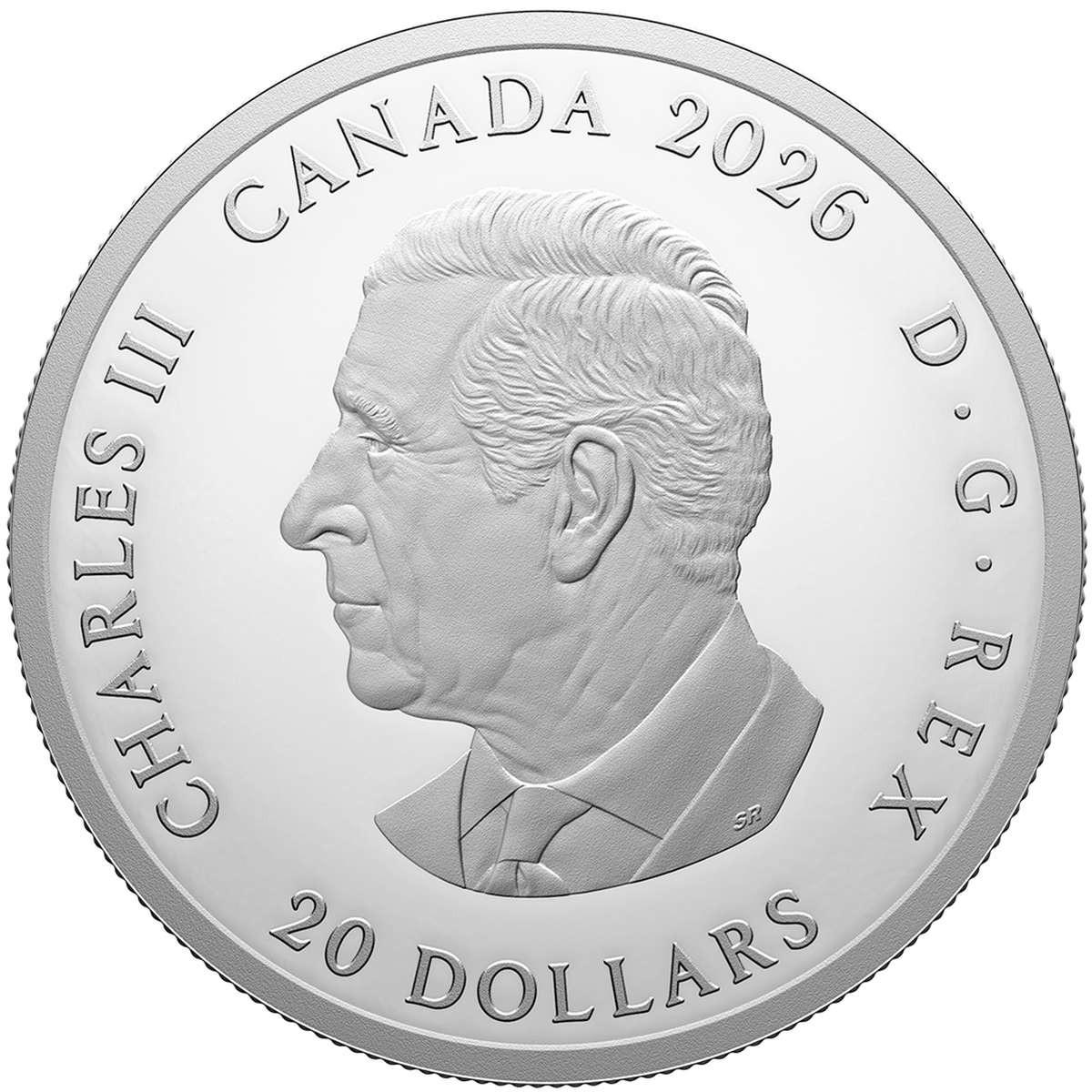
It’s a neat twist on the whole ‘great flood’ myth, which far from being a myth was likely a geological event related to the end of the last ice age. The coin design incorporates the Turtle Island with its back covered in growth, including the Tree of Life, and with the muskrat coming up from the depths below. A nice looking homage to Canada’s traditional oral history. The obverse is a basic one, including Canada’s own effigy of King Charles III by Stephen Rosati.
SPECIFICATIONS
| TYPE | DENOMINATION | COMPOSITION | DIMENSION | FINISH | MINTAGE |
| Dinosaurs | $50 CAD (Canada) | 156 g of 0.9999 silver | 65.25 mm | Proof | 647 |
| Butterfly | $125 CAD (Canada) | 502.5 g of 0.9999 silver | 85.52 mm | Proof, Gilding, Glass | 800 |
| Turtle Island | $20 CAD (Canada) | 31.39 g of 0.9999 silver | 38.0 mm | Antique, Colour | 5,000 |
Leave A Comment