

MONTSERRAT
Montserrat is a British Overseas Territory located in the Leeward Islands of the Eastern Caribbean, which is part of the chain known as the Lesser Antilles. It’s nickname, “The Emerald Isle of the Caribbean” is derived from its resemblance to coastal Ireland and for its Irish ancestry (prisoners, indentured servants, forced labourers, and loyal opposition soldiery) of many of its inhabitants who began arriving at the island around 1632. Montserrat is about 16 km long and 11 km wide, with roughly 40 km of coastline.
NOTED GEOGRAPHY: On 18 July 1995, the previously dormant Soufrière Hills volcano, in the southern part of the island, became active. Eruptions destroyed Montserrat’s Georgian era capital city of Plymouth. Between 1995 and 2000, two-thirds of the island’s population was forced to flee, primarily to the United Kingdom, leaving fewer than 1,200 people on the island in 1997 (rising to nearly 5,000 by 2016). The volcanic activity continues, mostly affecting the vicinity of Plymouth, including its docking facilities, and the eastern side of the island around the former W. H. Bramble Airport, the remnants of which were buried by flows from volcanic activity on 11 February 2010.
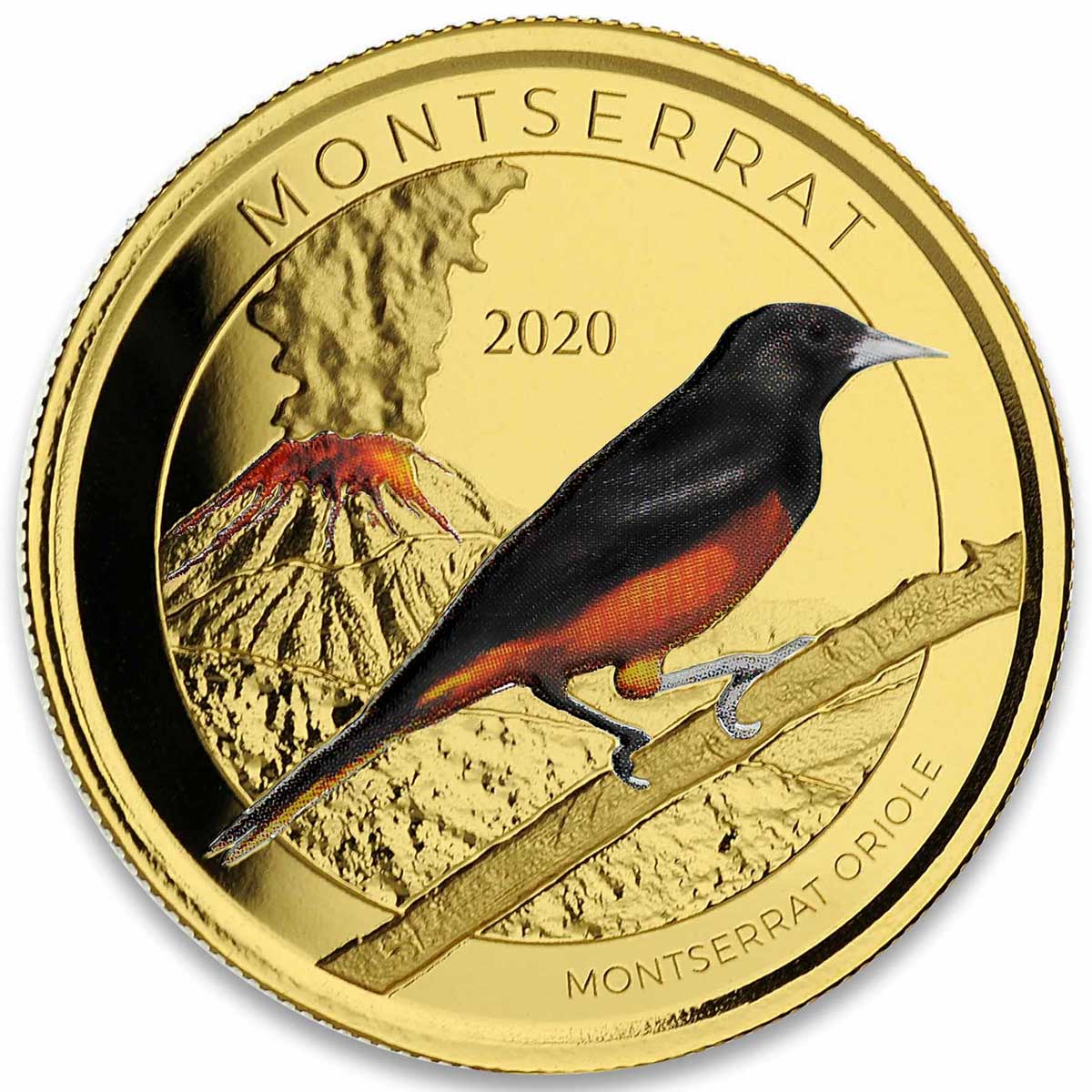
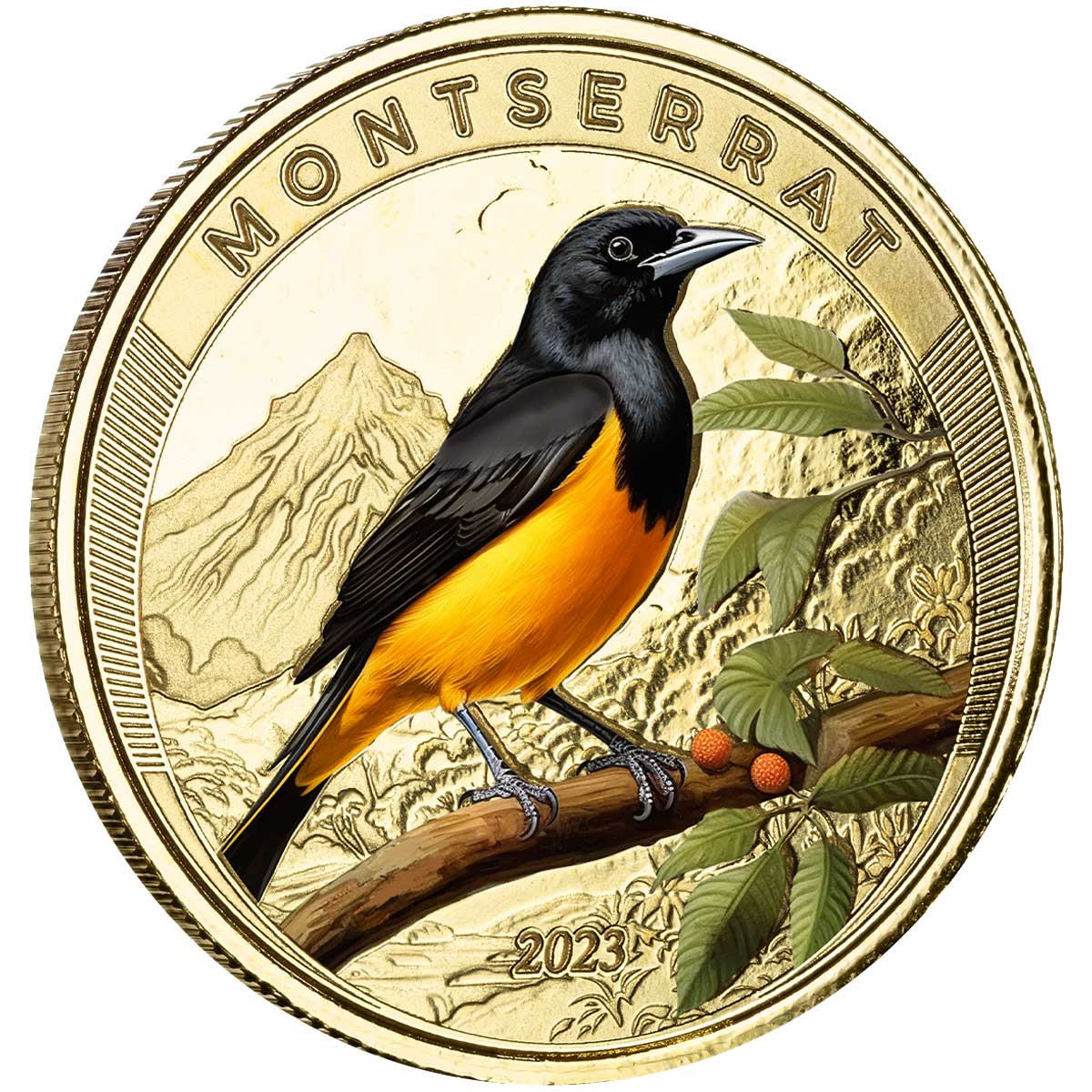
NOTED NATURE: Montserrat, like many isolated islands, is home to rare, endemic plant and animal species. The national bird is the endemic Montserrat Oriol. Montserrat is known for its coral reefs and its caves along the shore. These caves house many species of bats, and efforts are underway to monitor and protect the ten species of bats from extinction. It is estimated that 120 invertebrates are endemic to Montserrat.
NOTED CULTURE: The only place outside of Ireland where St. Patrick’s Day is a national holiday. Sport is popular, especially considering the small remaining population. Football, cricket (of course!), basketball, and sailing are all regularly undertaken. For more than a decade, George Martin’s AIR Montserrat studio played host to recording sessions by many well known rock musicians, including Dire Straits, The Police, Rush, Elton John, Michael Jackson and The Rolling Stones.
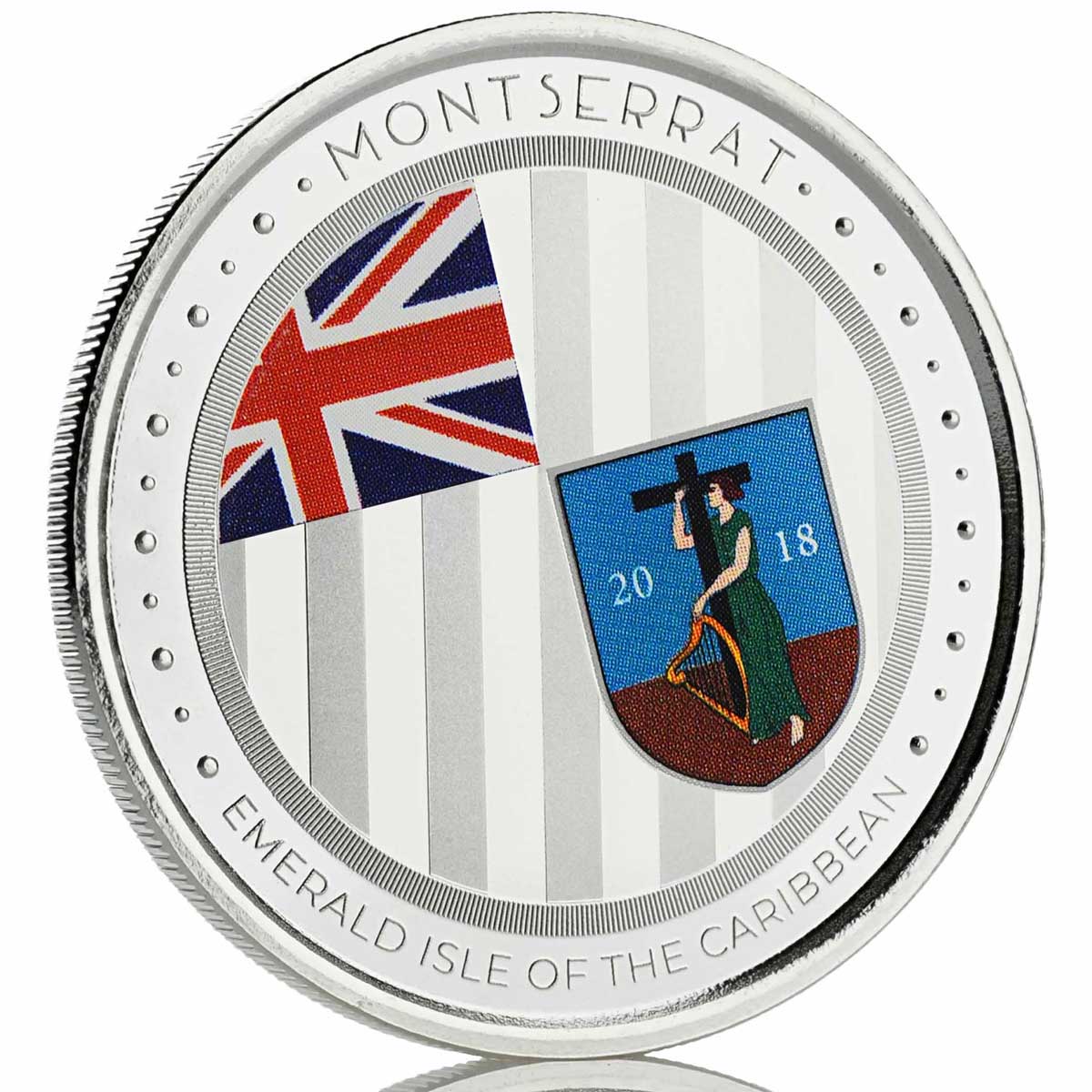
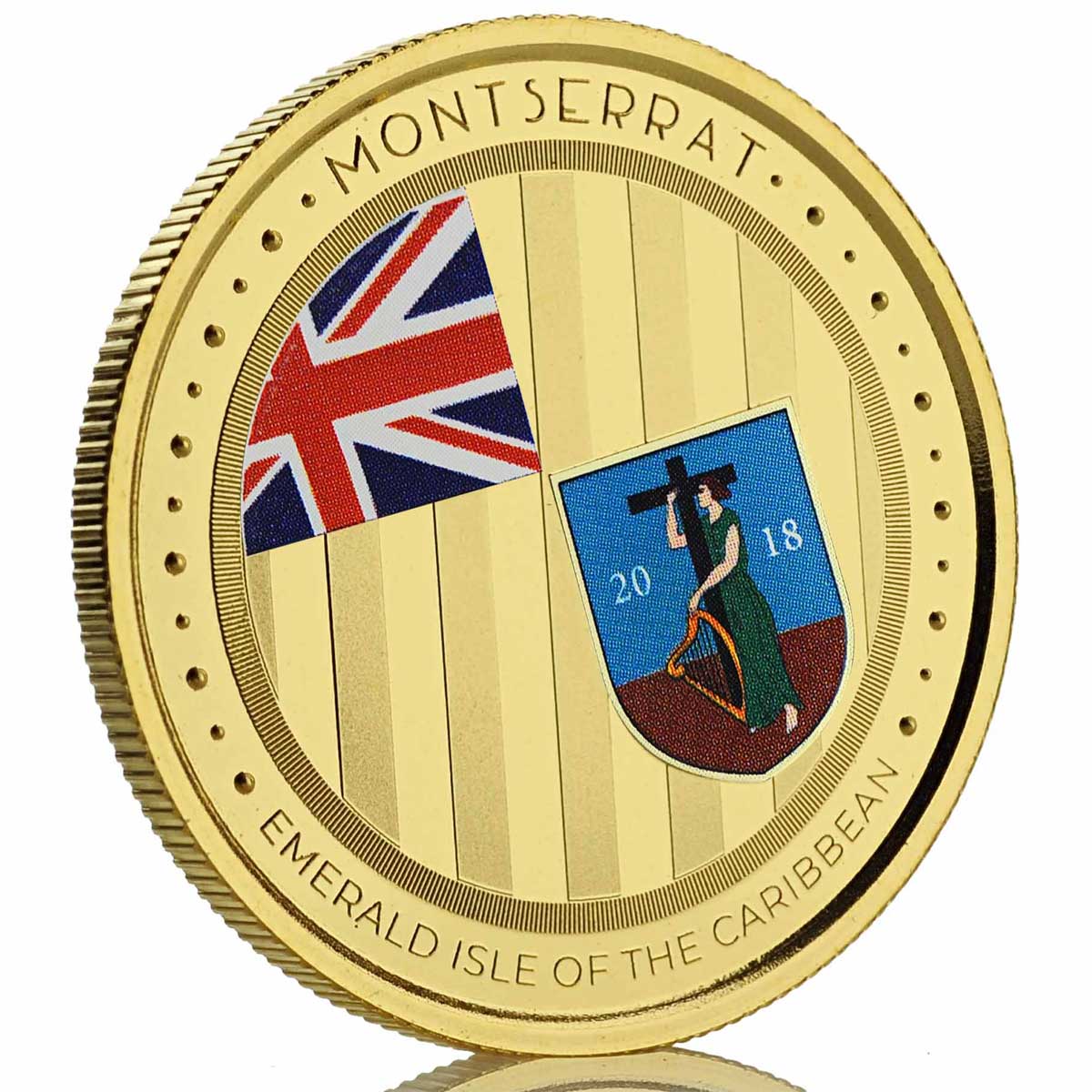
2018 COAT OF ARMS
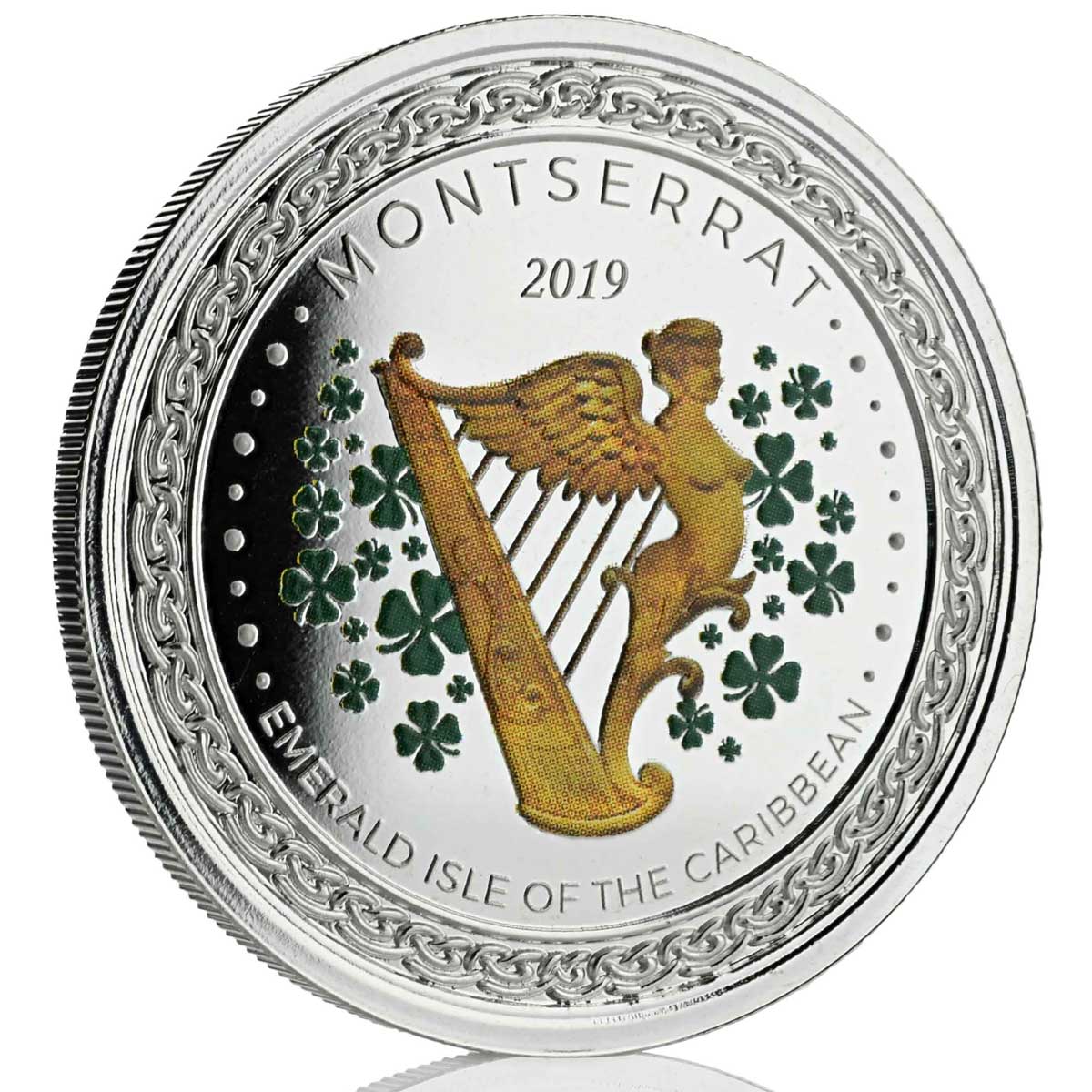
2019 IRISH HARP

2020 ORIOLE

2021 ANGELFISH


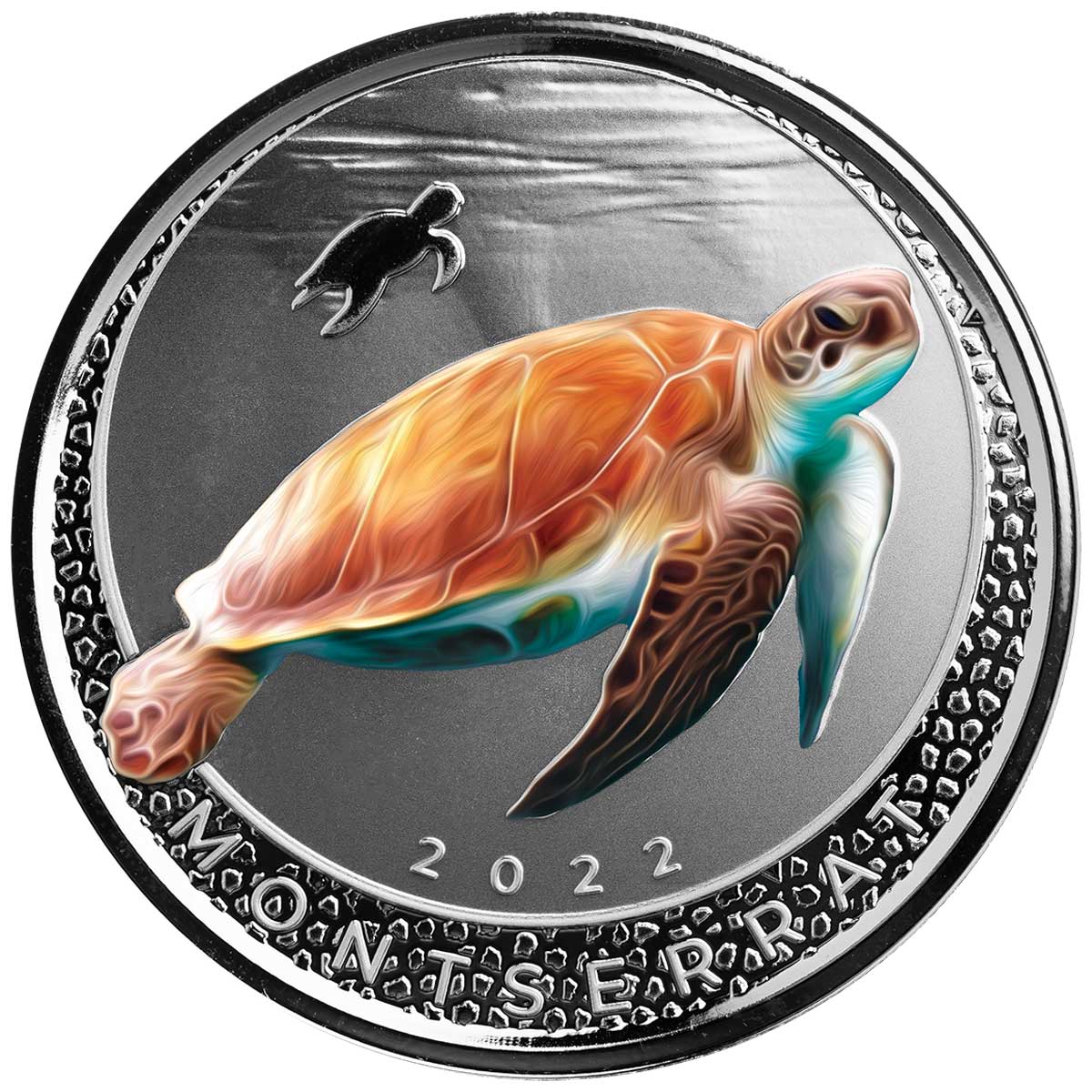
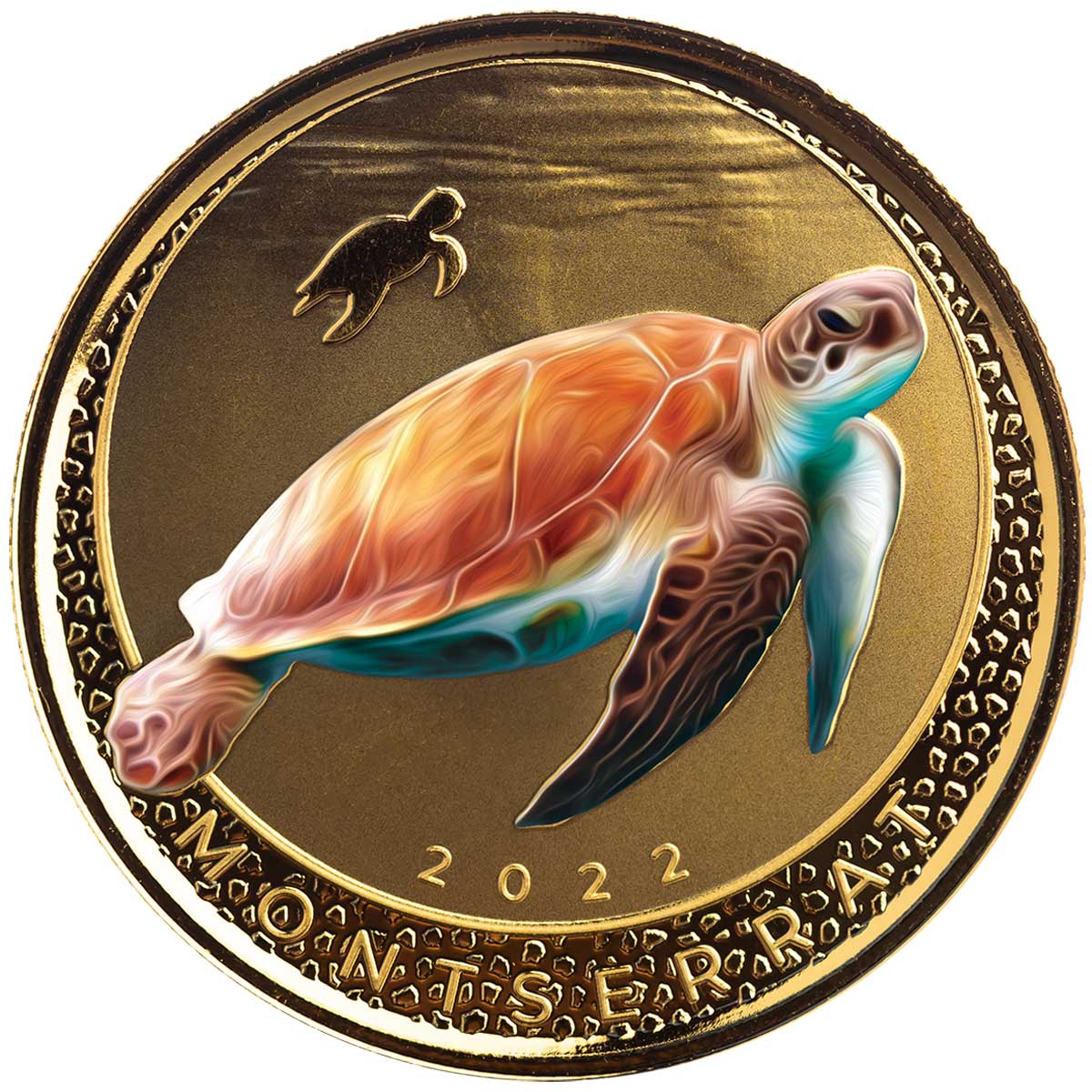
2022 SEA TURTLE
2023 ORIOLE II

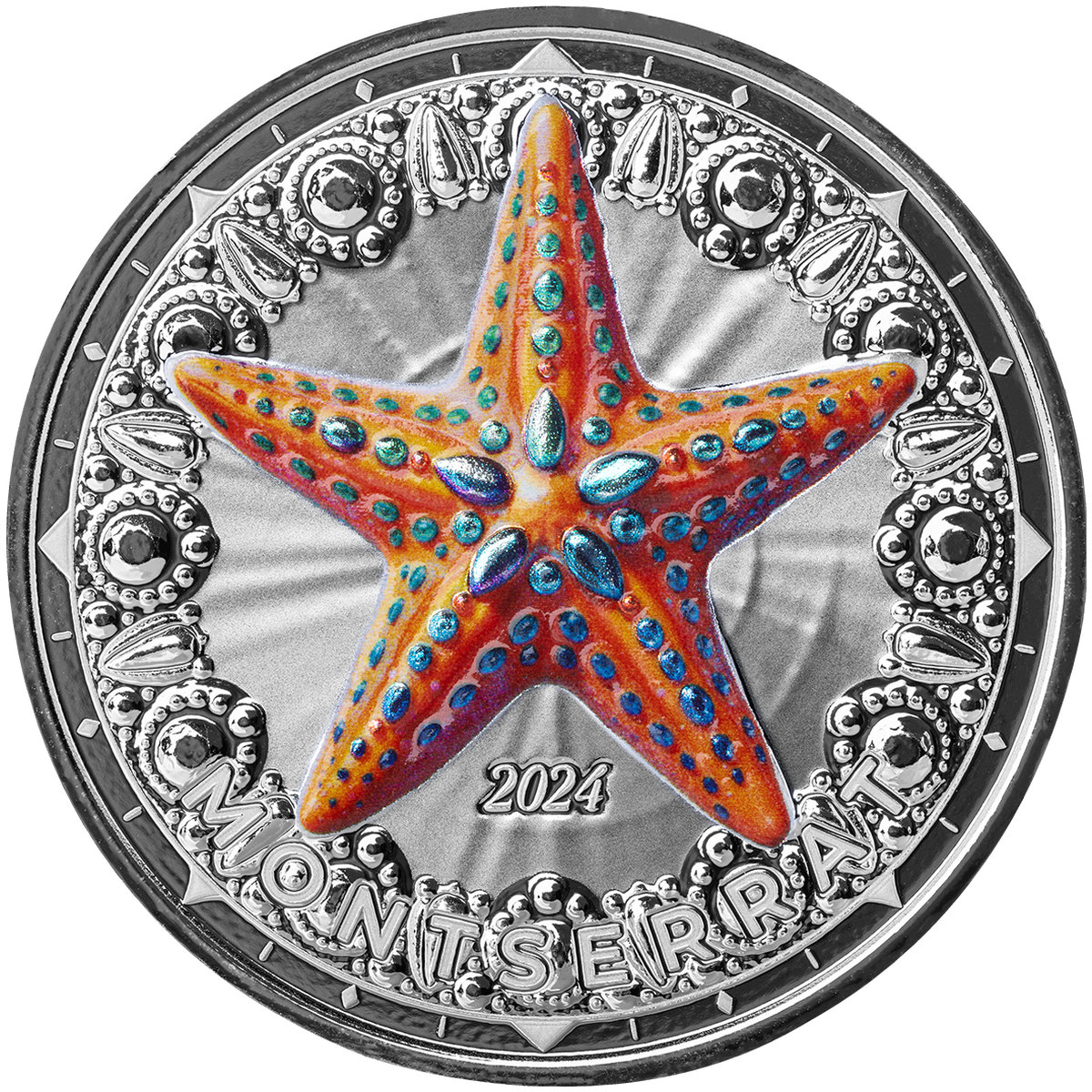
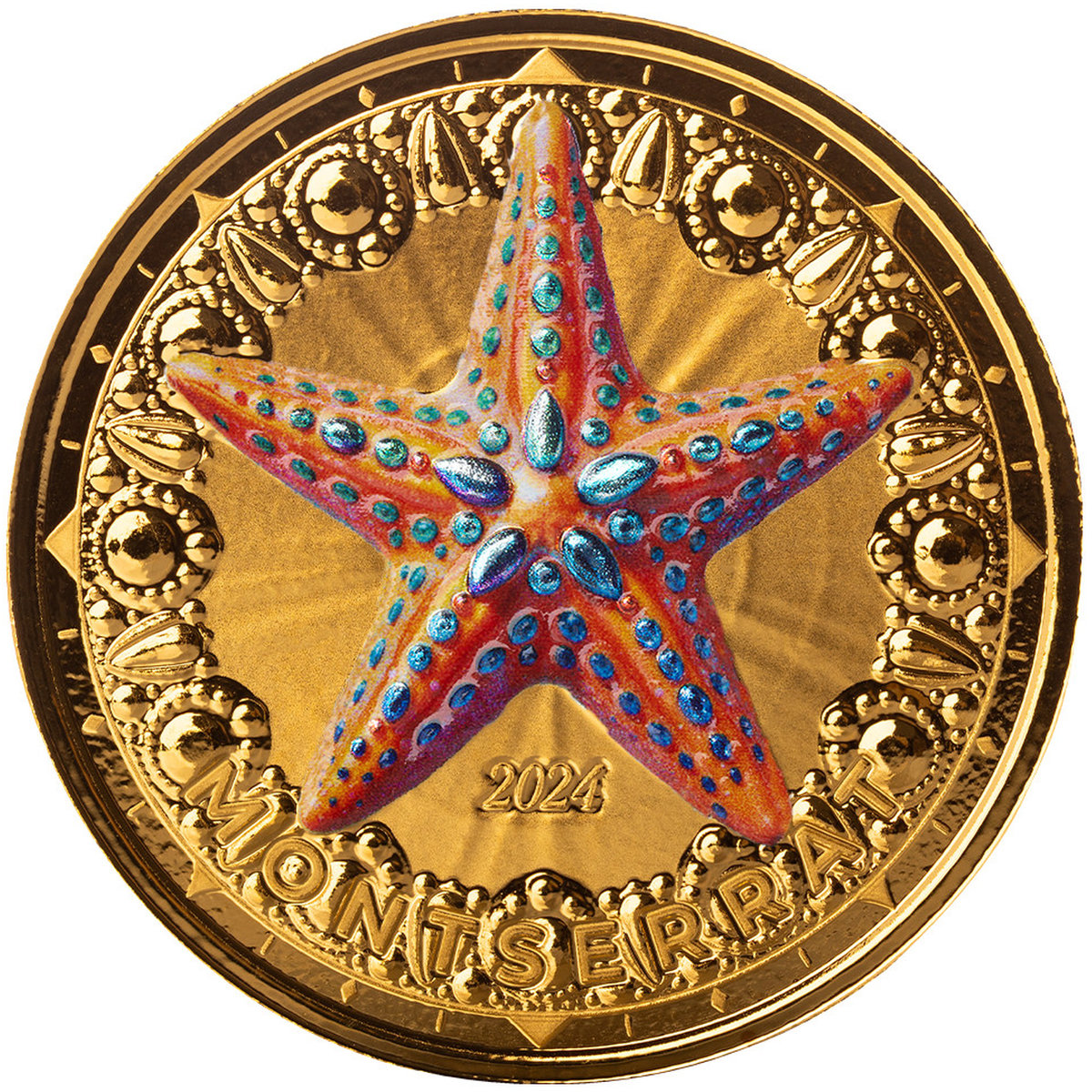
2024 STARFISH
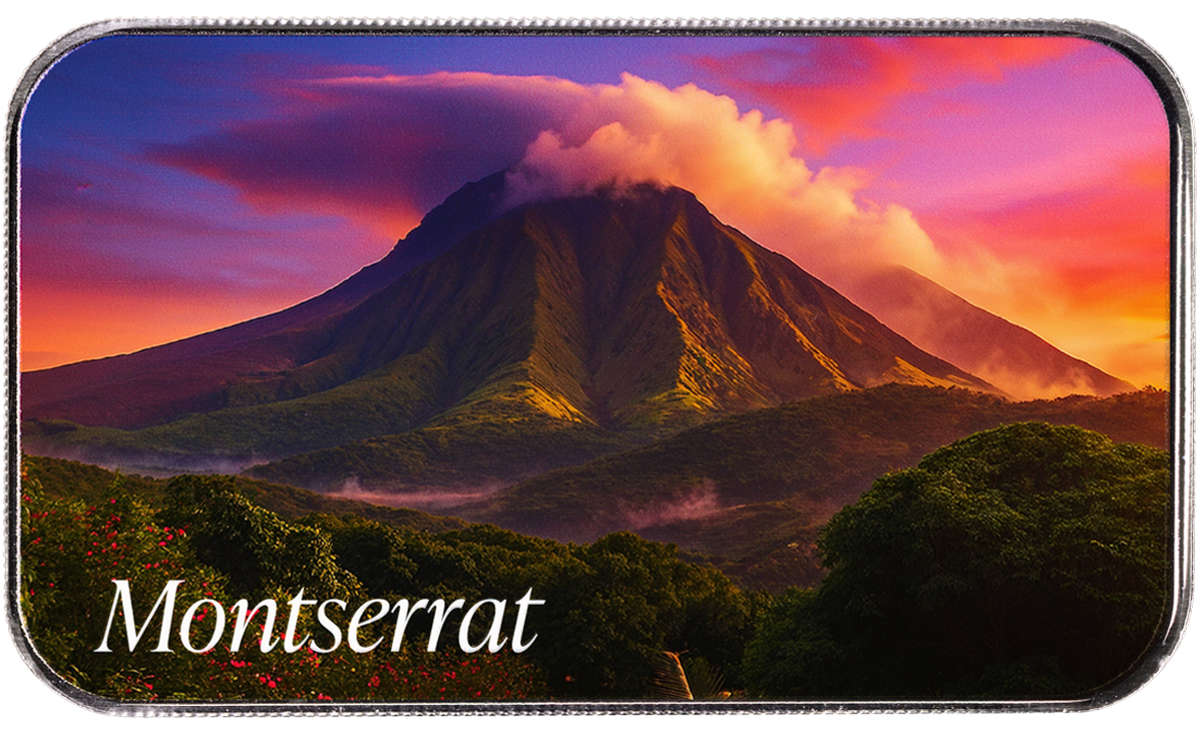
2025 VOLCANO
ST. LUCIA
Saint Lucia is a sovereign island country in the eastern Caribbean Sea on the boundary with the Atlantic Ocean. Part of the Lesser Antilles, it is located north/northeast of the island of Saint Vincent, northwest of Barbados and south of Martinique. It covers a land area of 617 km² and reported a population of 165,595 in the 2010 census. Its capital is Castries. Saint Lucia was named after Saint Lucy of Syracuse, and is the only country in the world named after a historical woman
NOTED GEOGRAPHY: The volcanic island of Saint Lucia is more mountainous than most Caribbean islands, with the highest point being Mount Gimie, at 950 metres above sea level. Two other mountains, the Pitons, form the island’s most famous landmark. They are located between Soufrière and Choiseul on the western side of the island. Forests cover about 77% of the land area.
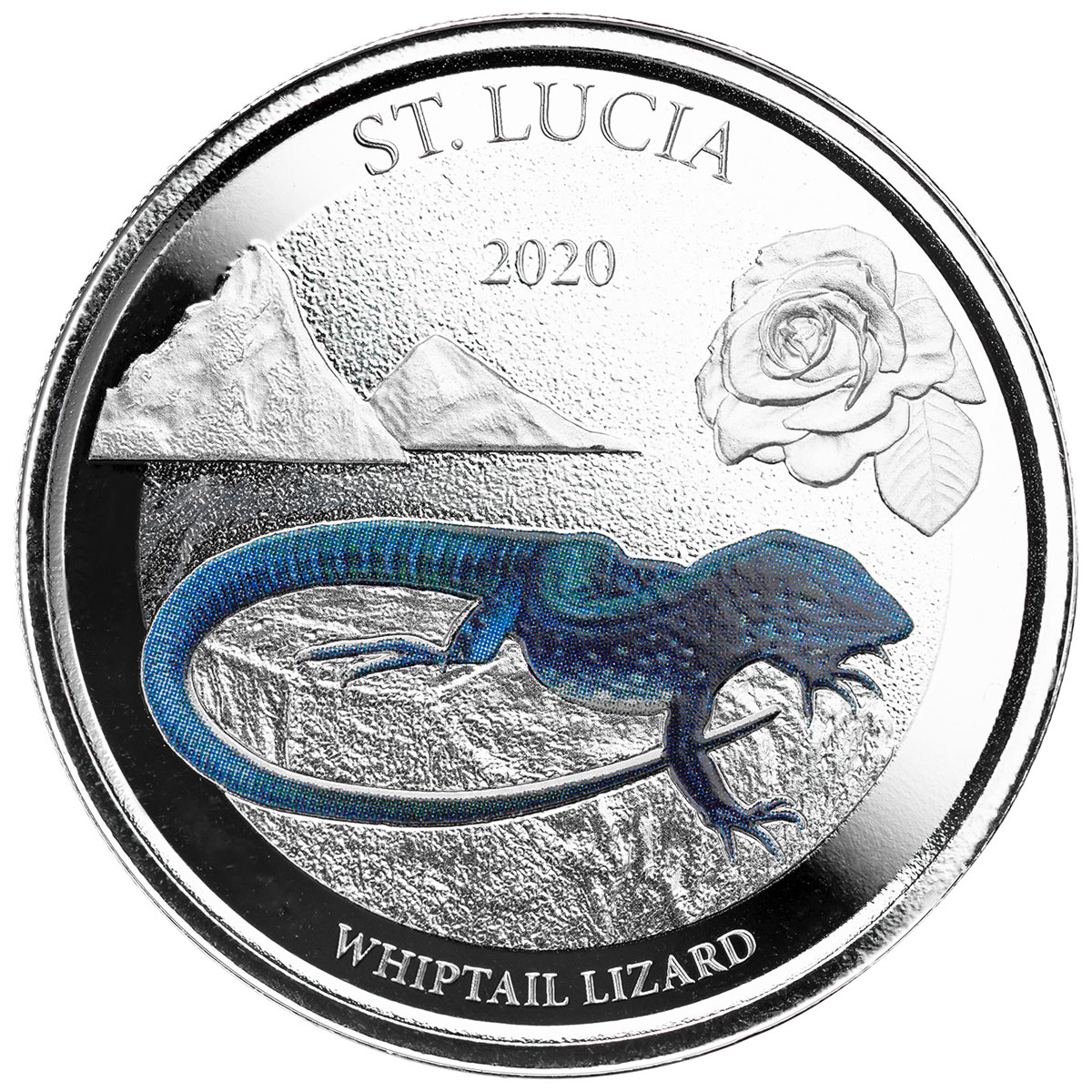
NOTED NATURE: Lizards, birds and sealife abound around Saint Lucia, The venomous Fer-de-lance snake, and the Boa Constrictor occupy the islands, and the stunning Saint Lucia Parrot is the national bird.
NOTED CULTURE: Saint Lucia boasts the highest ratio of Nobel laureates produced with respect to the total population of any sovereign country in the world. Two winners have come from Saint Lucia: Sir Arthur Lewis won the Nobel Prize in Economics in 1979, and the poet Derek Walcott received the Nobel Prize in Literature in 1992. Cricket and sailing are popular, and the nation has a fine reputation for its cuisine.
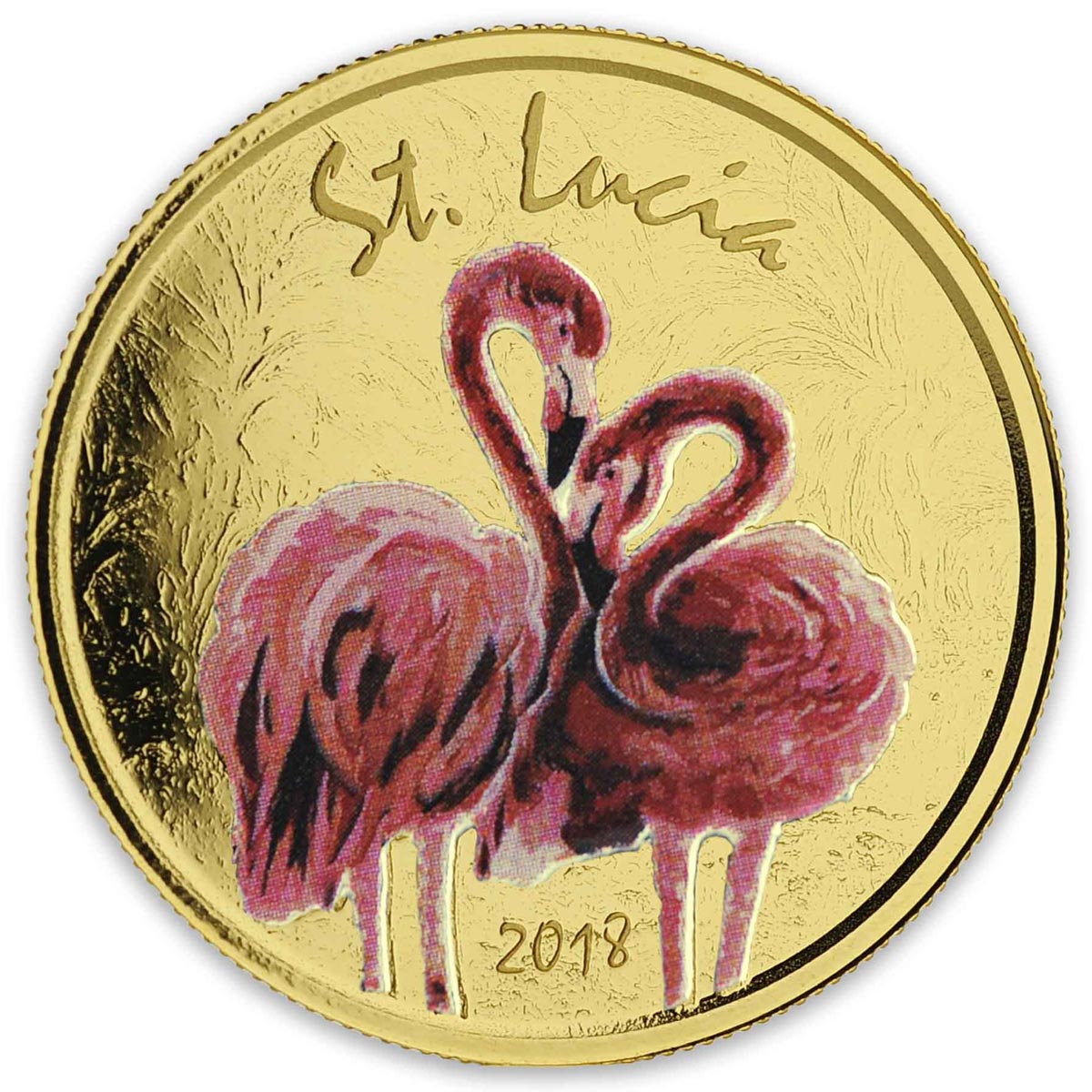
2018 LAND OF BIRDS I
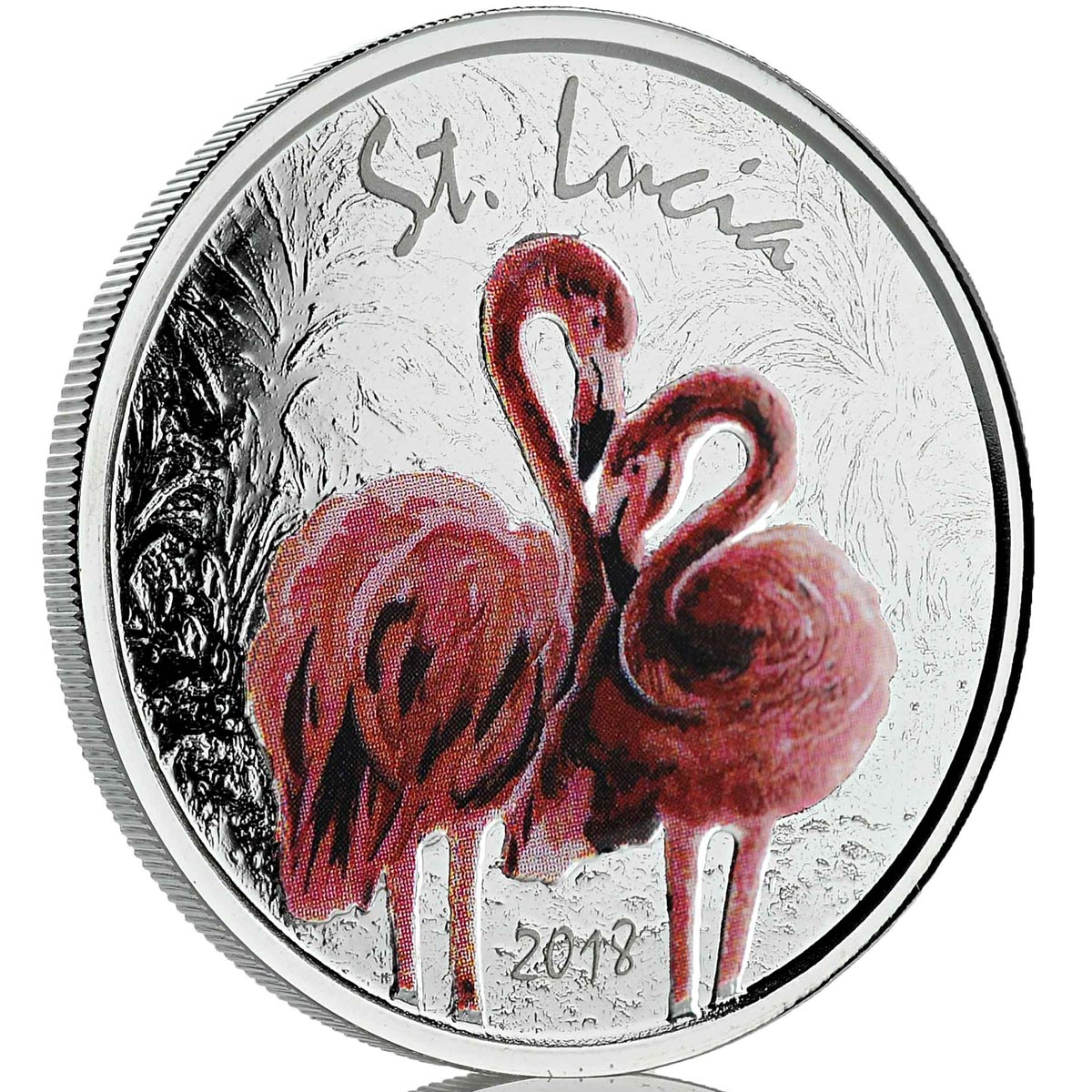
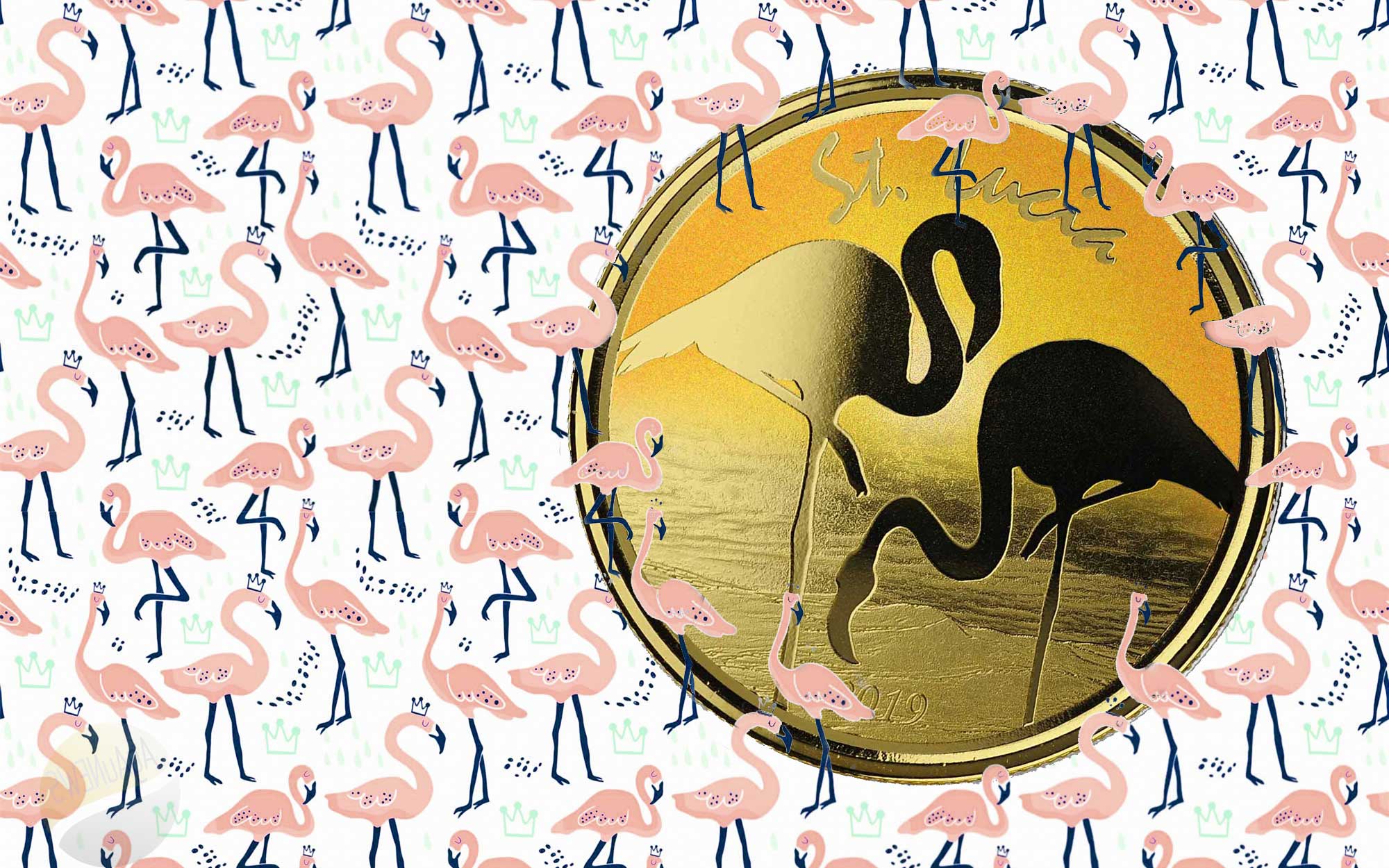
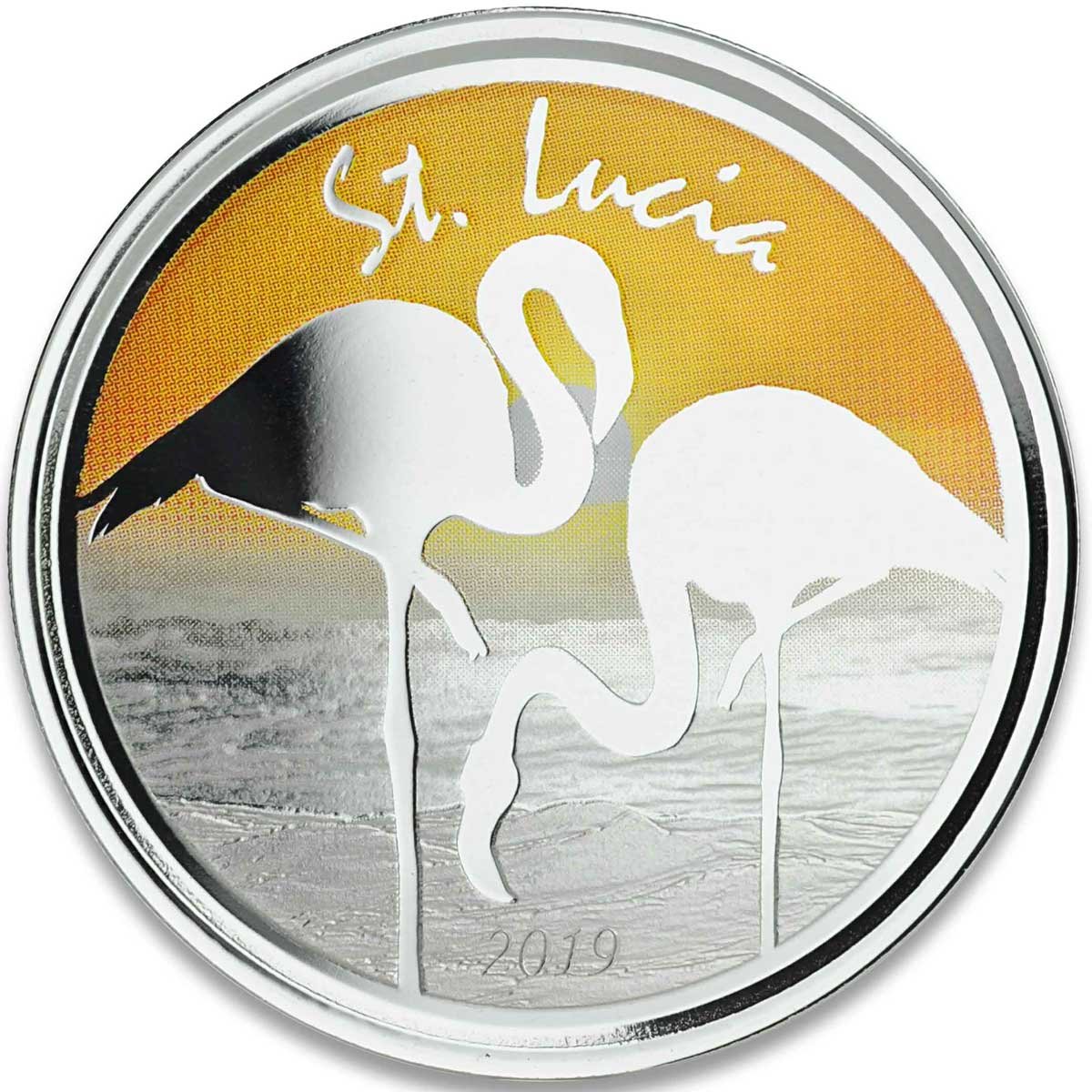
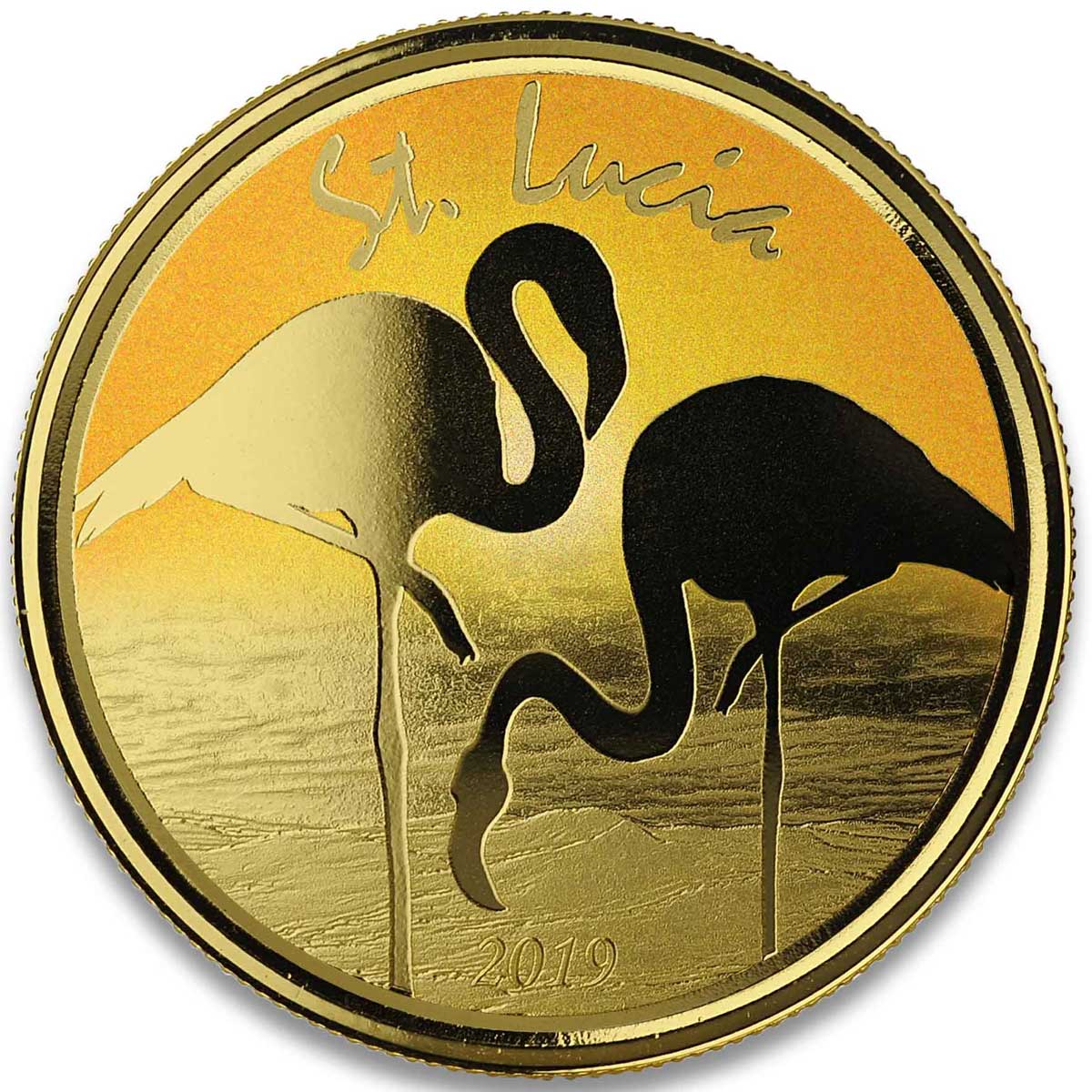
2019 LAND OF BIRDS II
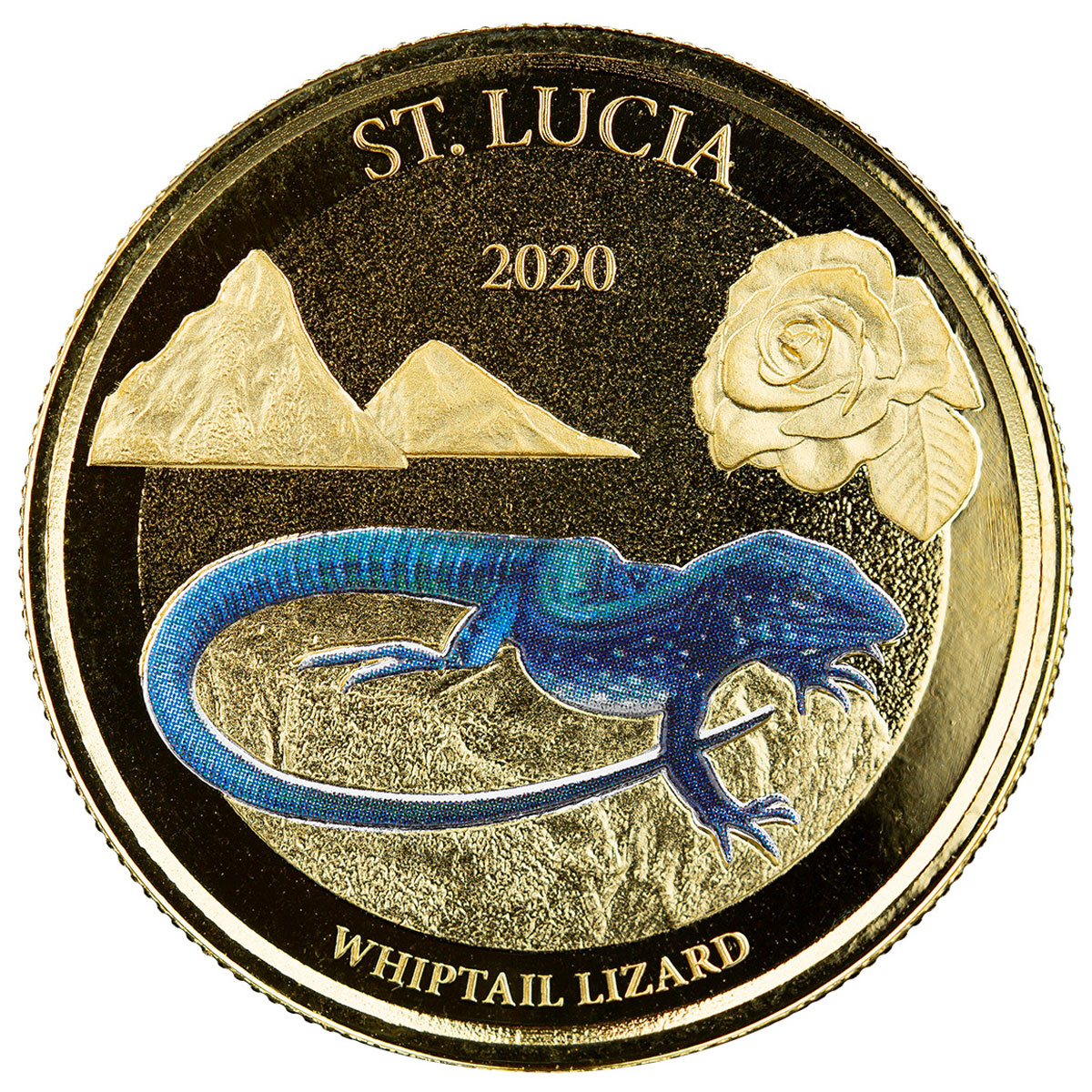
2020 WHIPTAIL LIZARD
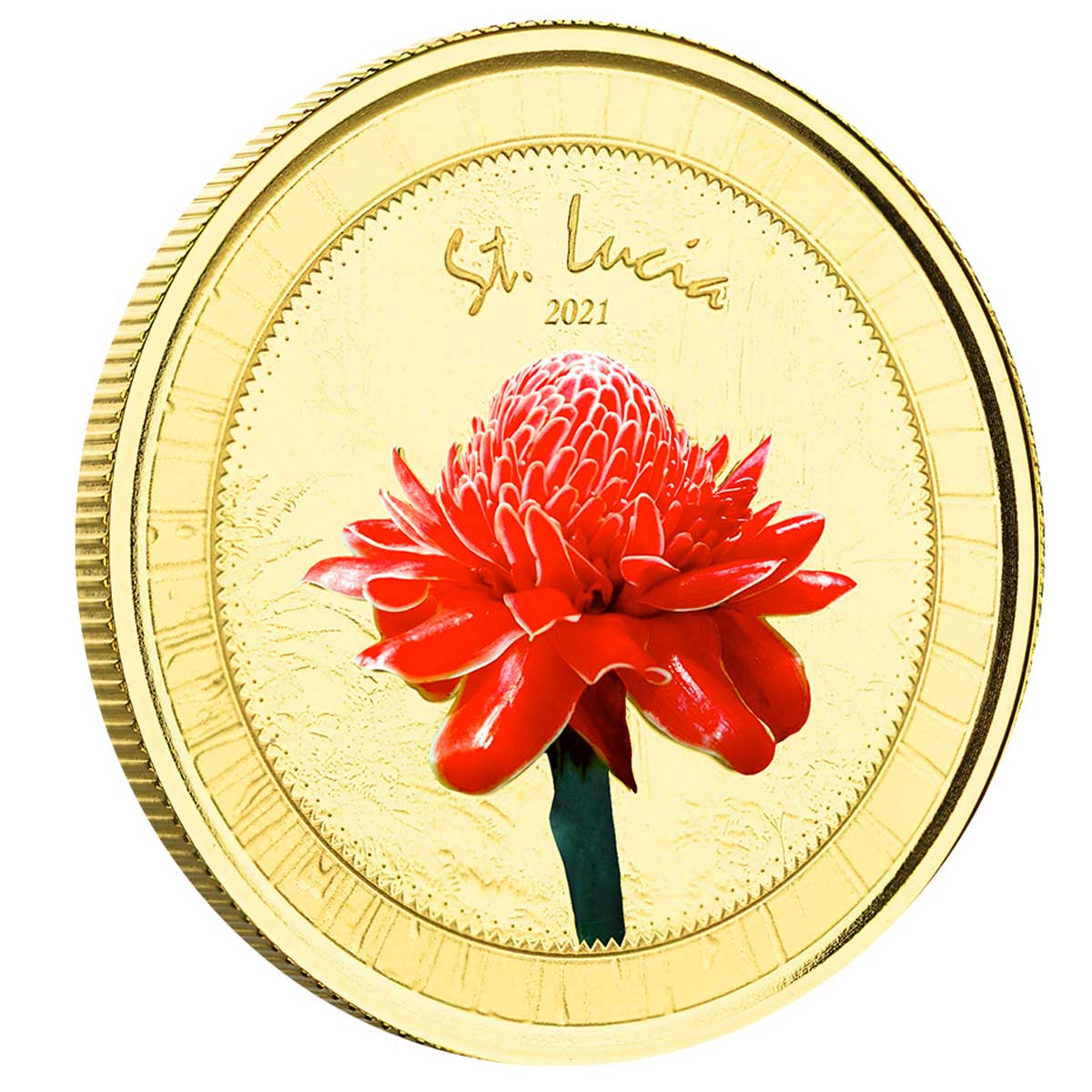
2021 TORCH GINGER

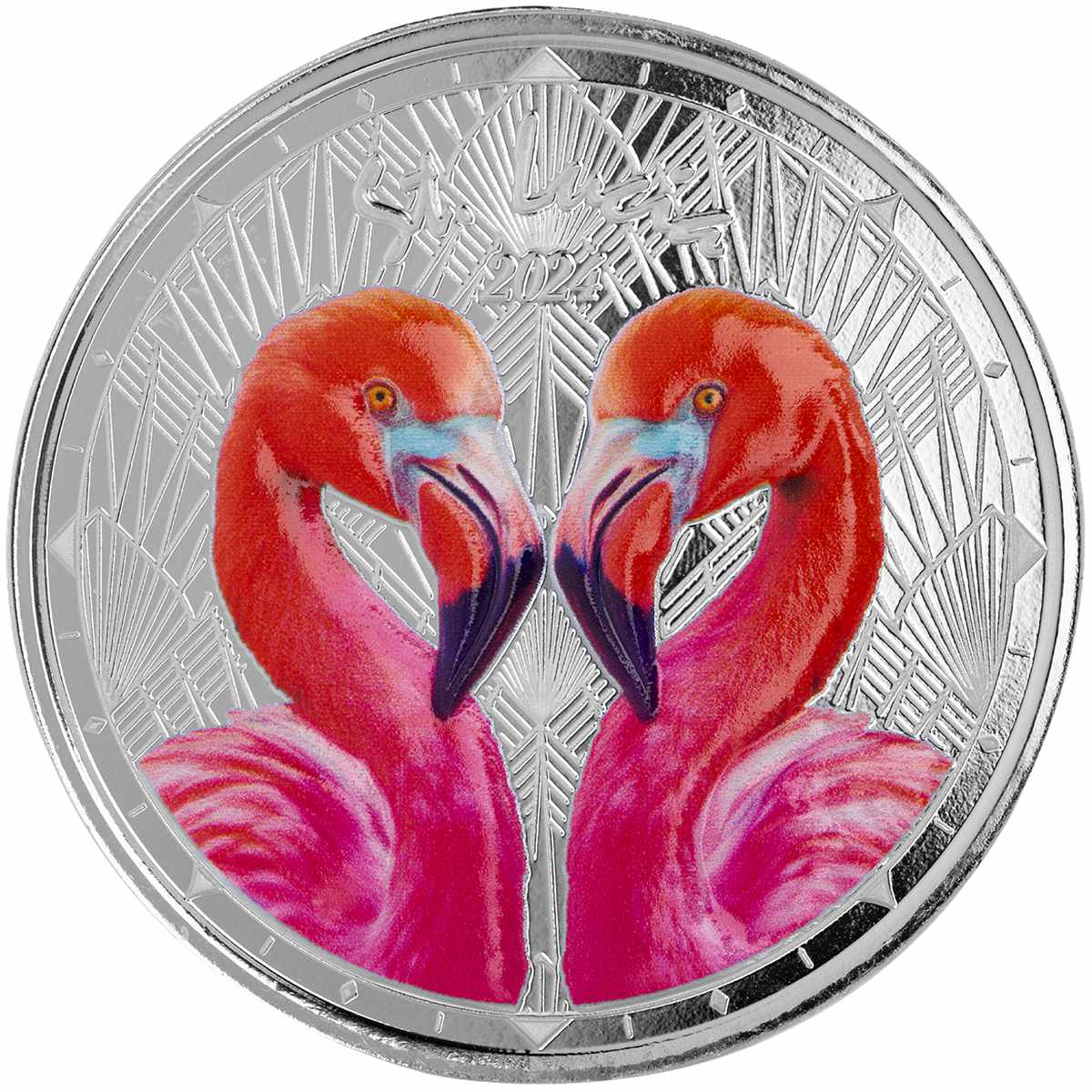
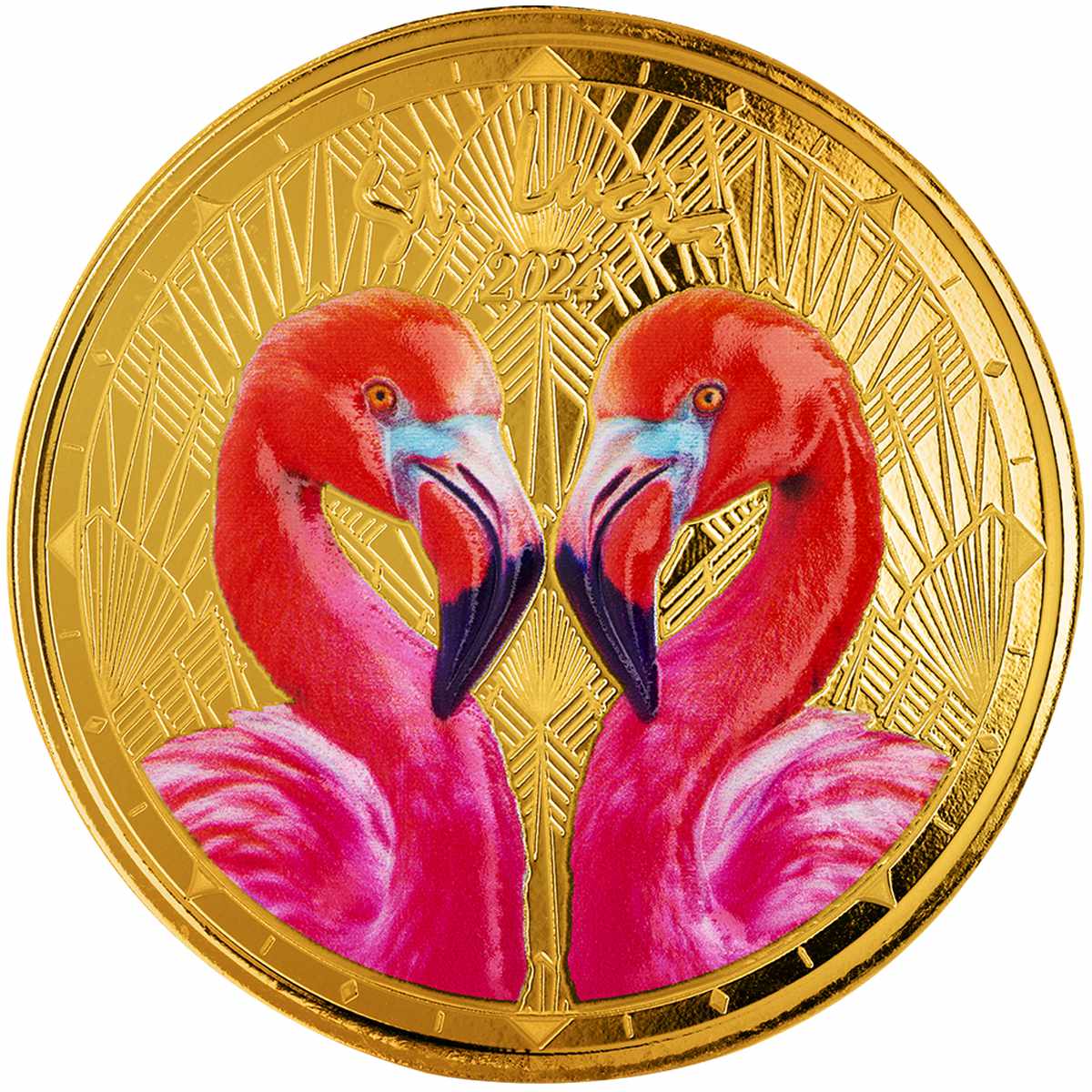
2022 THE COUPLE


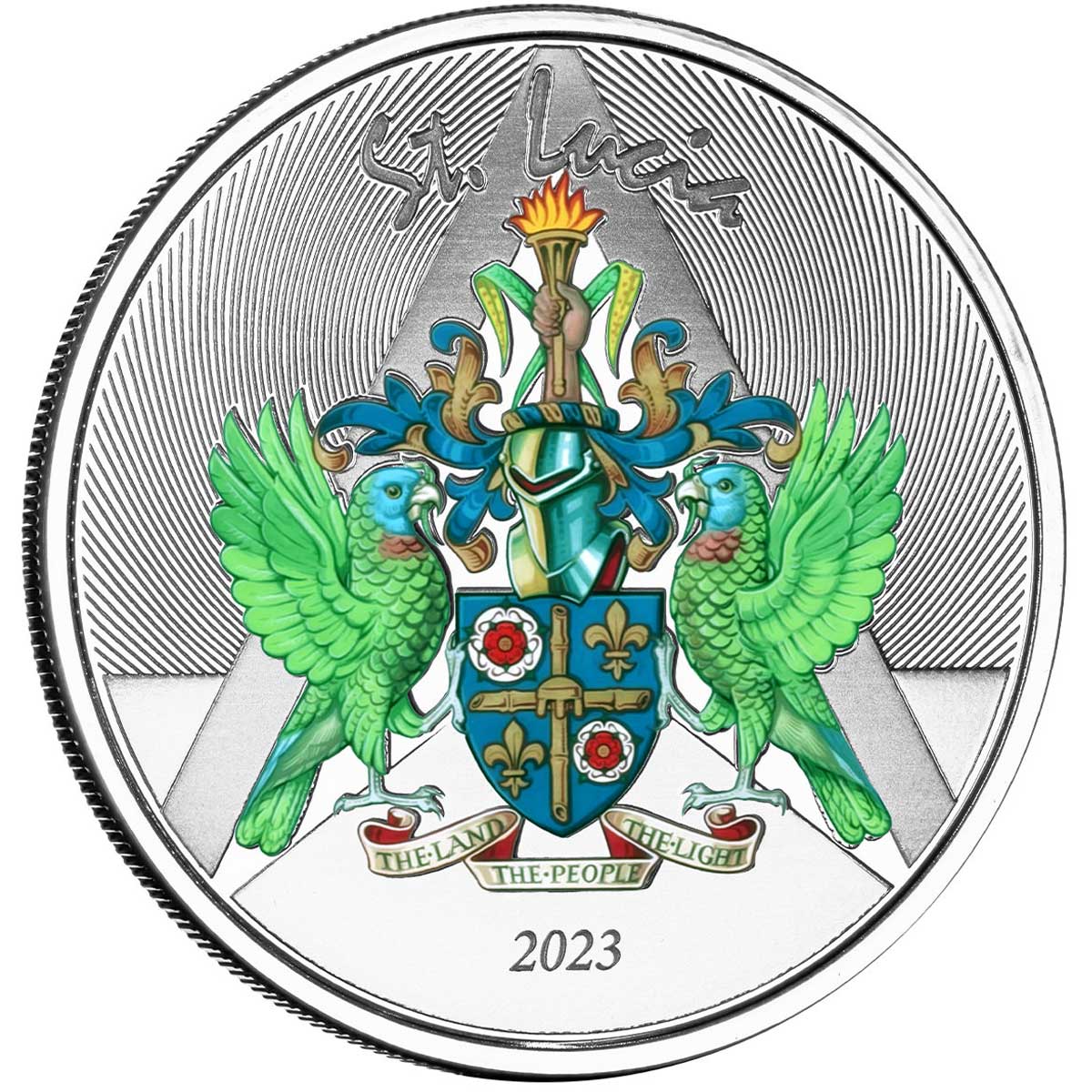
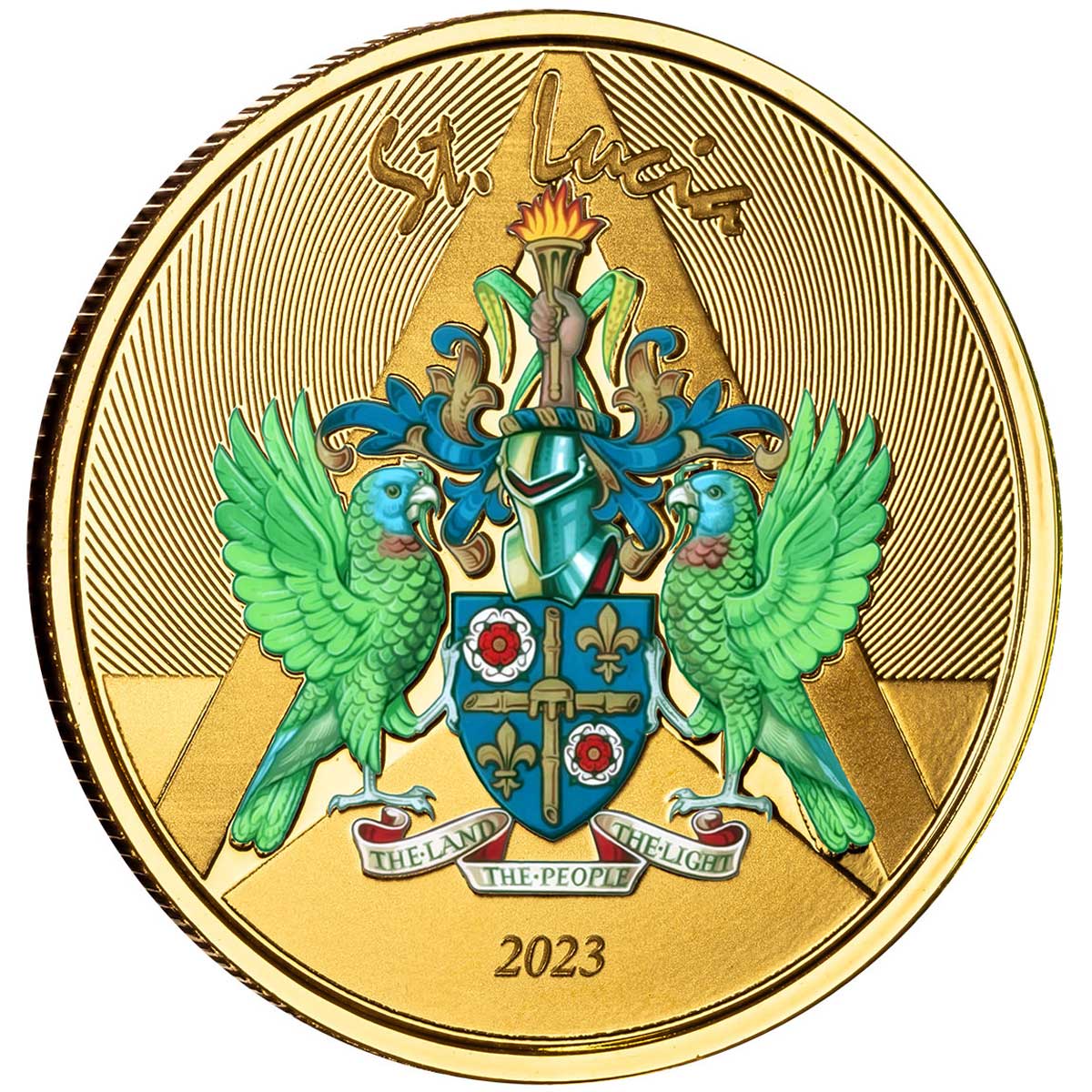
2023 COAT OF ARMS
2024 LAND OF BIRDS III
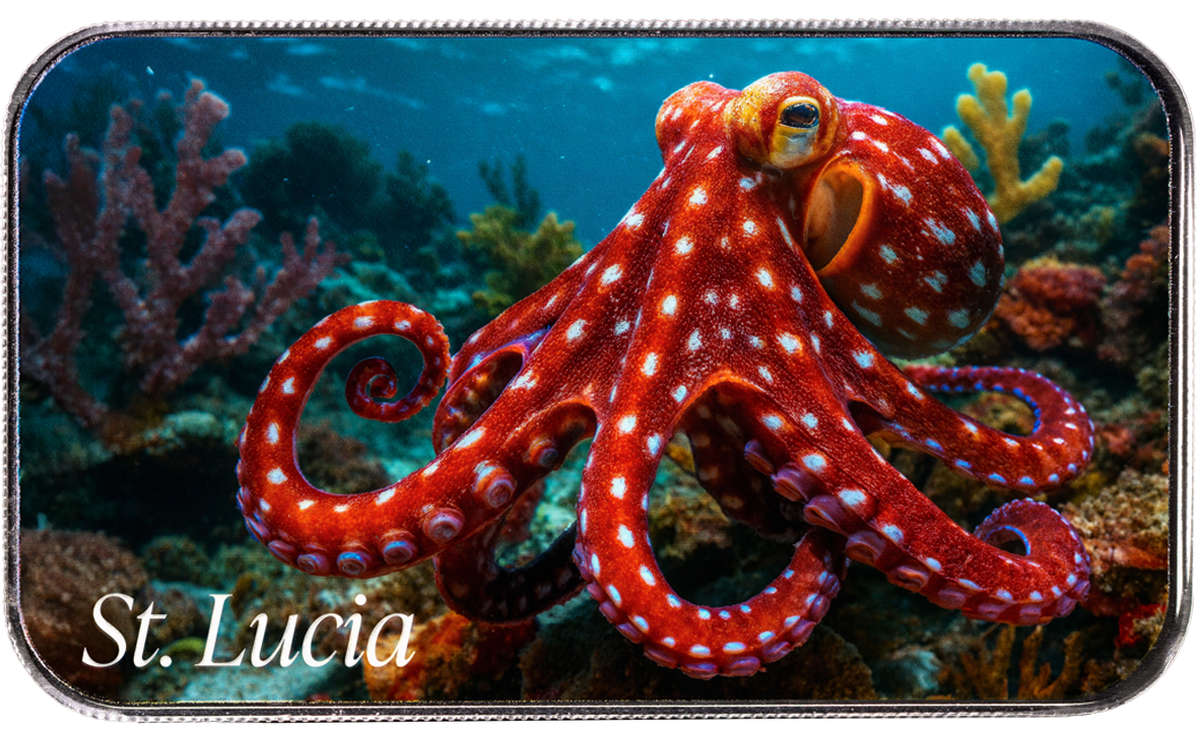
2025 OCTOPUS
ST. KITTS & NEVIS
Saint Kitts and Nevis, officially the Federation of Saint Christopher and Nevis, is an island country in the Leeward Islands chain of the Lesser Antilles, it is the smallest sovereign state in the Western Hemisphere, in both area and population, as well as the world’s smallest sovereign federation. The country is a Commonwealth realm, with Charles III as King and head of state. It is the only sovereign federation in the Caribbean. The capital city is Basseterre, located on the larger island of Saint Kitts, while the smaller island of Nevis lies approximately 3 km to the southeast, across a shallow channel called The Narrows. The population is around 53,000.
NOTED GEOGRAPHY: Both islands are of volcanic origin, with large central peaks covered in tropical rainforest, with the majority of the population living along the flatter coastal areas. Saint Kitts and Nevis contains two terrestrial ecoregions: Leeward Islands moist forests and Leeward Islands dry forests.
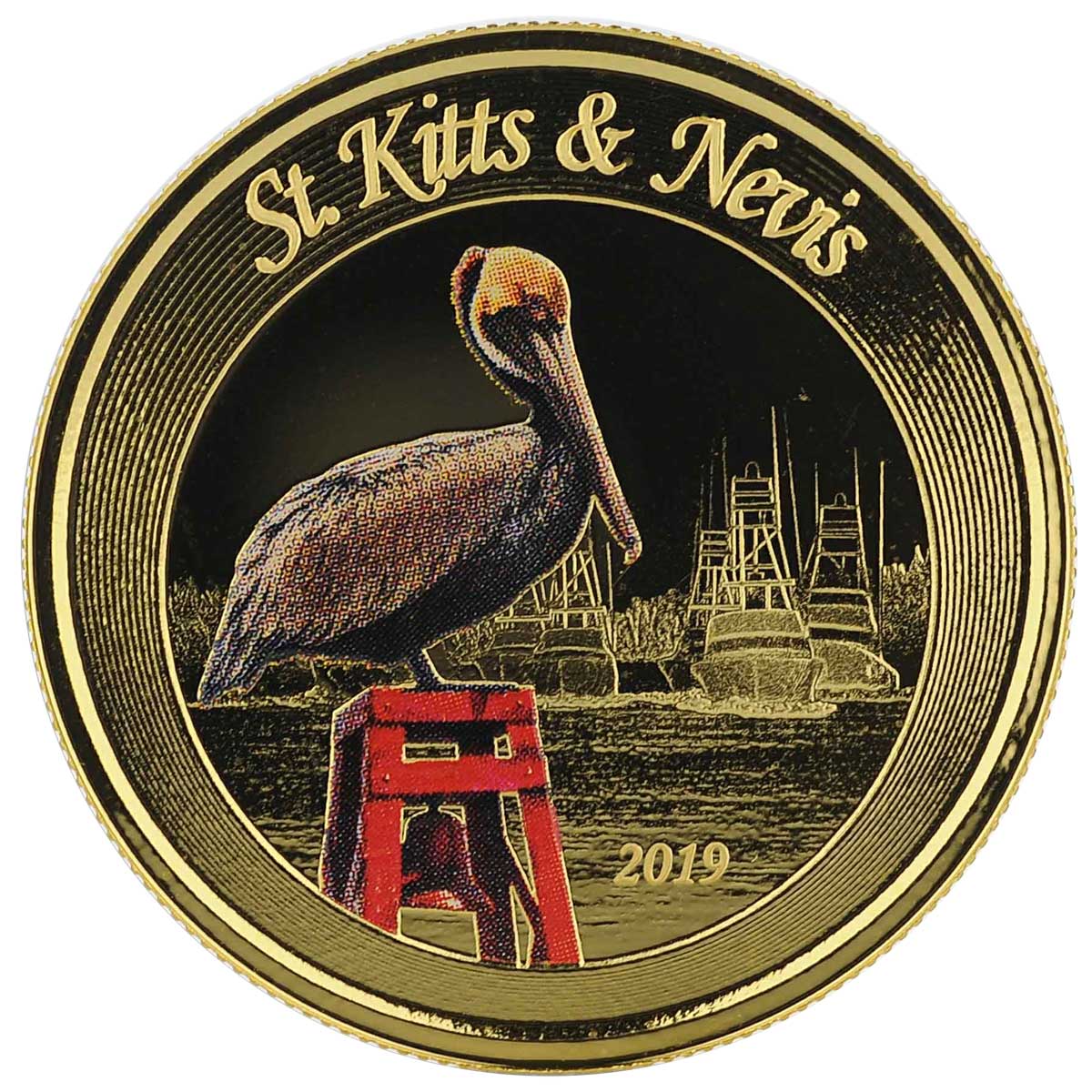
NOTED NATURE: The national bird, one of 176 species reported on the islands, is the Brown Pelican. There’s a rich ecosystem both on land, and under the sea, with many beautiful coral reefs surrounding them.
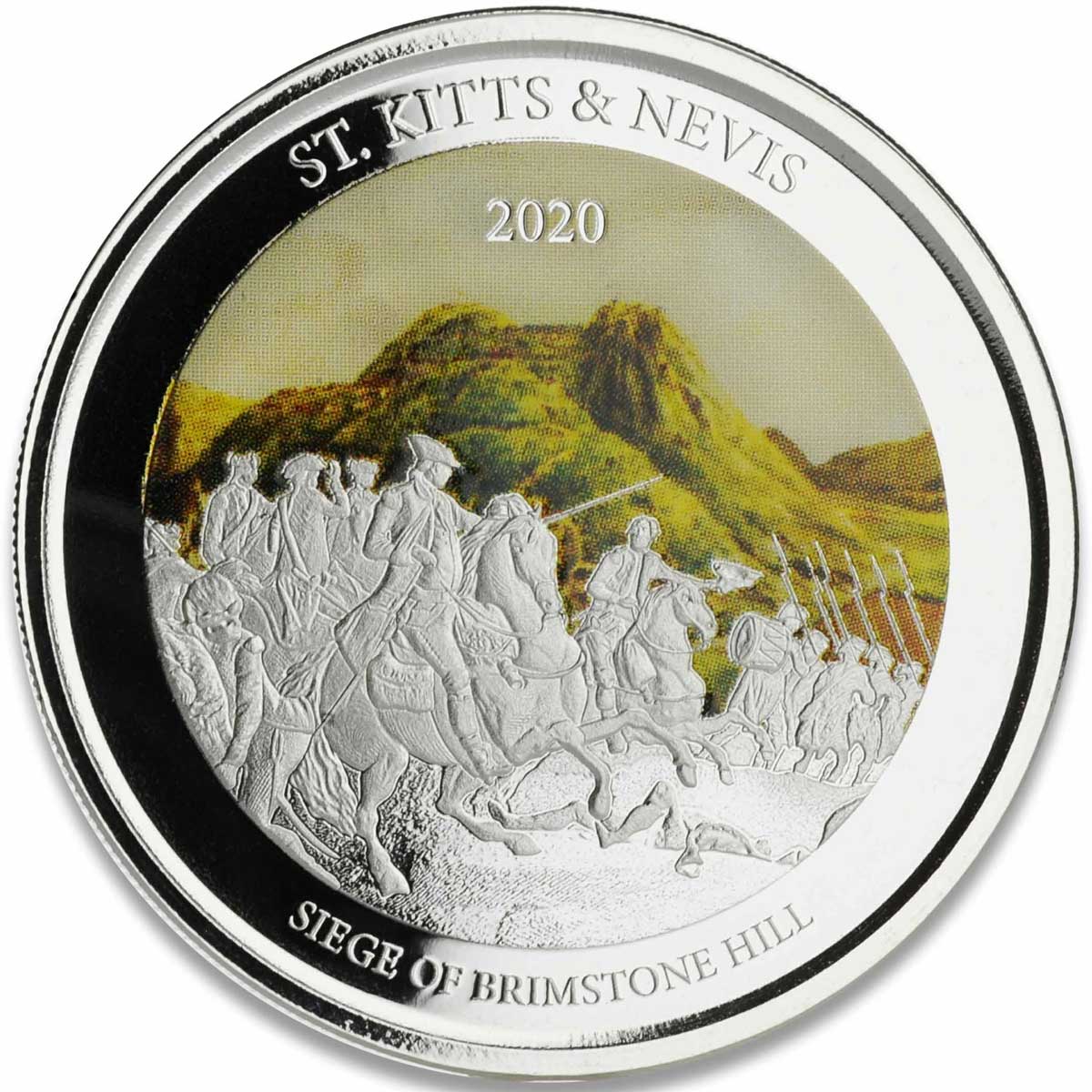
NOTED CULTURE: Tourism and agriculture mark the island’s main sources of revenue, as with many others in the region. Popular sports are football and cricket (sensing a trend yet?), and wreck diving is common. A popular attraction is Brimstone Hill, the largest fortress ever built in the Caribbean. In 1782, it was the site of a battle between British defenders and French attackers. Despite being outnumbered almost 3 to 1, they held on for a month.
2018 PELICAN

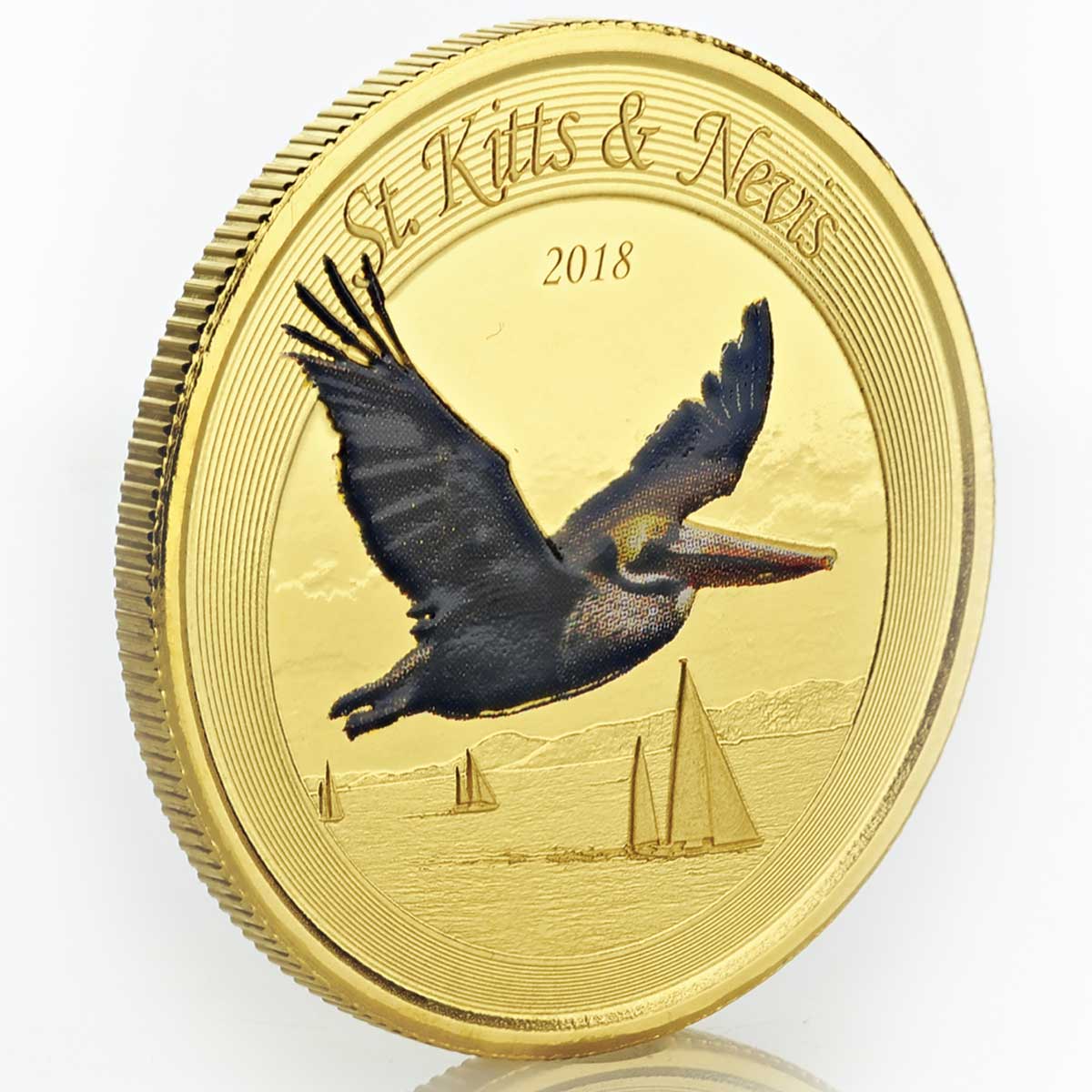
2019 PELICAN II

2020 BRIMSTONE HILL

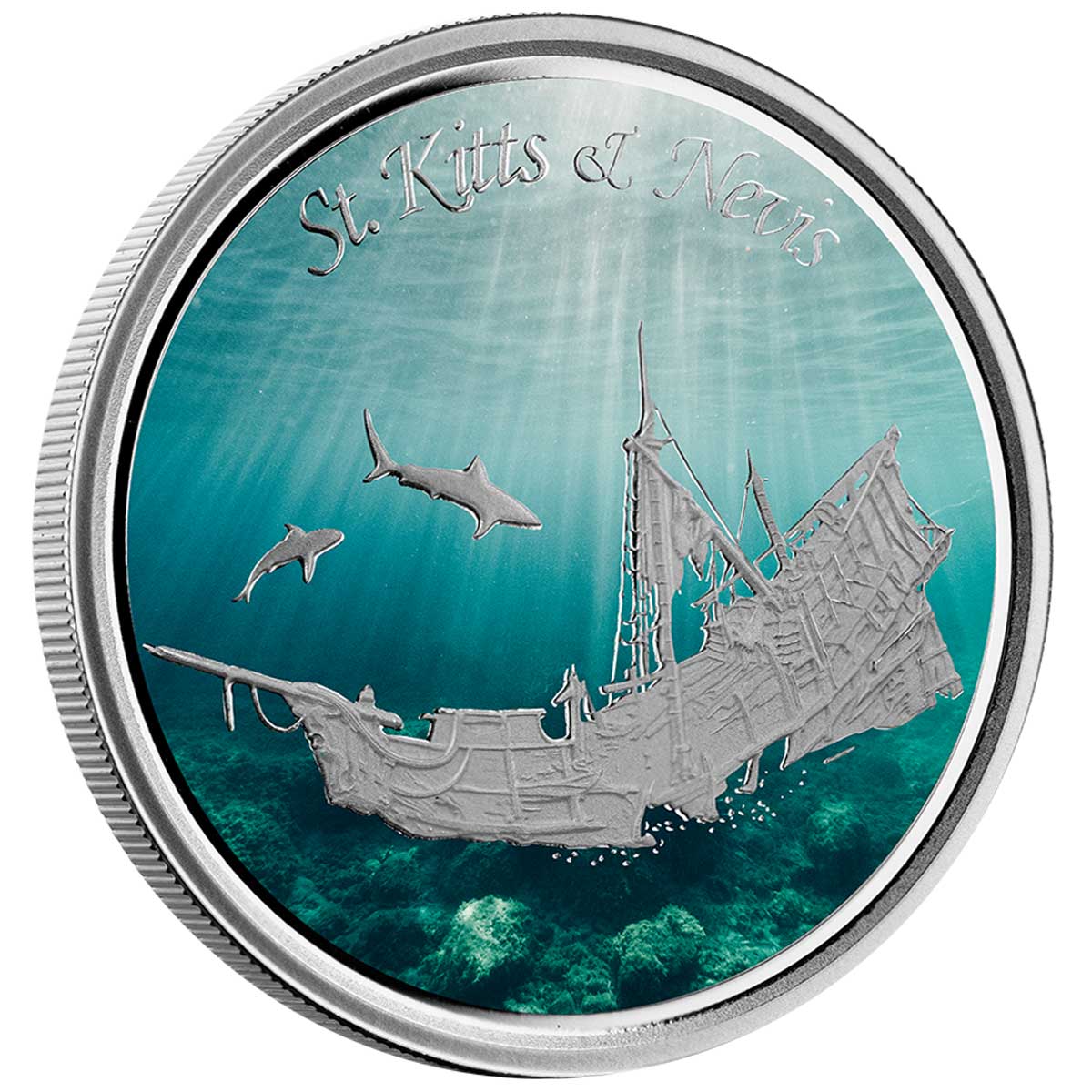
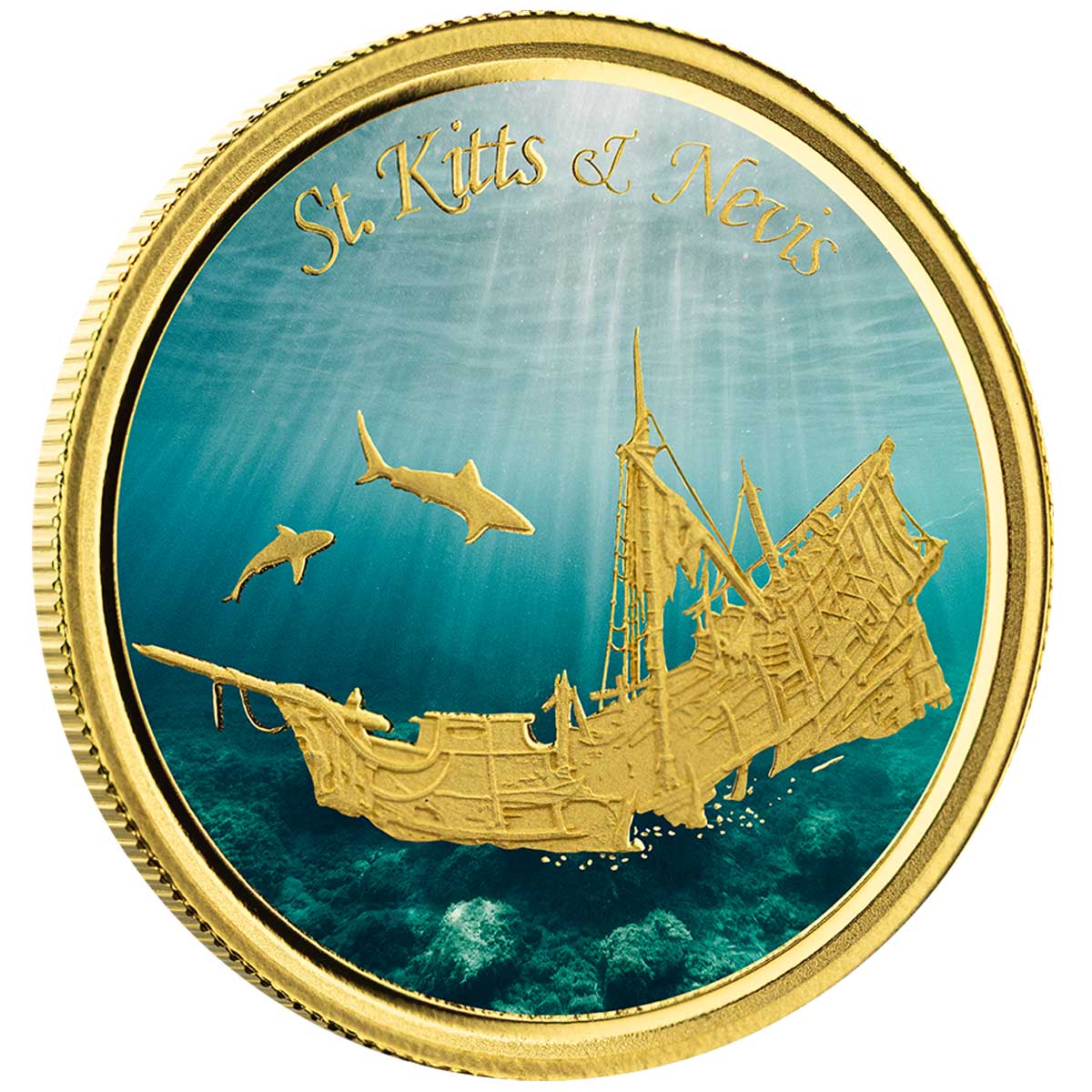
2021 SHIP WRECK
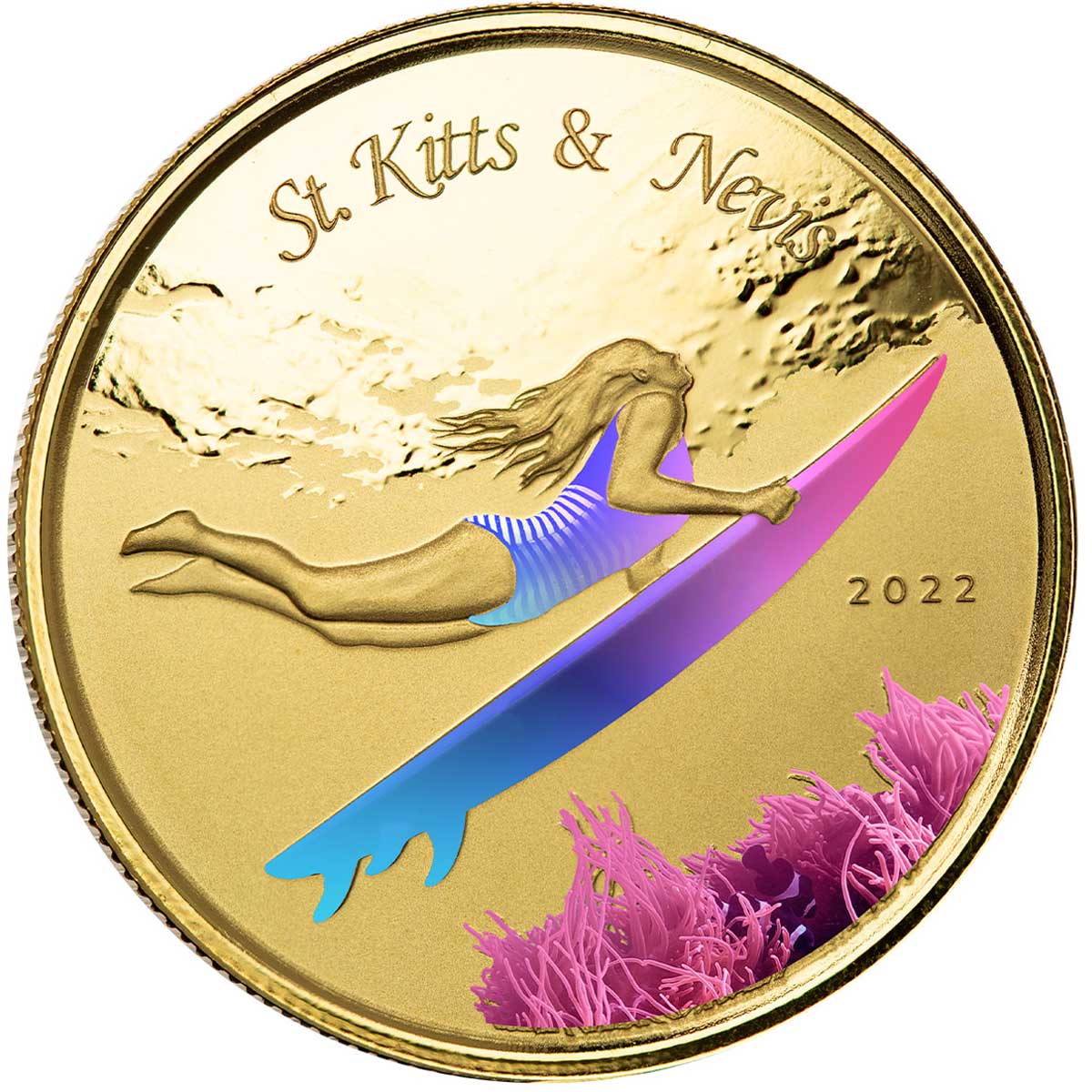
2022 UNDERWATER SURFER

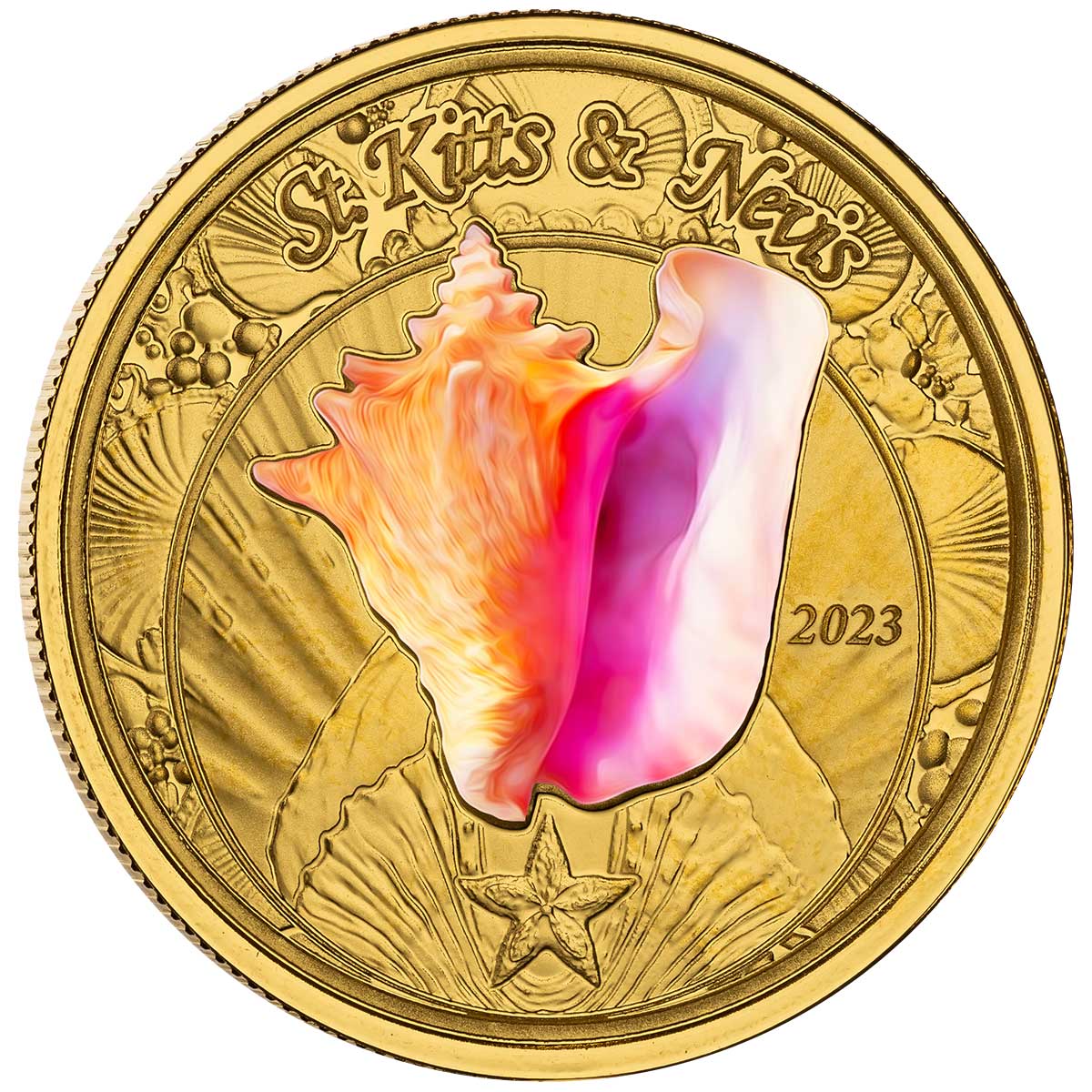
2023 CONCH SHELL

2024 COAT OF ARMS


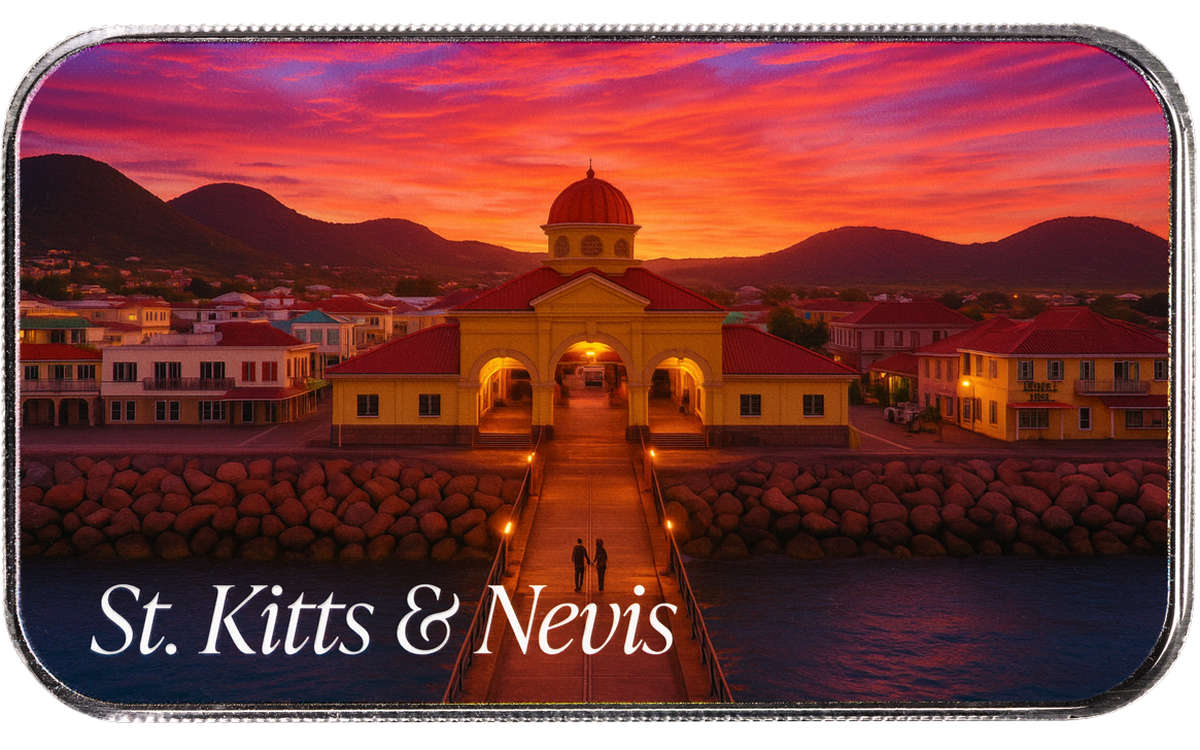
2025 PORT ZANTE
ST. VINCENT & THE GRENADINES
Saint Vincent and the Grenadines is a country in the Lesser Antilles island arc, in the southern portion of the Windward Islands. Its 389 km² territory consists of the main island of Saint Vincent and the northern two-thirds of the Grenadines, which are a chain of smaller islands stretching south from Saint Vincent Island to Grenada. Saint Vincent and the Grenadines is a densely populated country for its size (over 300 inhabitants/km2) with around 110,000 inhabitants. Kingstown is the capital and main port. Saint Vincent has a French and British colonial history,
NOTED GEOGRAPHY: Most of Saint Vincent and the Grenadines lies within the Hurricane Alley. The island of Saint Vincent is volcanic and includes little level ground. The windward side of the island is very rocky and steep, while the leeward side has more sandy beaches and bays. Saint Vincent’s highest peak is La Soufrière volcano at 1,234 m. In April 2021, the La Soufrière volcano erupted several times, with “explosive events” continuing.
NOTED NATURE: Another island with a vibrant ecosystem, including the beautiful St. Vincent parrot, the island’s national bird. The seas are home to countless species, including large whales.
NOTED CULTURE: Again, tourism and agriculture are the main sources of income, with bananas the main crop. Tourism was boosted when the Pirates of the Caribbean films were shot there, making more people aware of them. It remains underdeveloped, however. Music is especially popular here.
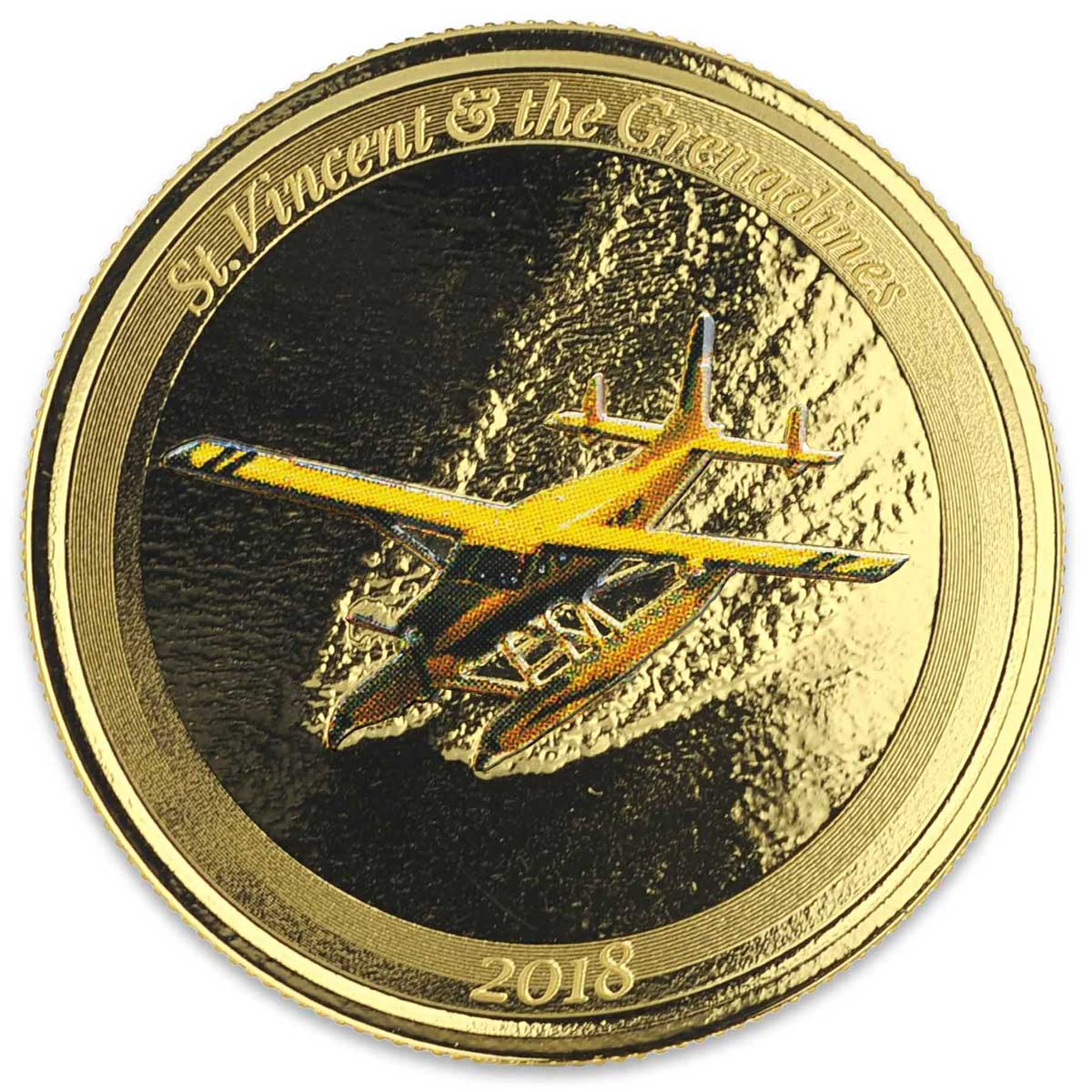
2018 SEAPLANE
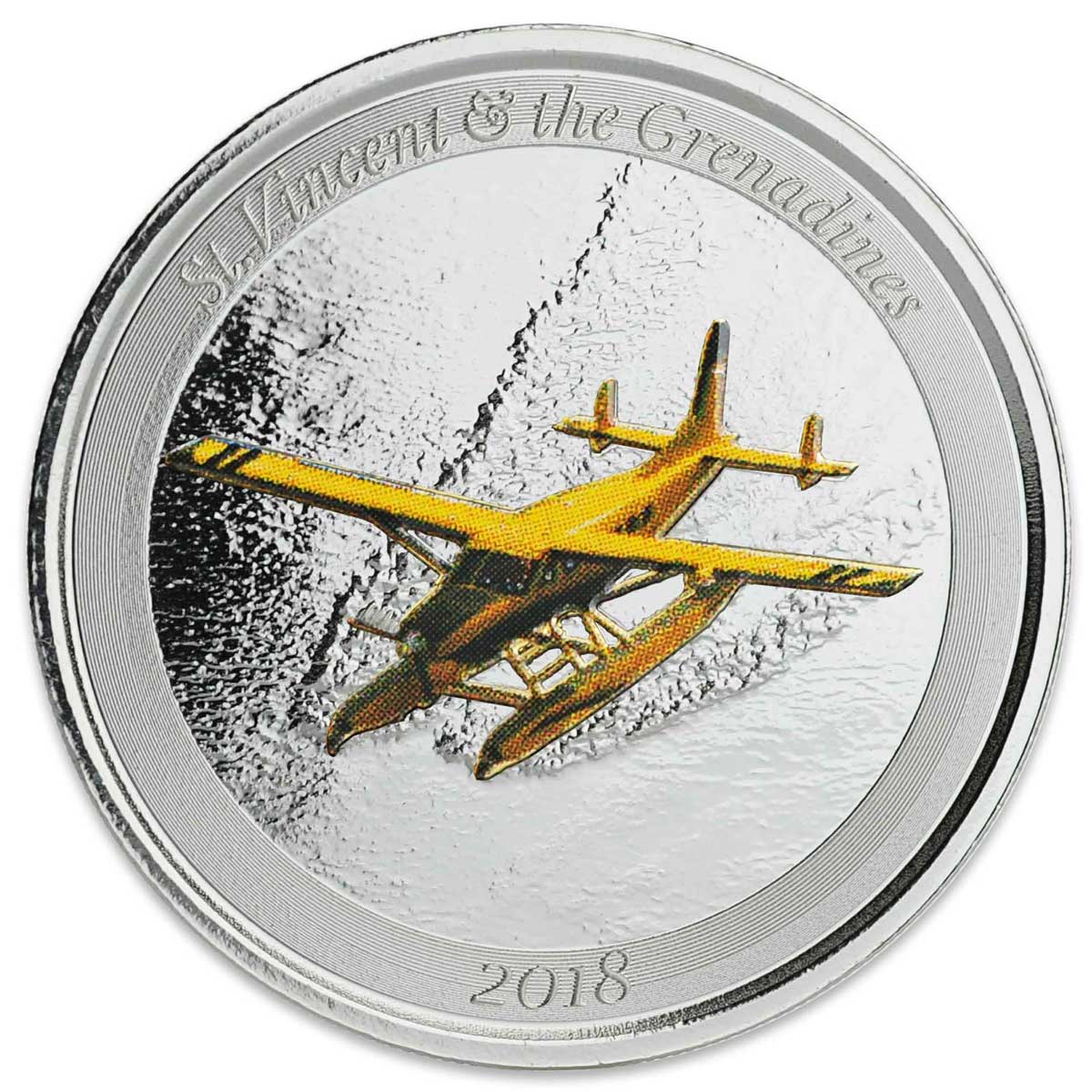
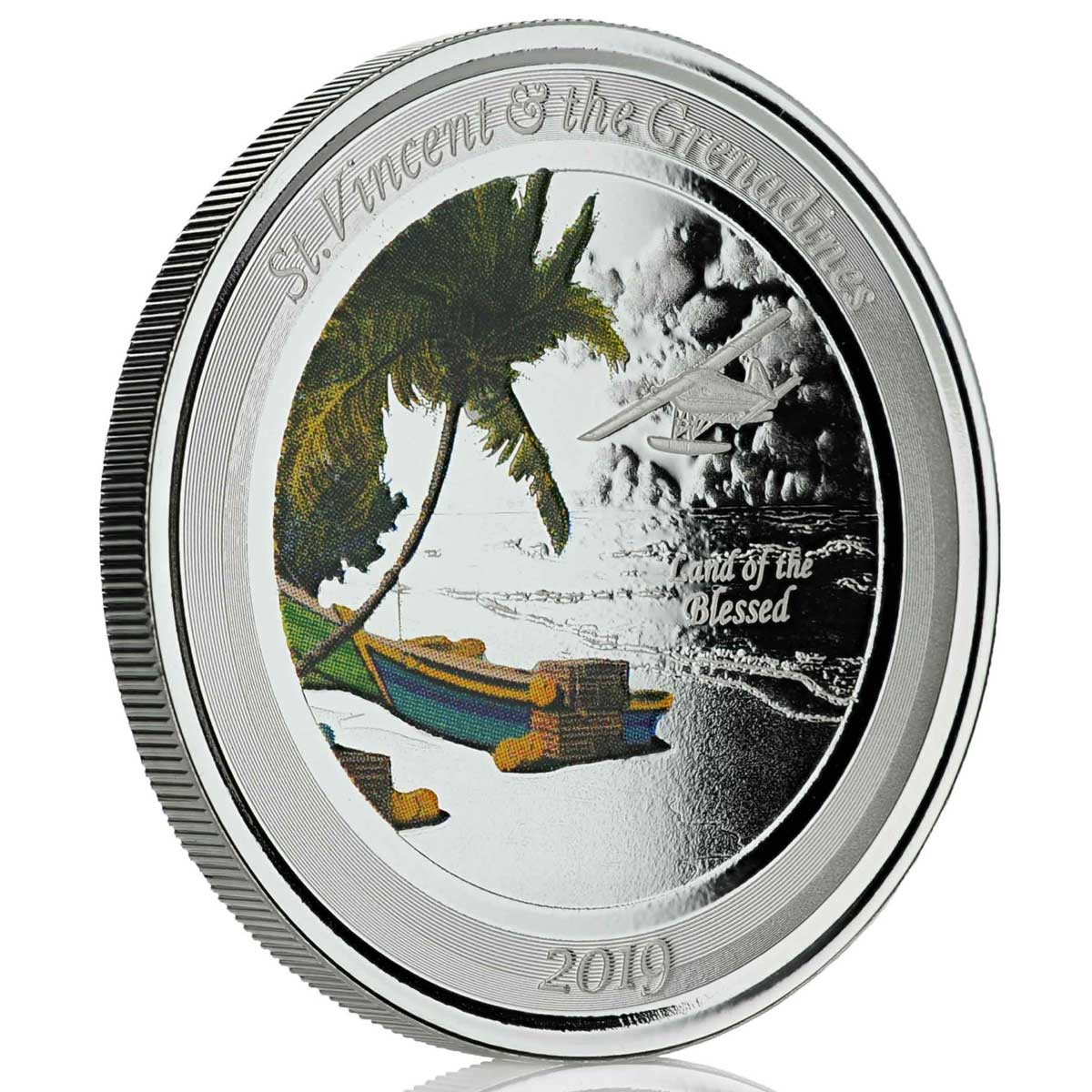
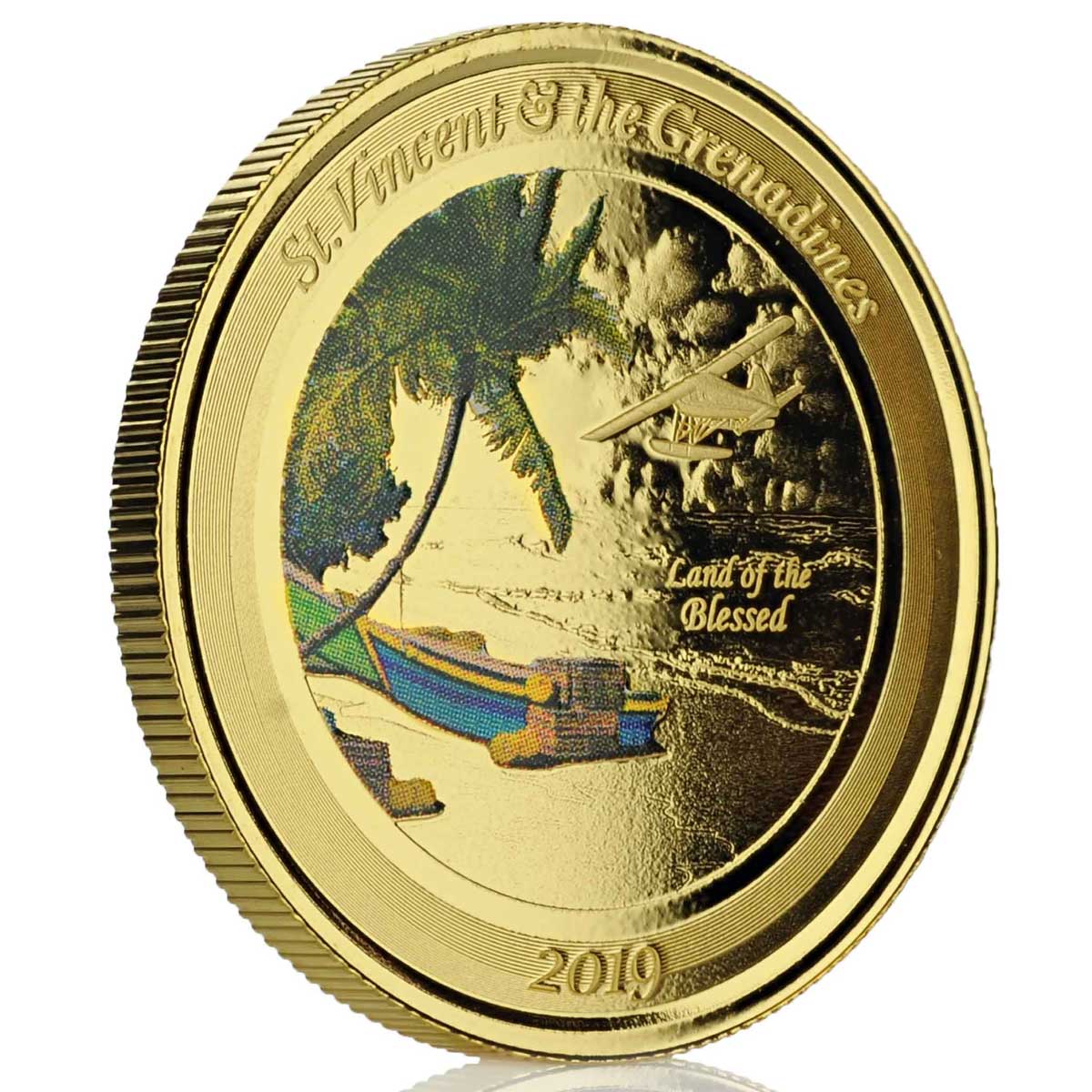
2019 SEAPLANE II
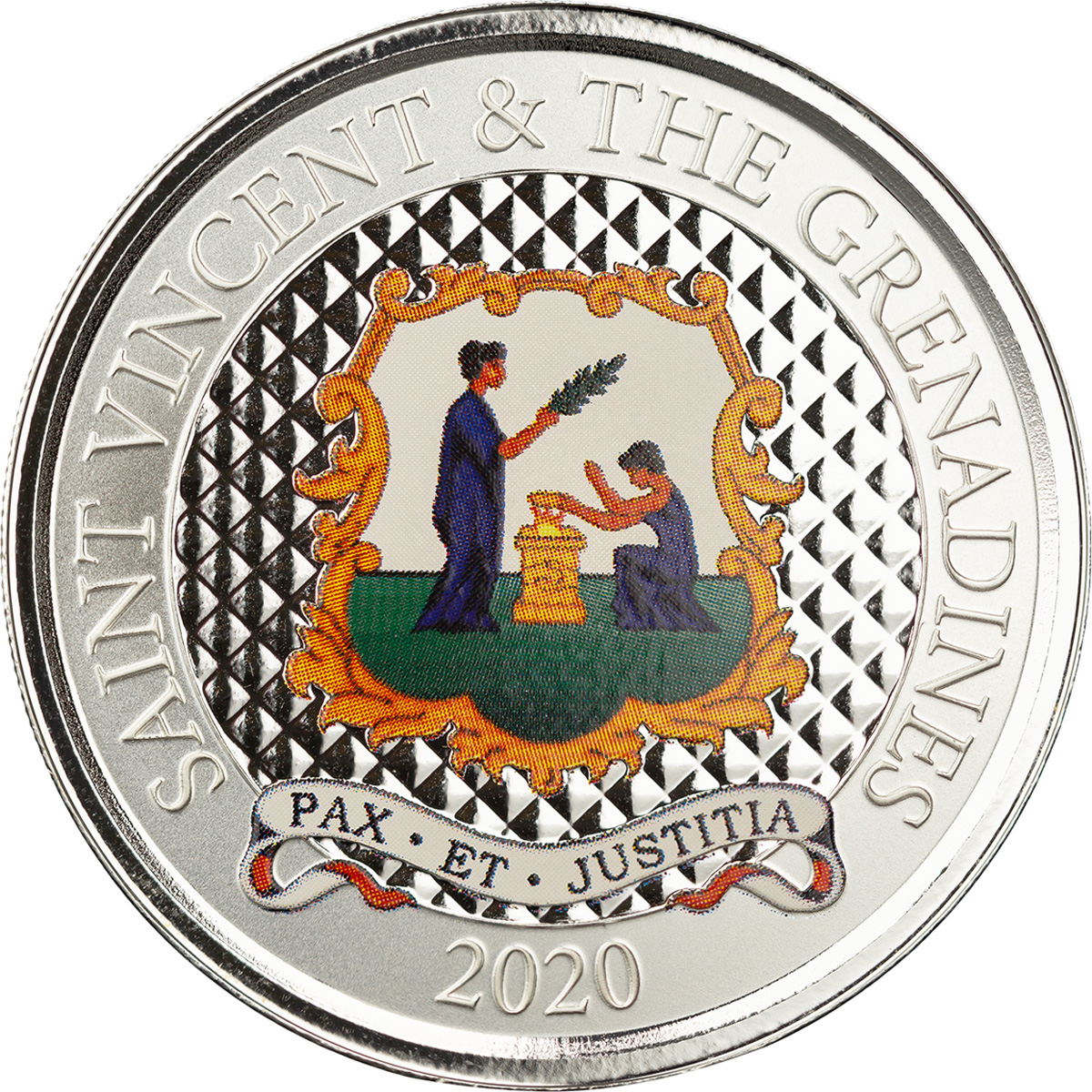
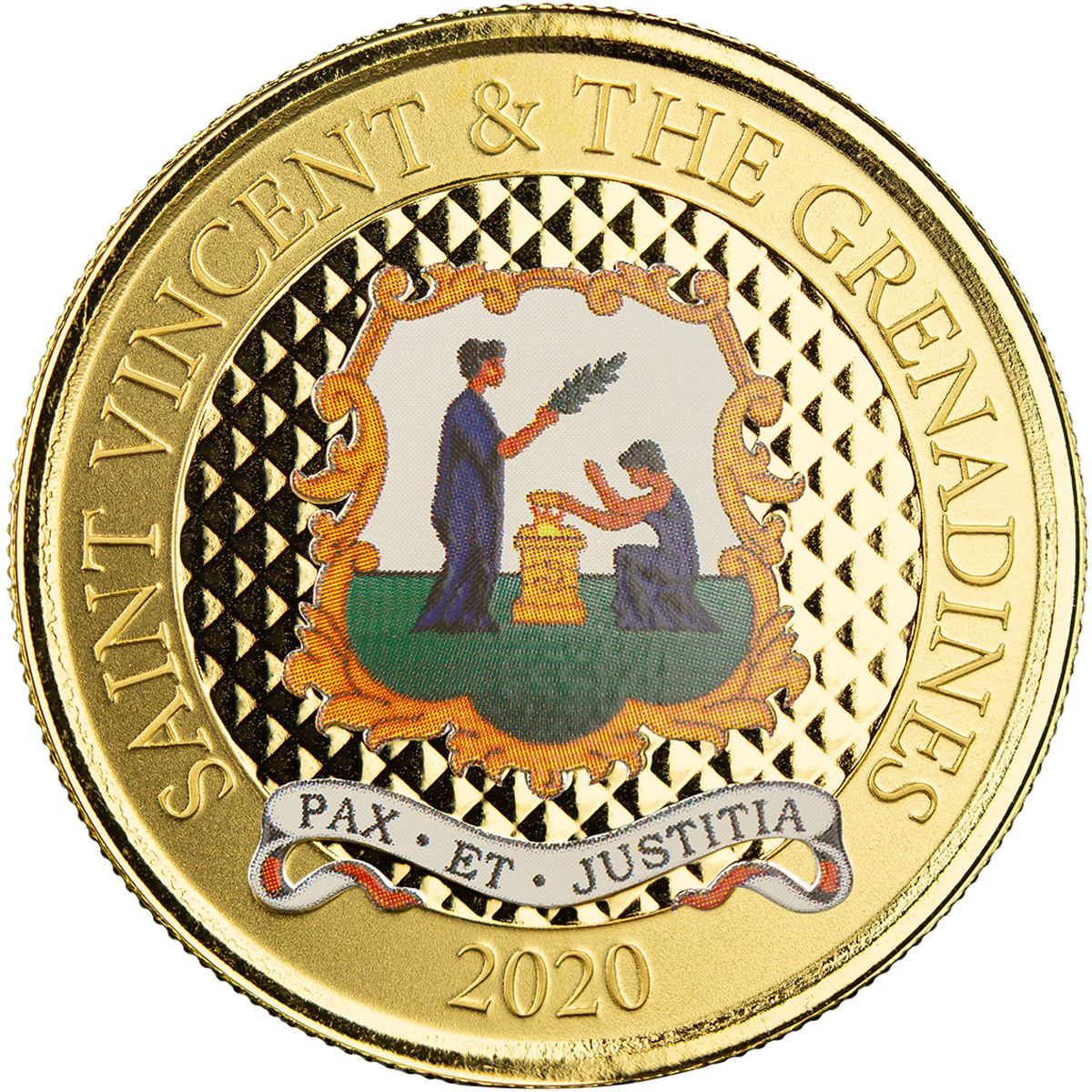
2020 COAT OF ARMS
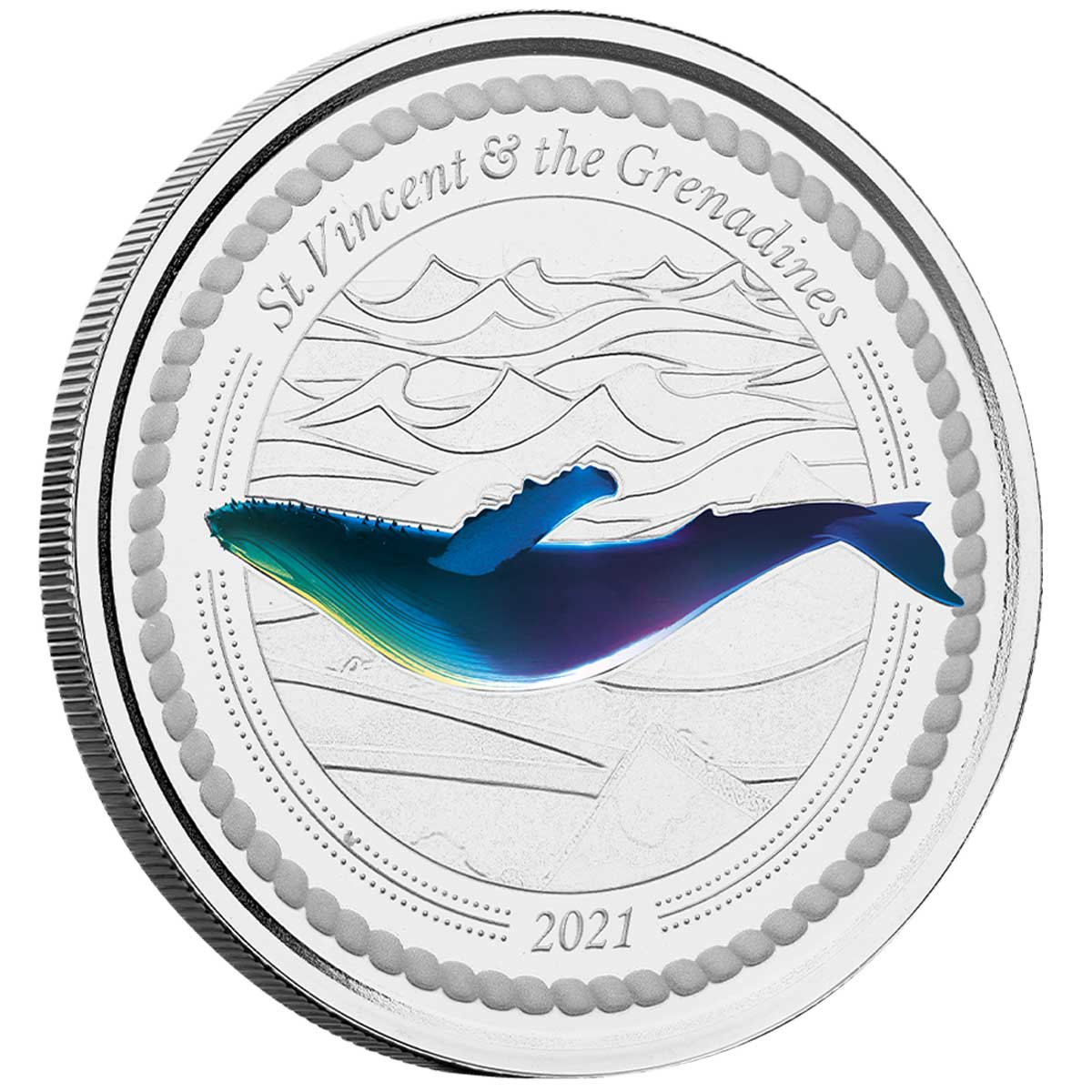
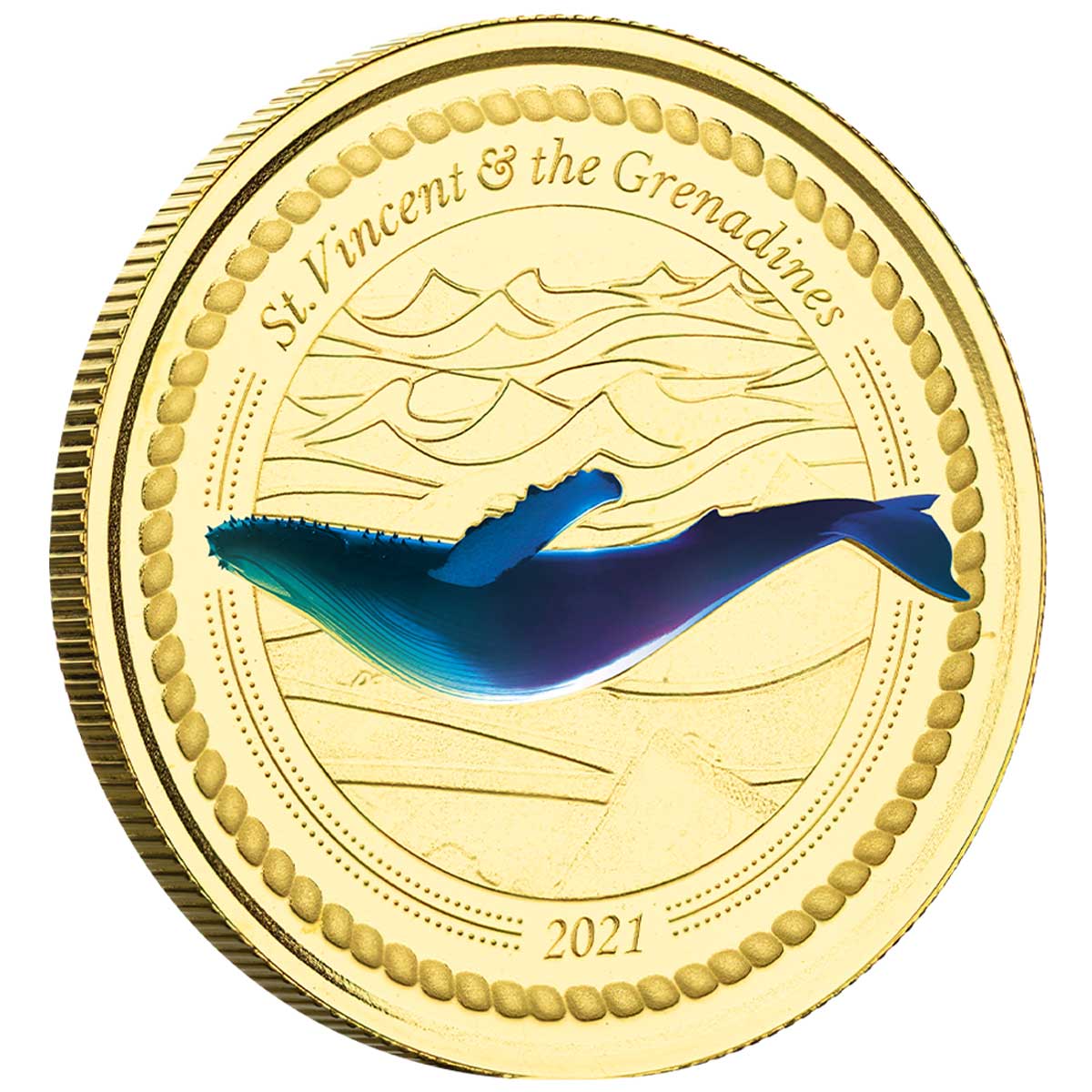
2021 HUMPBACK WHALE
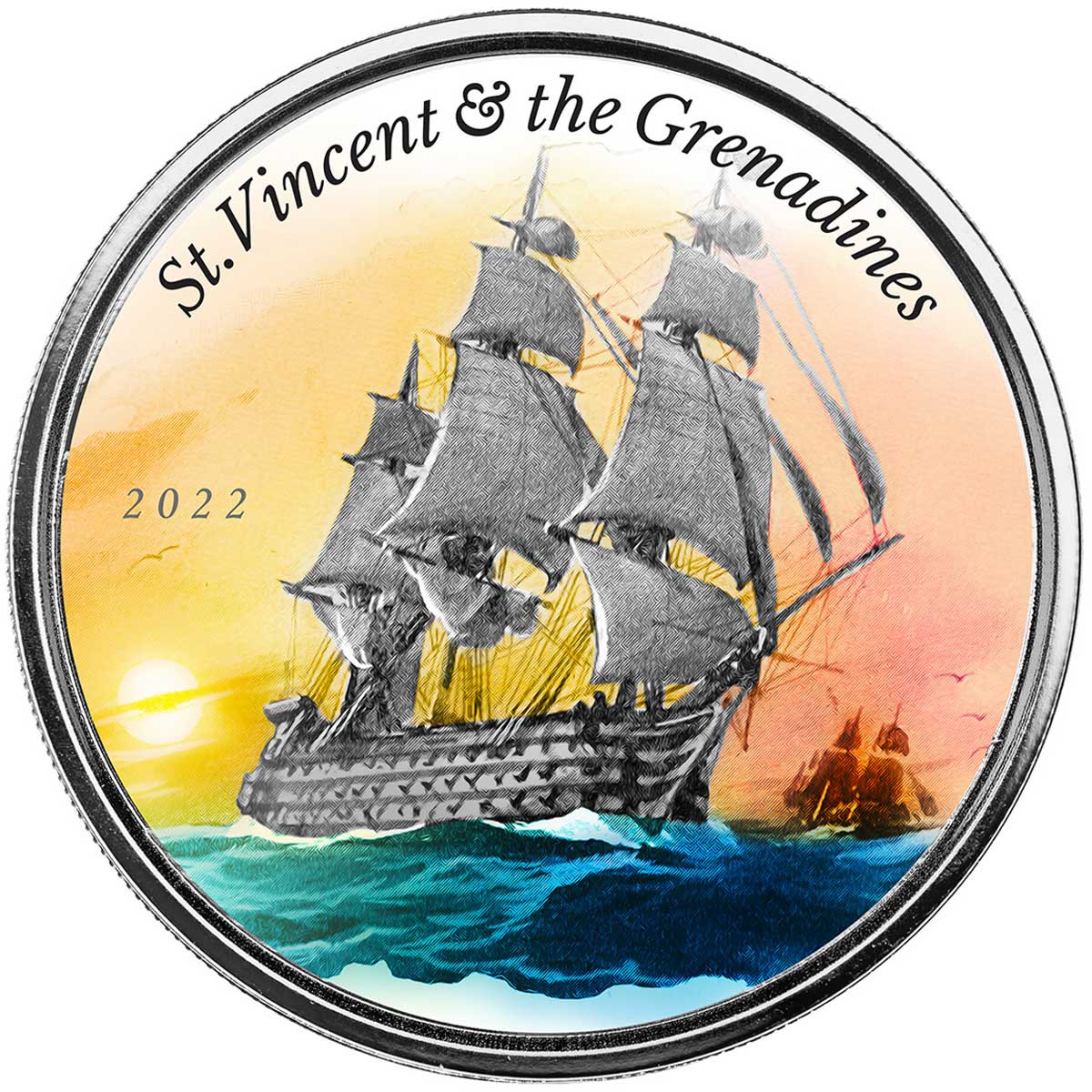
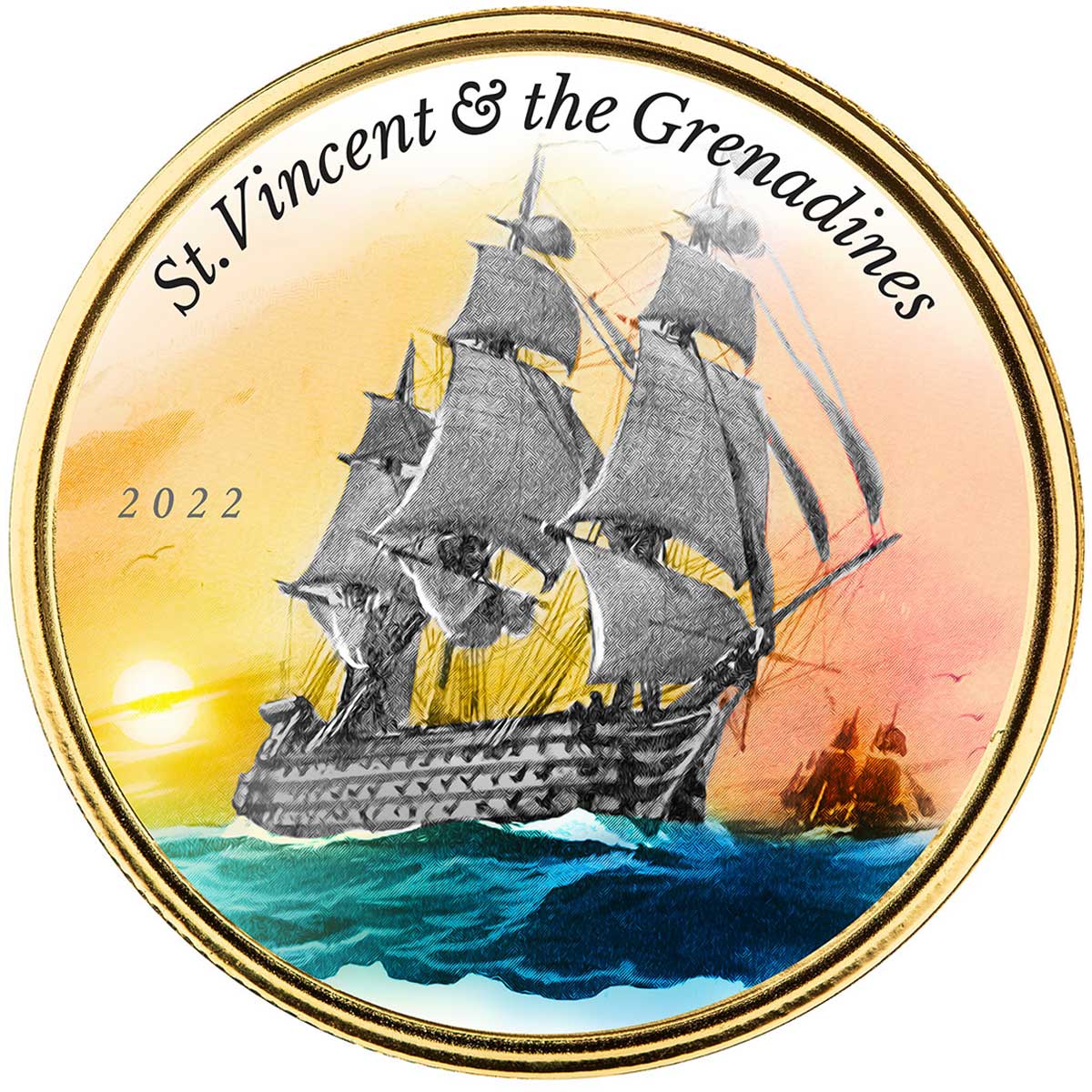
2022 WARSHIP
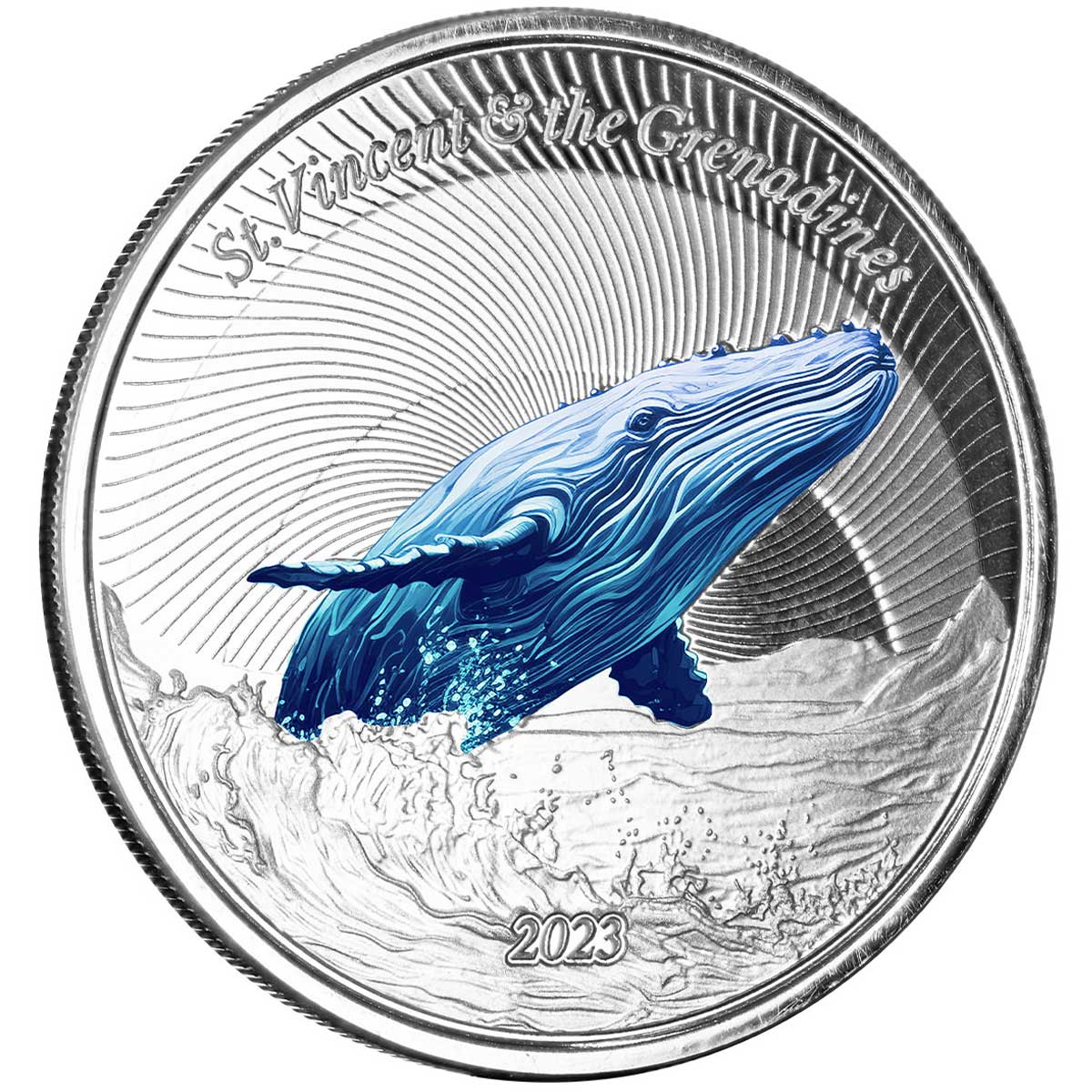
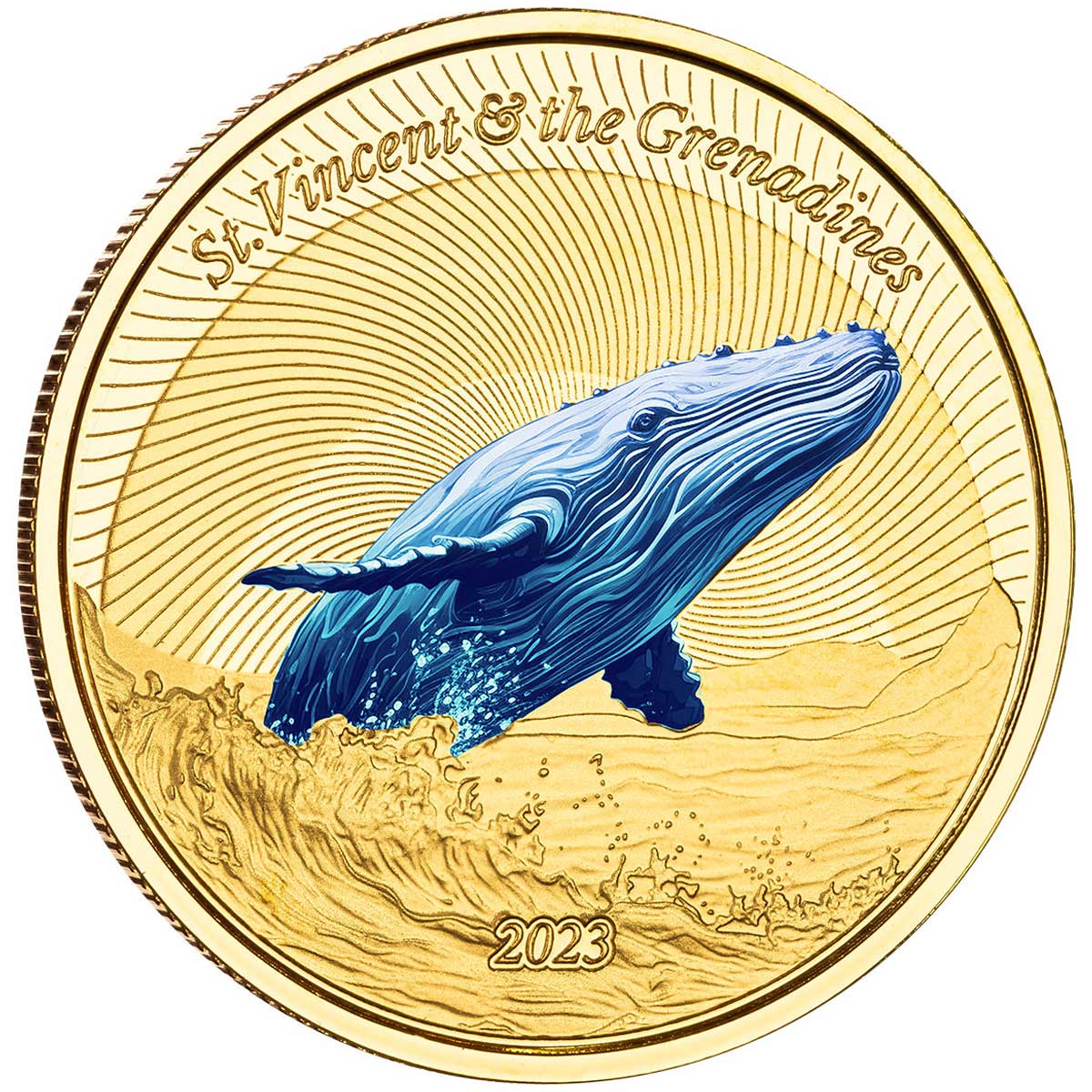
2023 HUMPBACK WHALE II
2024 PADDLEBOARDERS


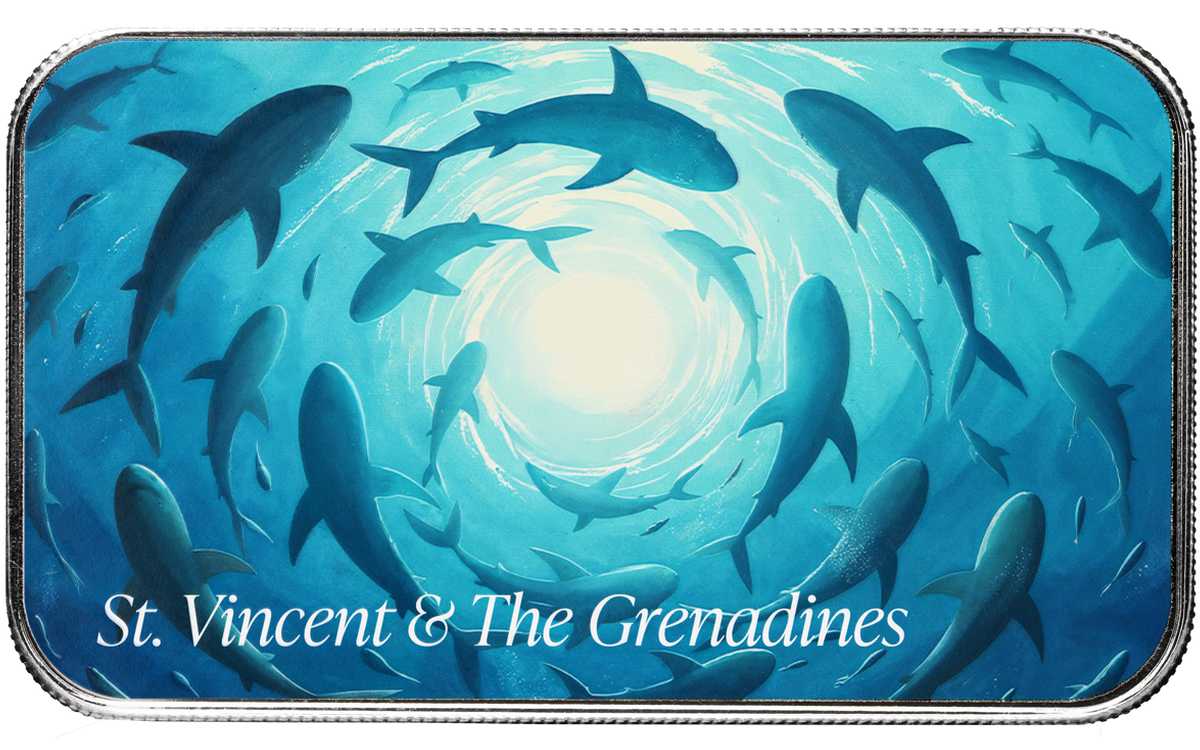
2025 SWIRLING SHARKS
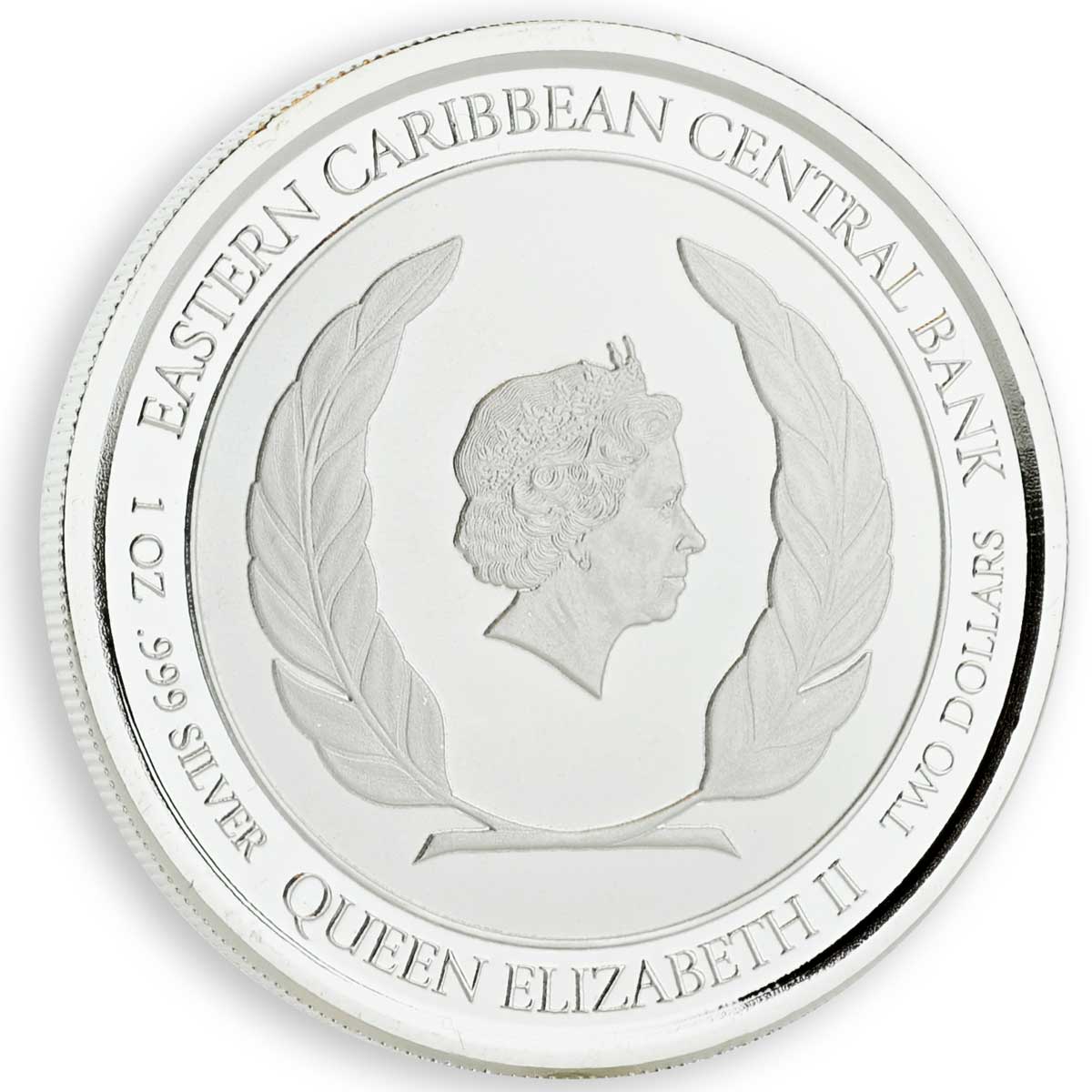
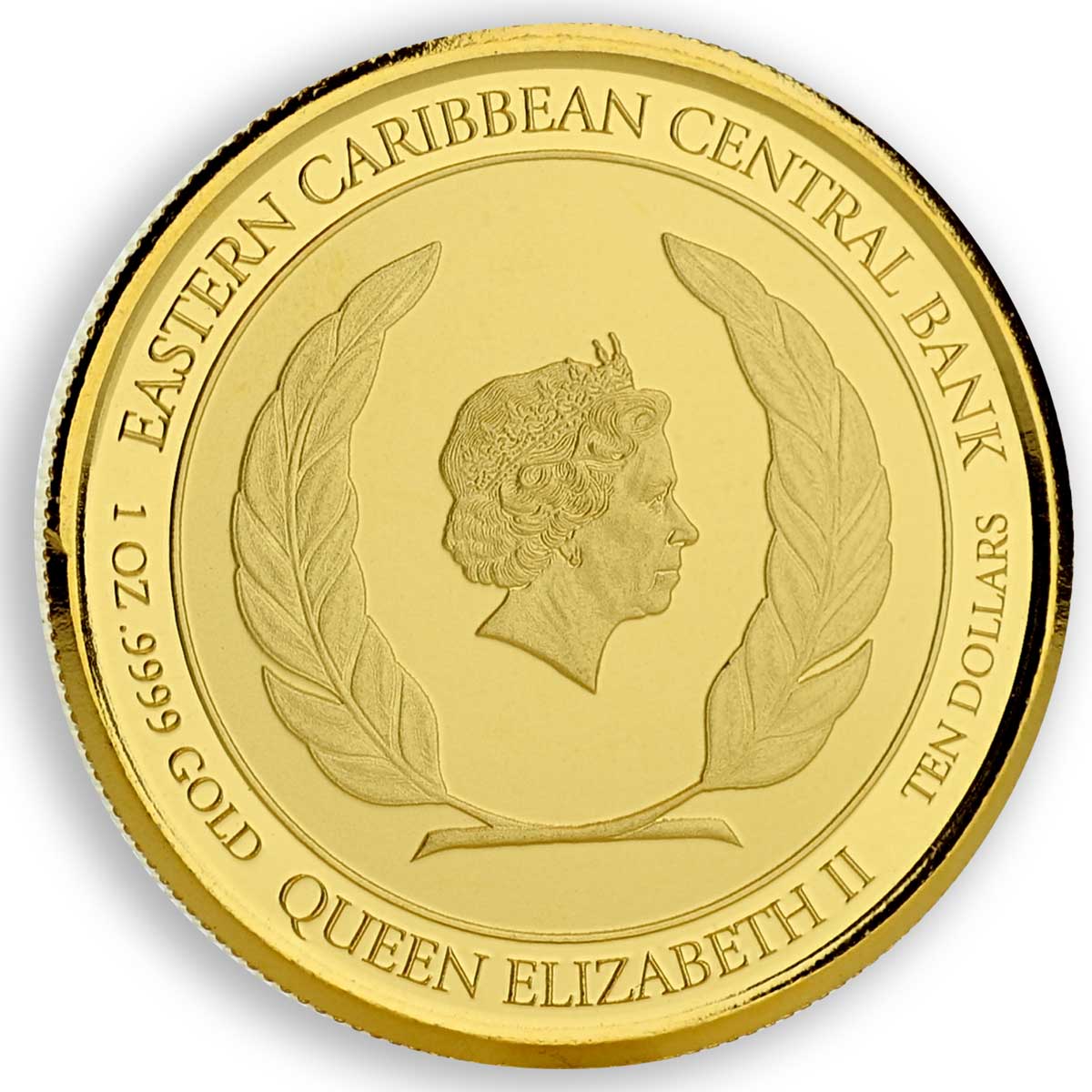
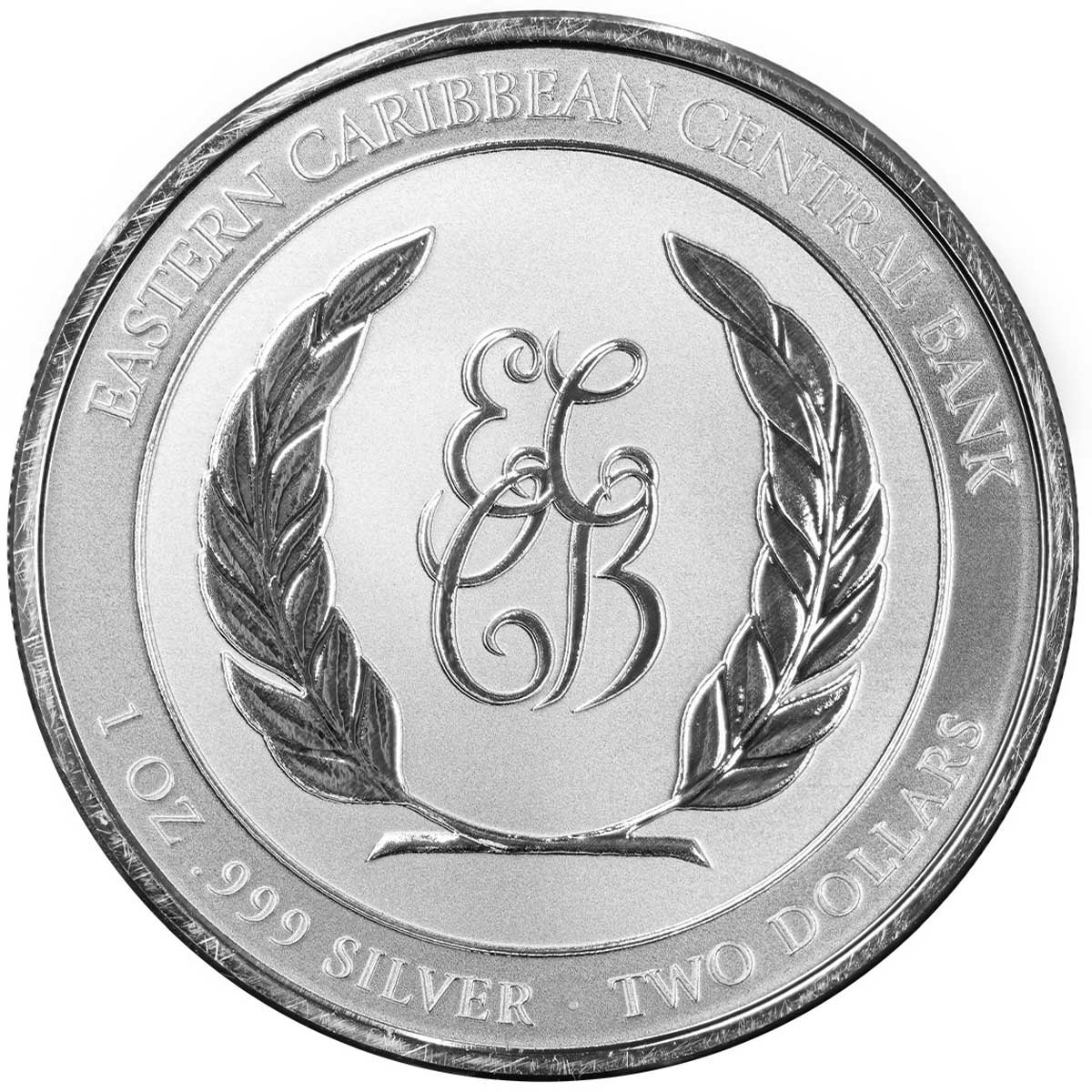
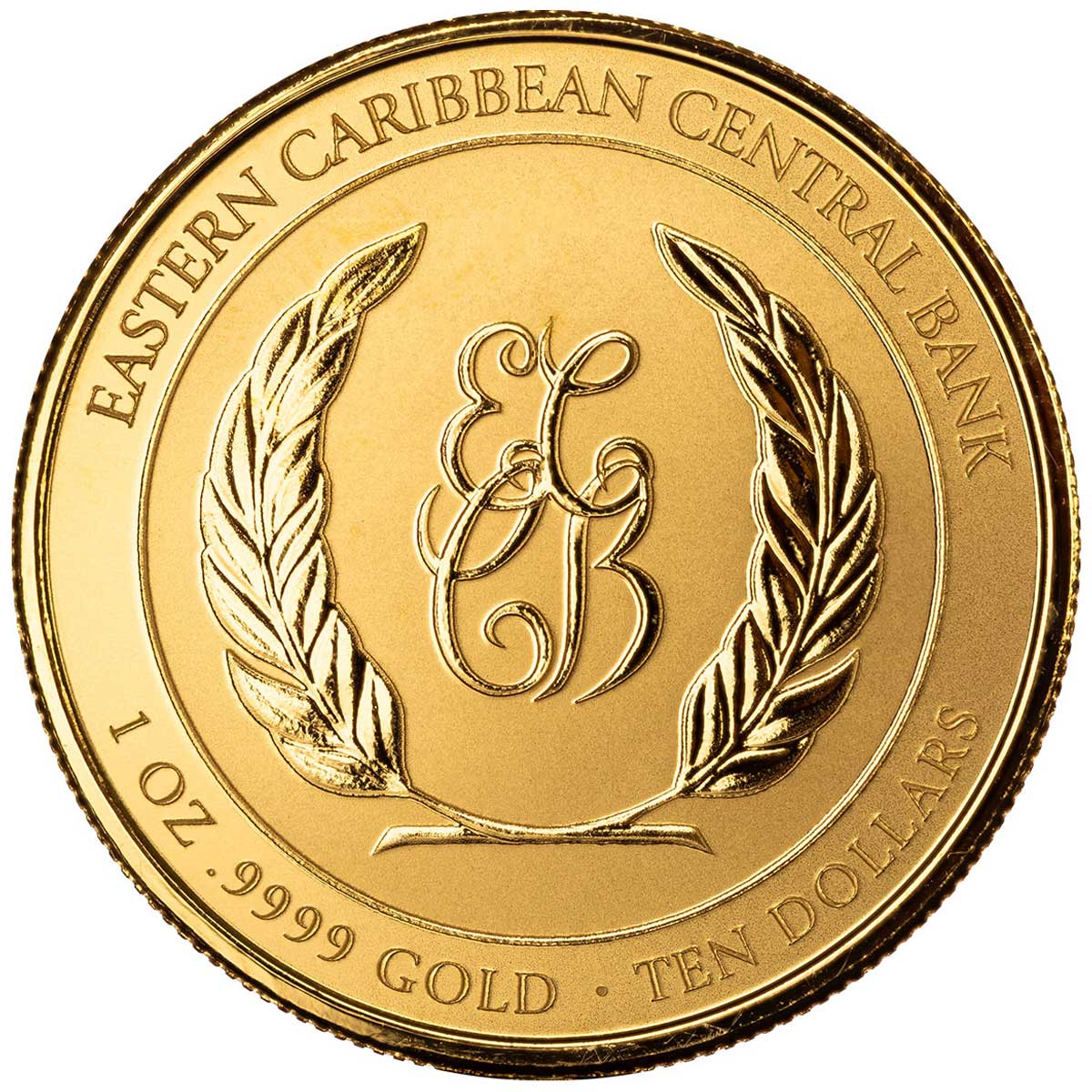
COMMON OBVERSE
PACKAGING
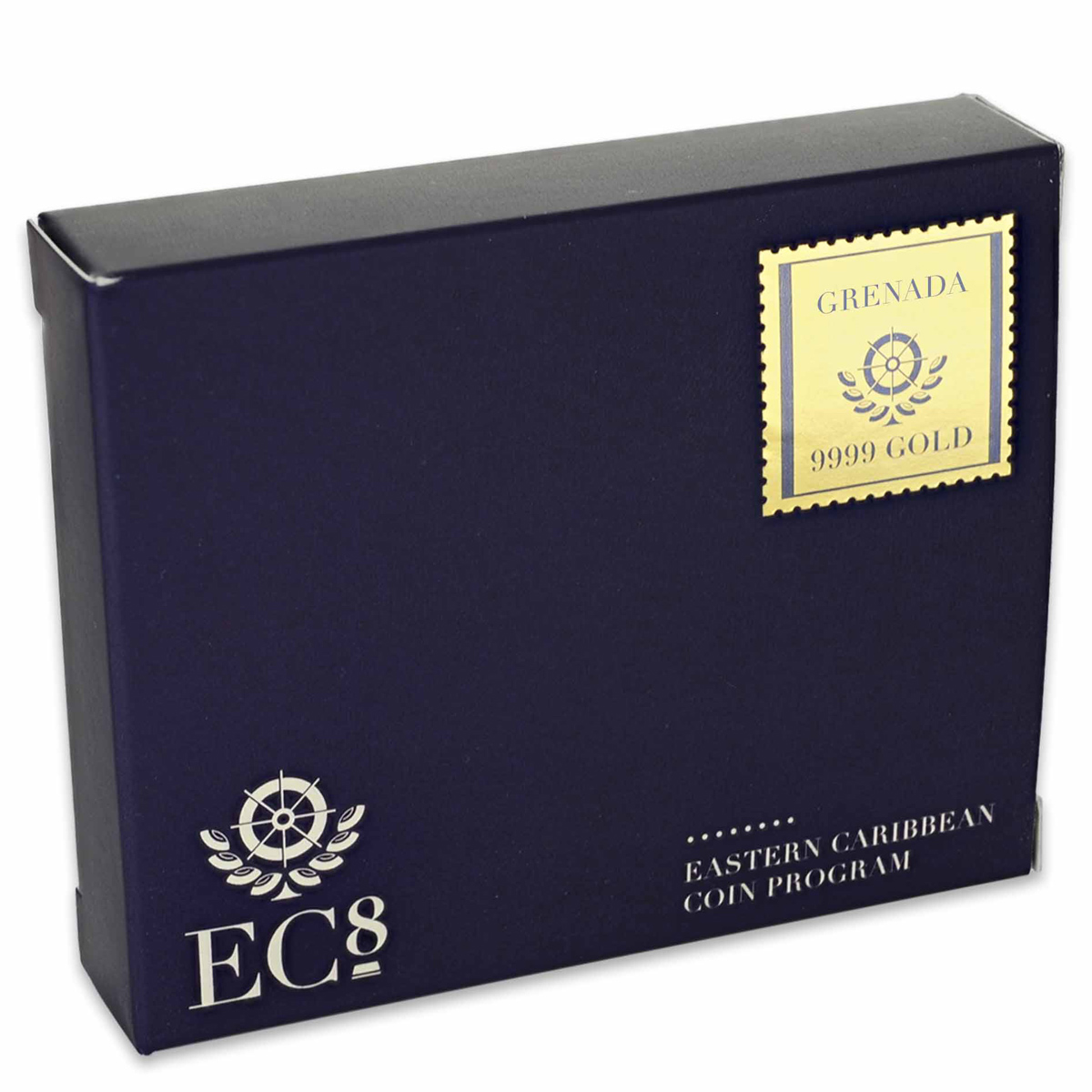

SPECIFICATION
| DENOMINATION | COMPOSITION | DIAMETER | FINISH | MINTAGE |
| $2 East Caribbean | 31.1 g of 0.999 silver | 38.60 mm | Proof, Colour | 2,500 (2020, 500) |
| $10 East Caribbean | 31.1 g of 0.9999 gold | 38.60 mm | Proof, Colour | 500 (2020, 100) |
Leave A Comment