Guns, bombs, ninjas, and The Last Supper. Mint of MK and Silver Pours keep up their reputation for weird and unique coins
We can always rely on Mint of MK and Silver Pours to put out some of the more esoteric coins we see here, and they’ve not let us down again with this eclectic selection of one and two-ounce silver coins. We’ve got fully dimensional bombs and guns, and shaped and high-relief ninja weapons and Renaissance works of art. Like I said, quite a mix! All are available to order now,
2026 HENRY DERRINGER PISTOL
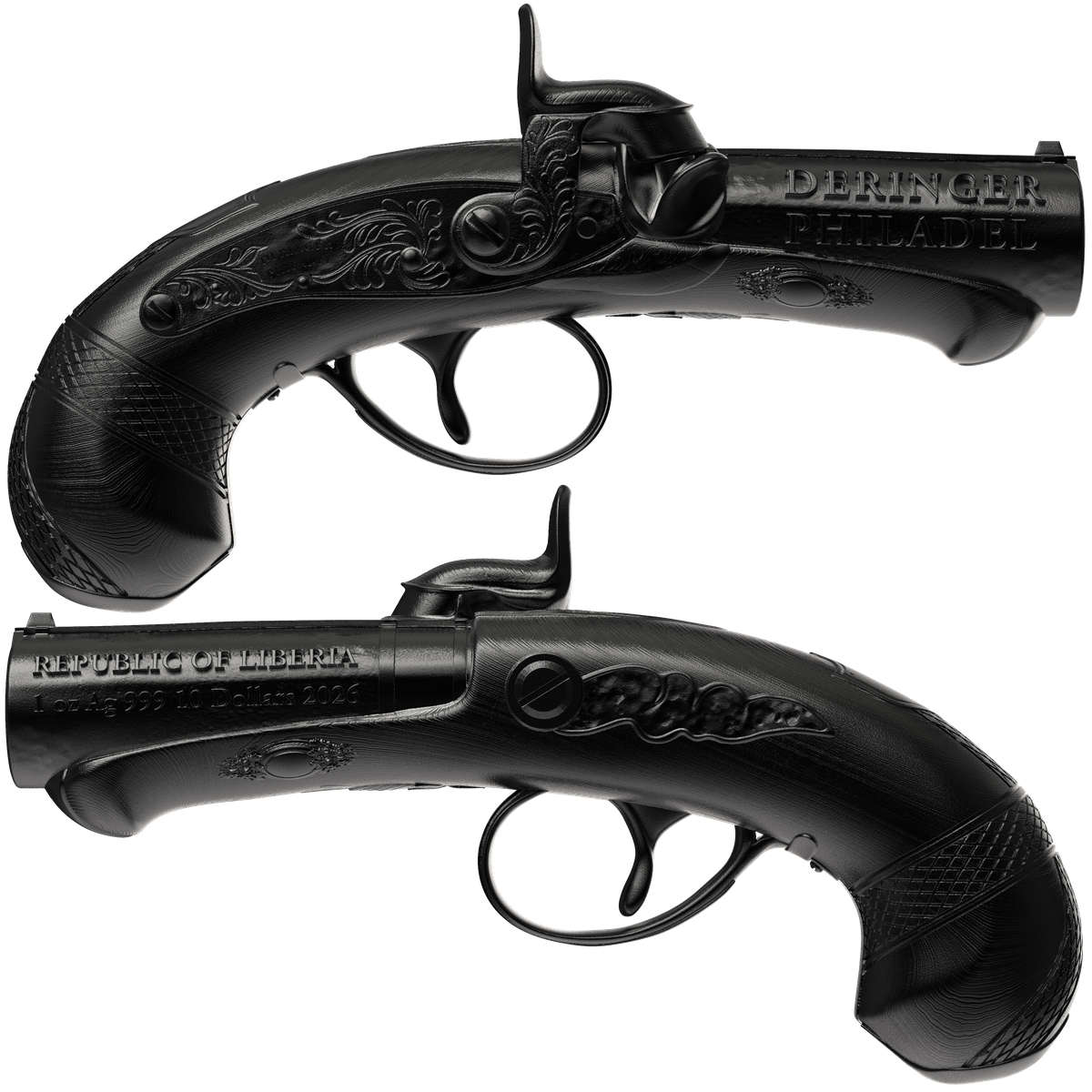
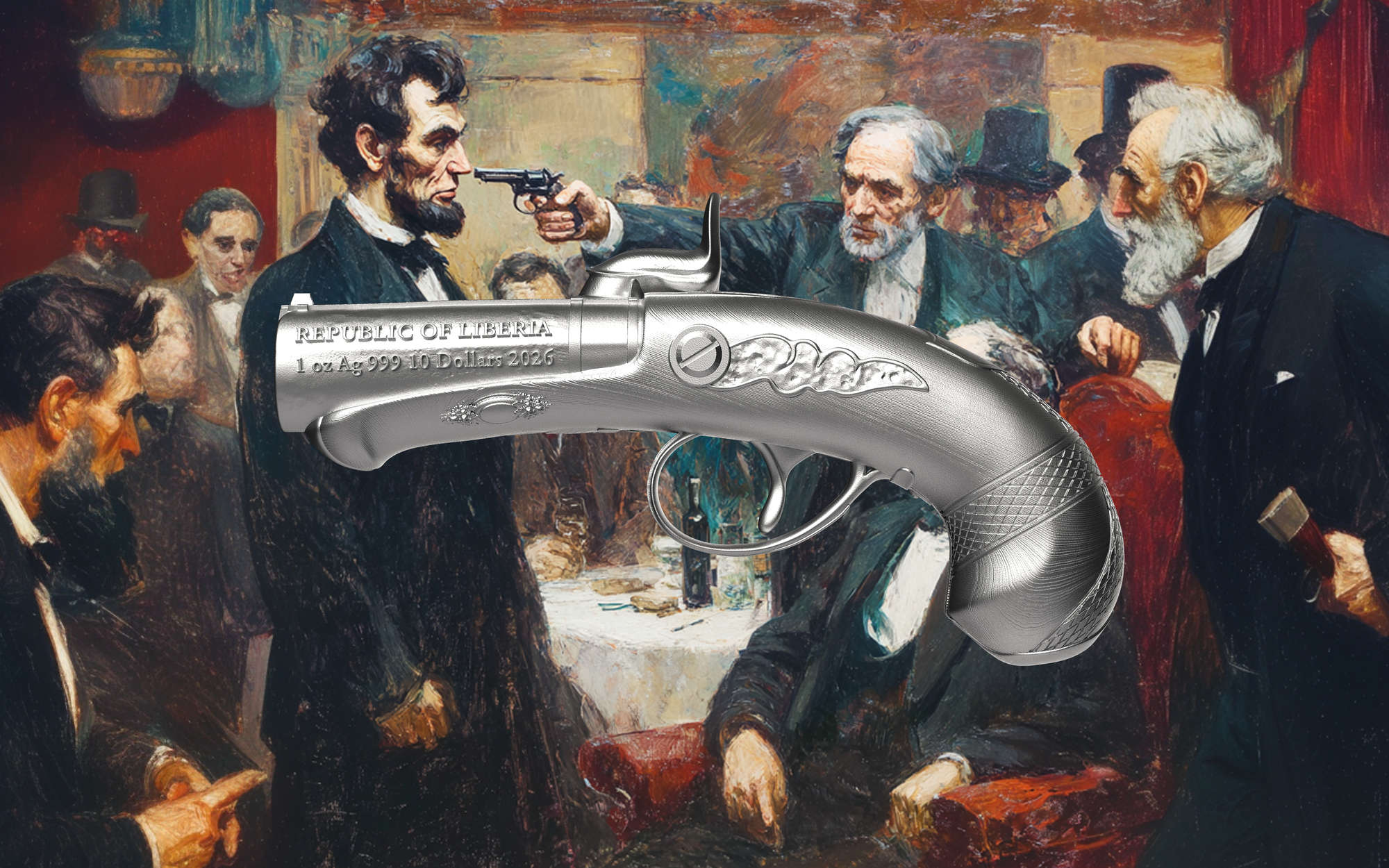
On 14 April 1865, at Ford’s Theatre in Washington D.C., John Wilkes Booth stepped out from the shadows and fired a single bullet into the back of President Abraham Lincoln’s head. He passed away the following morning. Confederate sympathiser Booth, was cornered and killed on April 26th, and his co-conspirators were hanged soon after.
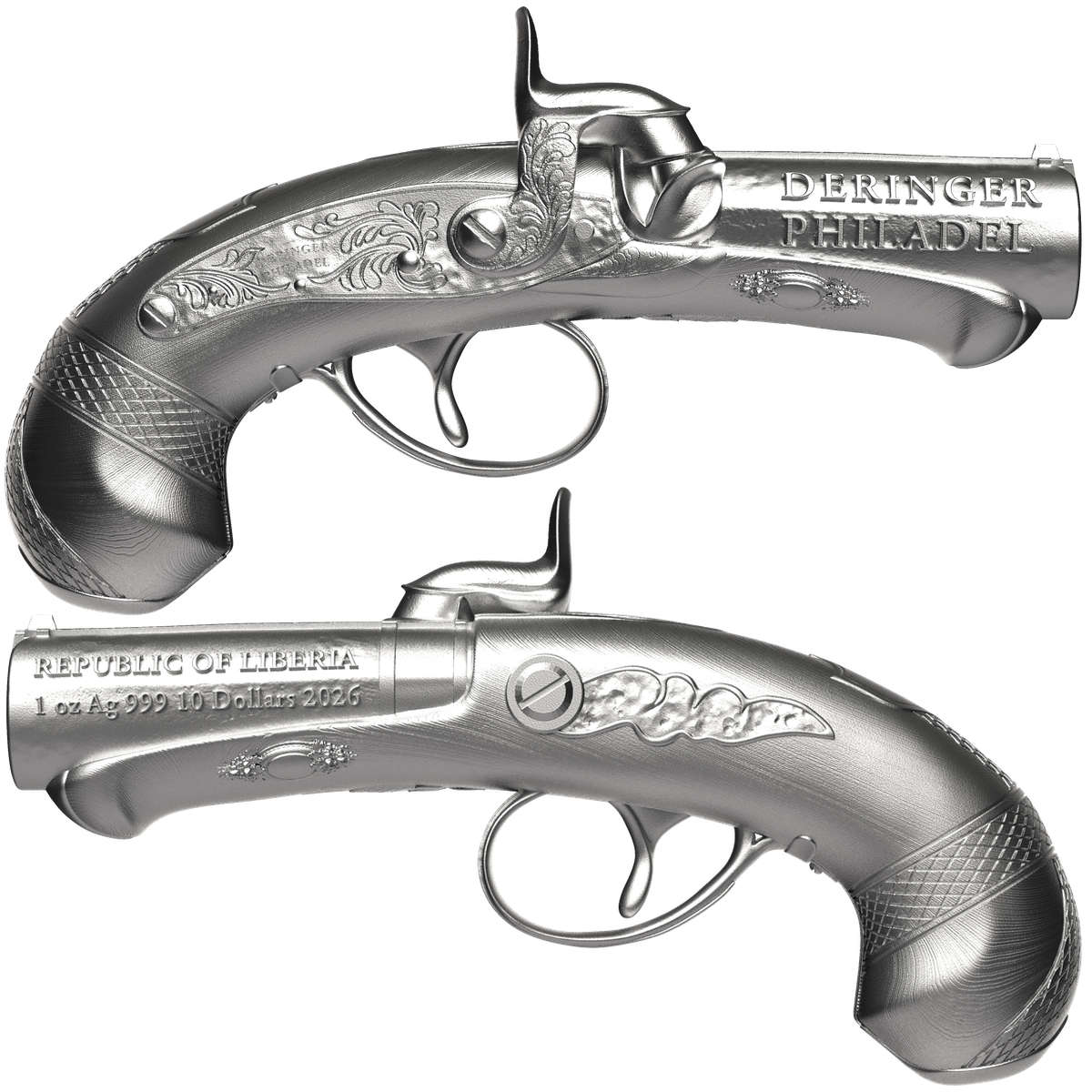
Left on the floor of the theatre’s box that Lincoln had sat in, was the pistol Booth had used. The Philadelphia Derringer was first produced in 1825, designed by the famous gunsmith Henry Deringer. It was a single-shot, concealed carry weapon, hardly the ideal weapon for an assassination, as it was muzzle-loaded, so essentially useless after firing.
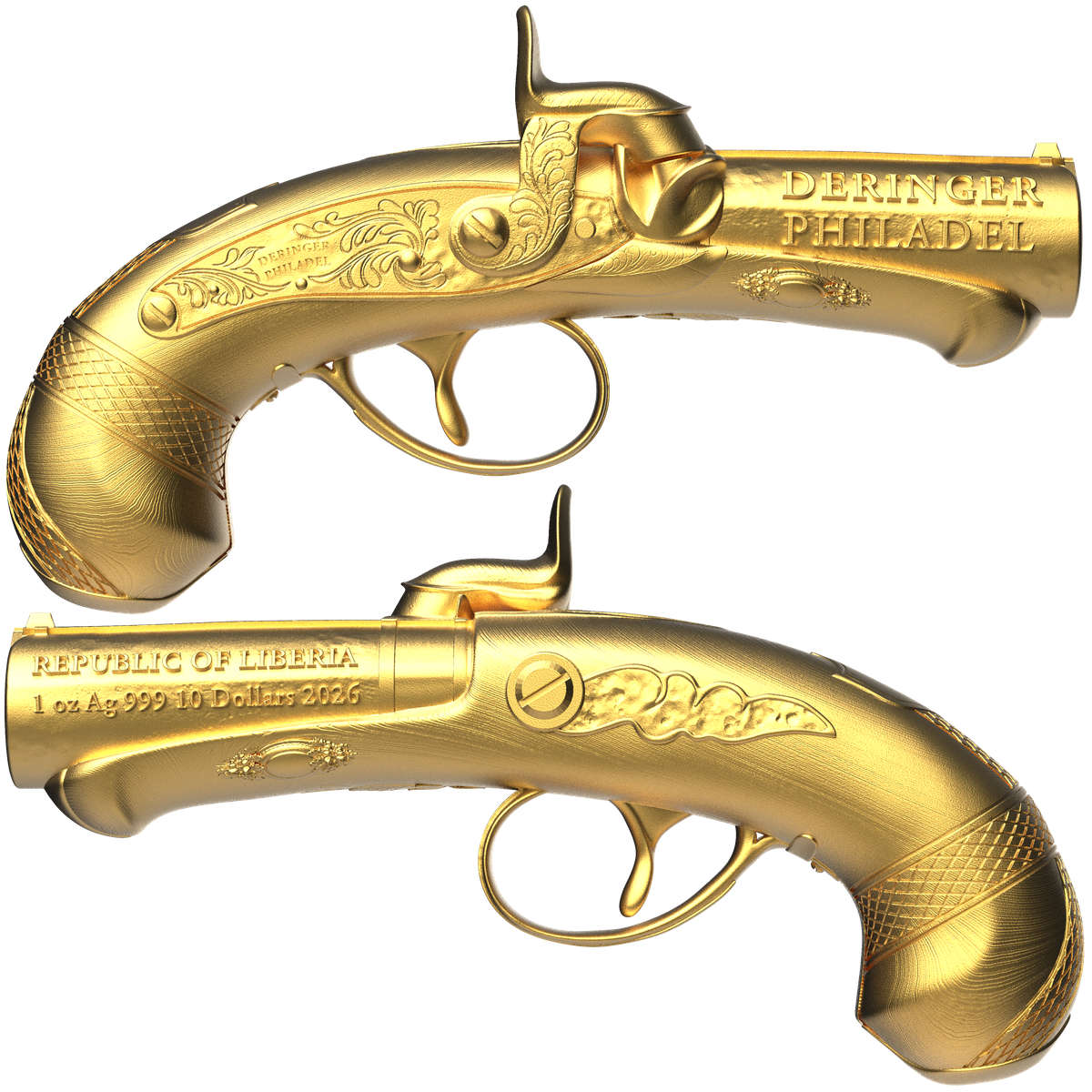
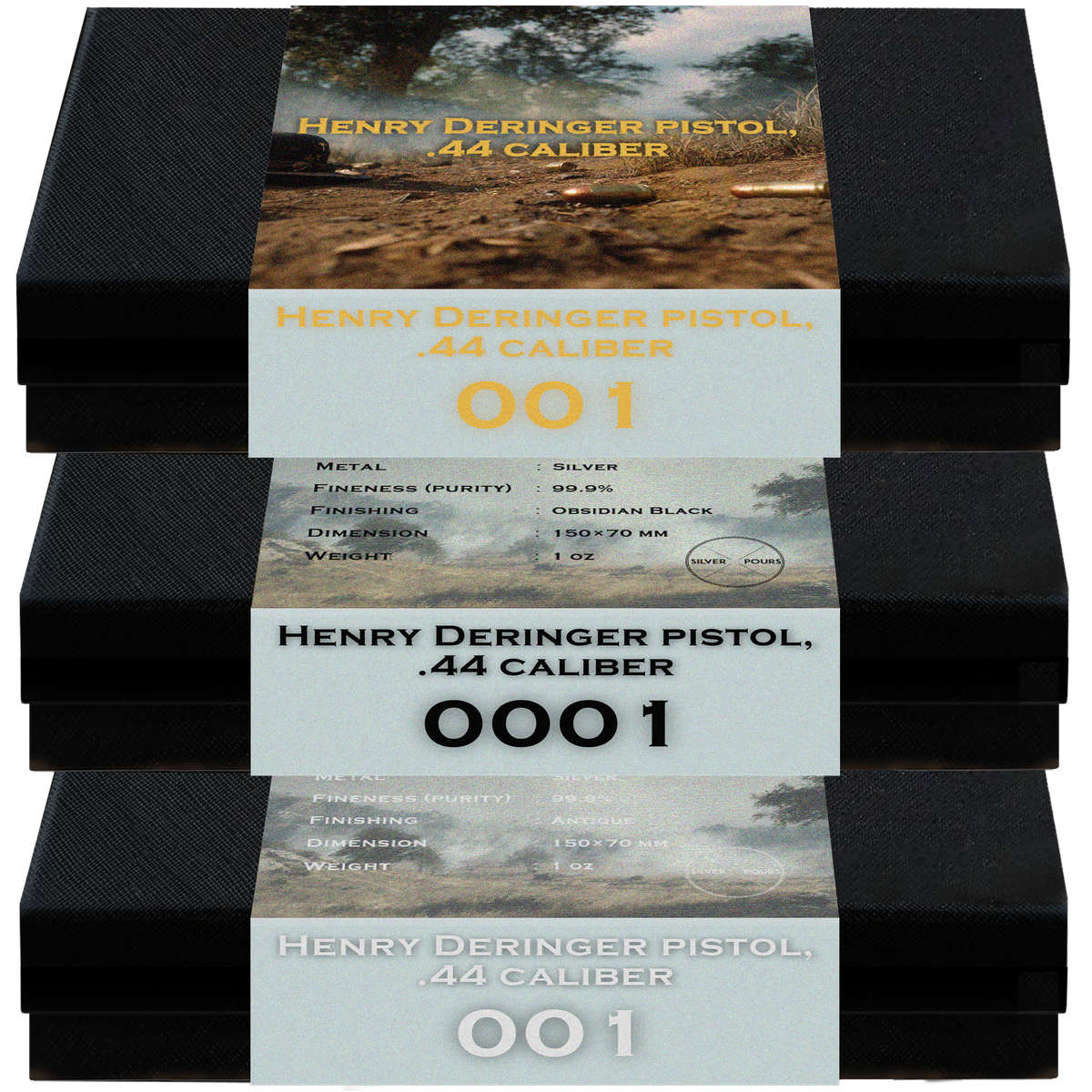
The new coin is a terrific reproduction, right down to the size, as these guns rarely exceeded 6″ in length. All the detailing is there, down to the decorative elements that adorned the original pistol. There are three variants to choose from, with an antiqued one, a gilded one, and an obsidian one, all with different mintages. Ironically, my least favourite (gilded) is the rarest.
| DENOMINATION | COMPOSITION | DIAMETER | FINISH | MINTAGE |
| $10 (Liberia) | 31.1 g of 0.999 silver | 150.0 x 70.0 mm | Antique | 1,000 |
| $10 (Liberia) | 31.1 g of 0.999 silver | 150.0 x 70.0 mm | Gilded | 250 |
| $10 (Liberia) | 31.1 g of 0.999 silver | 150.0 x 70.0 mm | Obsidian | 865 |
2026 NINJA SHURIKEN


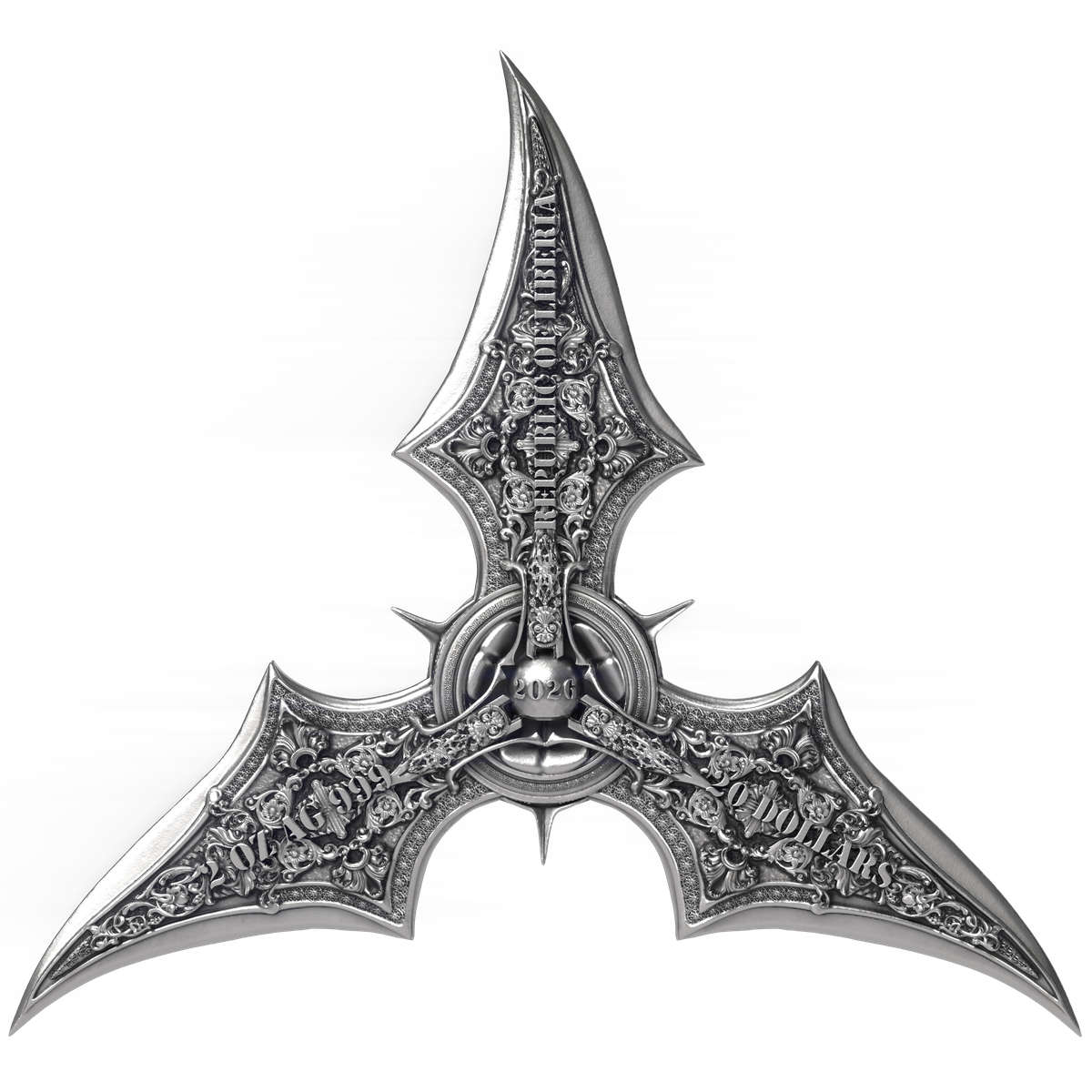
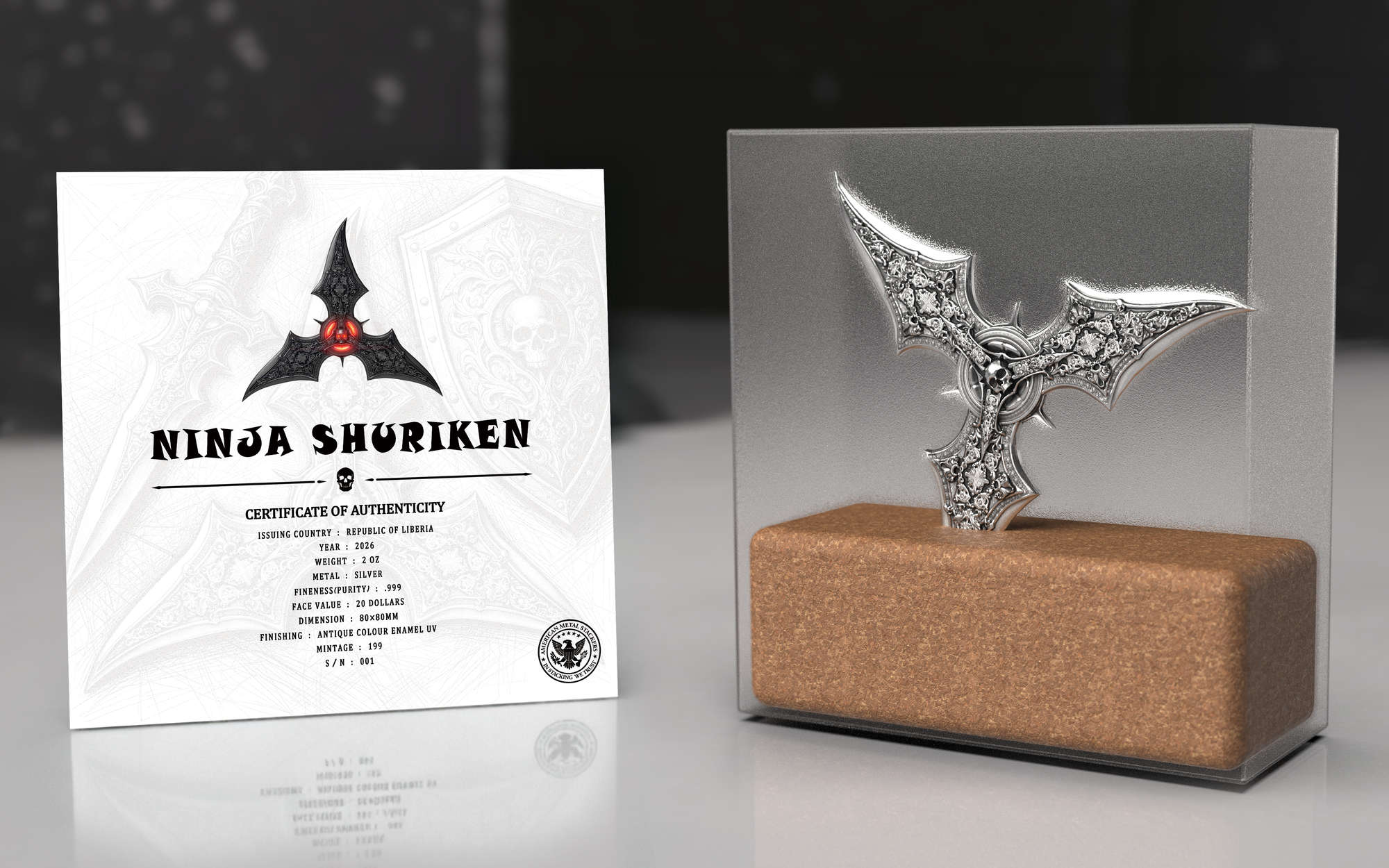
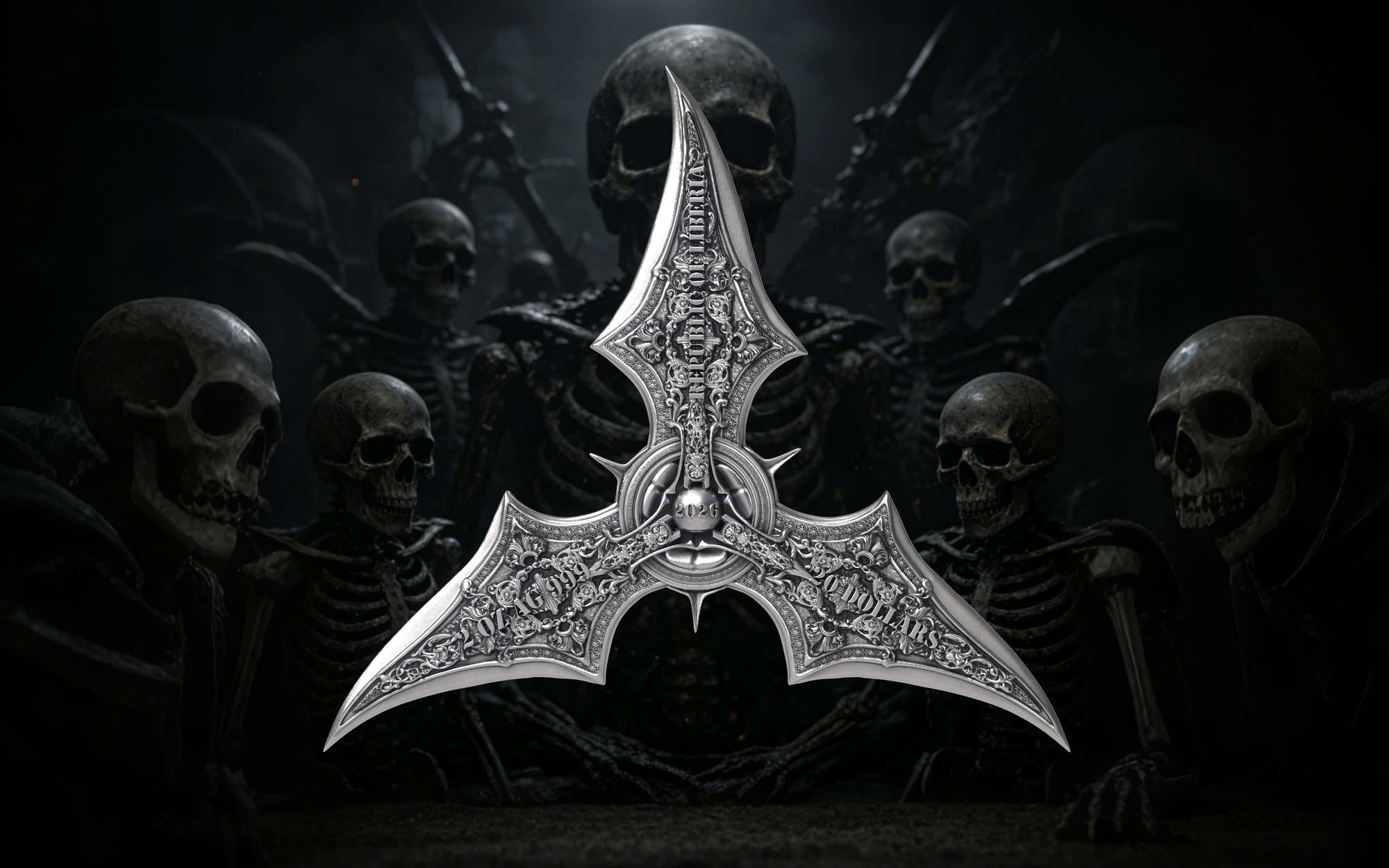
The Ninja were some of the most iconic warrior castes in history, and one of their most famous weapons was the shuriken. A small, easily concealed bladed weapon, it was designed to distract and injure, rather than kill, and came in a variety of shapes, with differing numbers of blades. The most famous is likely the Three-pointed Hira-shuriken, and that’s what this new coin has taken for inspiration.
This Liberian coin is richly decorated on both sides, not in anything particularly Japanese, it has to be said, but attractive, nevertheless. The central area has a UV-sensitive enamel replied for that bit of glow-in-the-dark action, which should contrast nicely with the antiqued finish.
Packaging is equally unusual, with what looks like a cork block holding the embedded shuriken, and that sits inside an acrylic box. There’s a nicely themed COA with it, serialised with which number of the 199 you have.
| DENOMINATION | COMPOSITION | DIAMETER | FINISH | MINTAGE |
| $20 (Liberia) | 62.2 g of 0.999 silver | 80.0 x 80.0 mm | Antique, UV enamel | 199 |
2026 LITTLE BOY BOMB
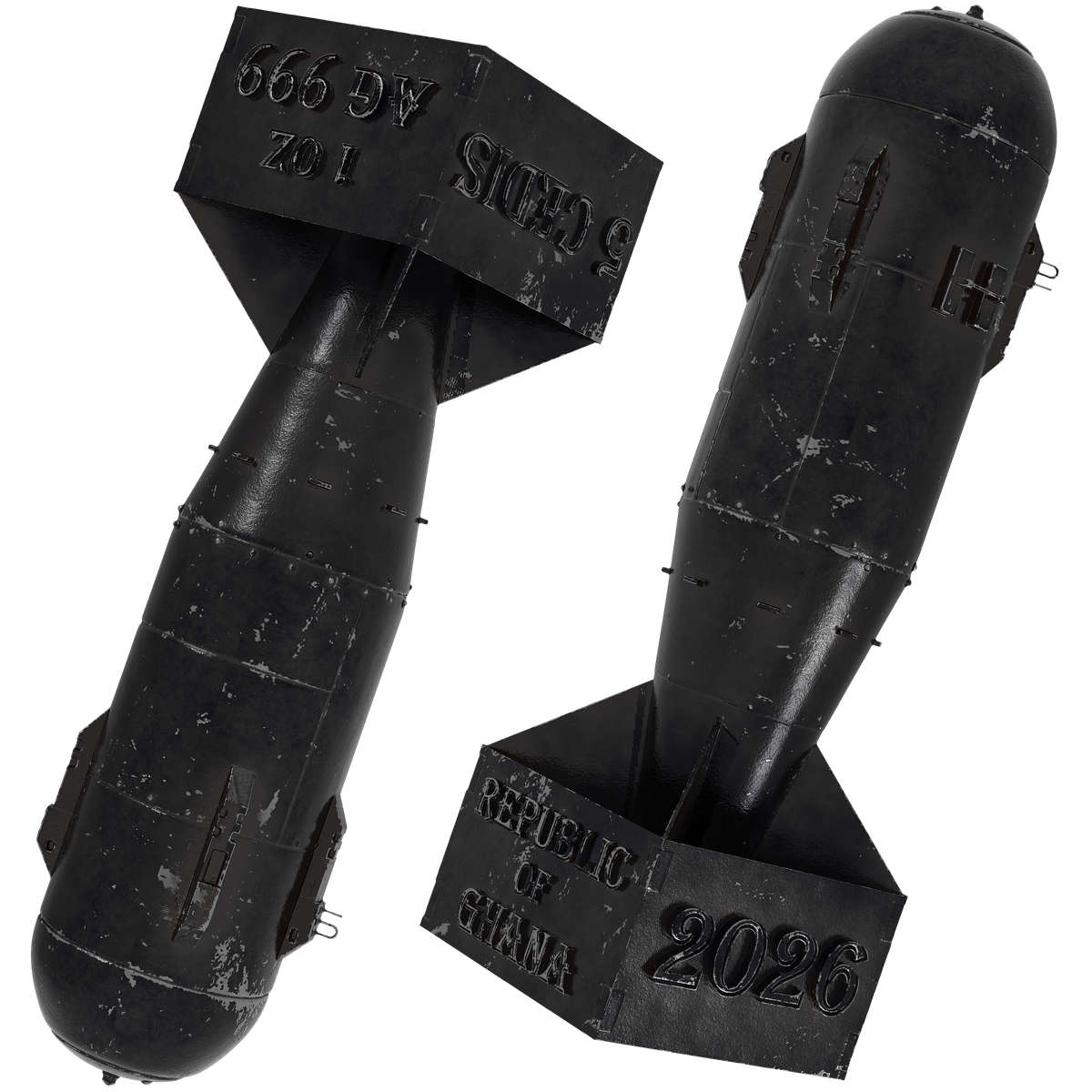
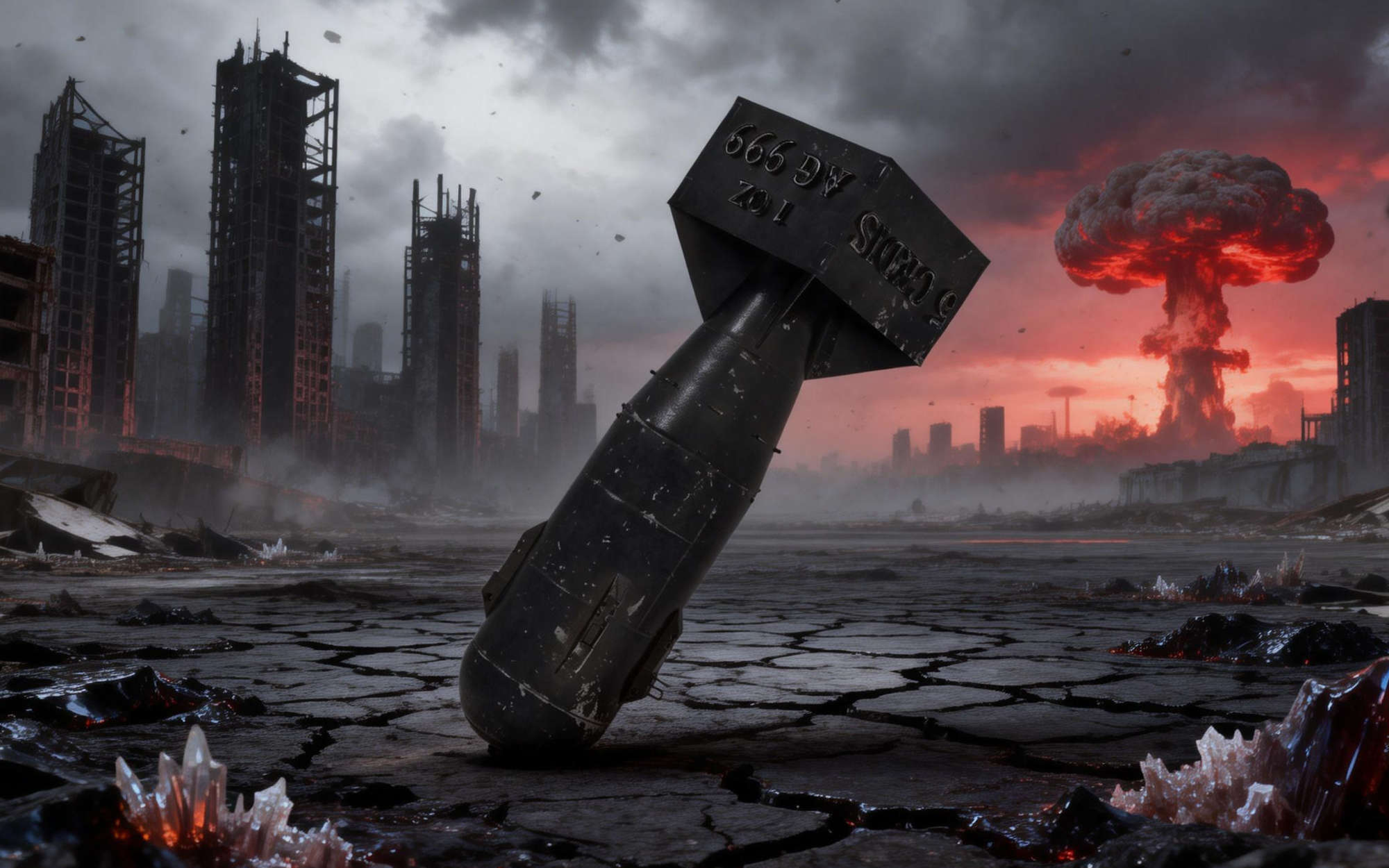
Released at an altitude of 9,467 metres from the bomb bay of the B29 ‘Enola Gay’, and dropping for 44.4 seconds before exploding at 600 metres above the Japanese city of Hiroshima, the first nuclear weapon used in combat immediately killed at least 70,000 people. Little Boy was a Uranium-235 gun-type fission weapon, weighing around four tons, but packing a similar punch to 15,000 tons of TNT. It was enough to flatten over 60% of Hiroshima, despite its incredibly inefficient design.
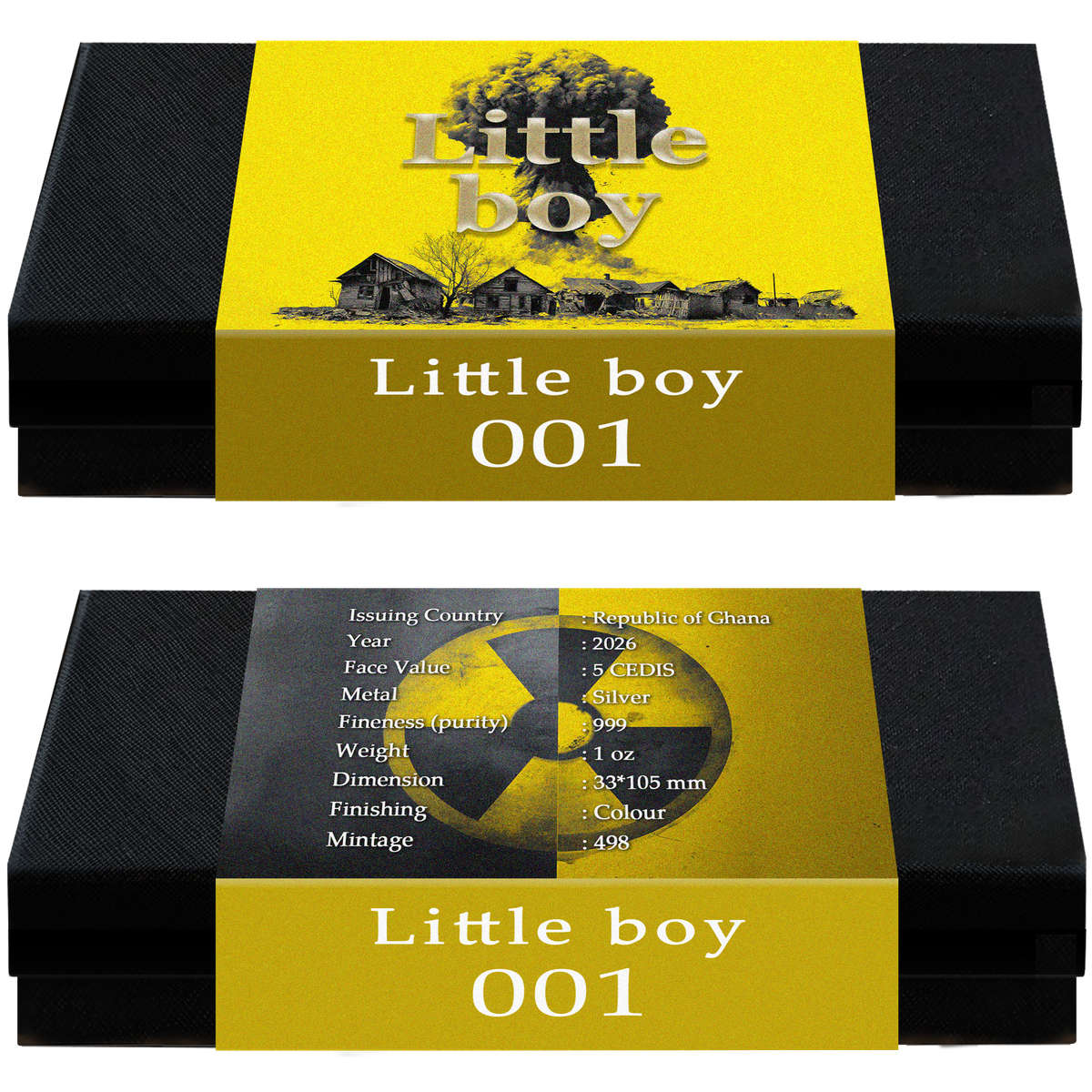
The coin is the second in a series that started with the second nuclear bomb ever used in combat, Fat Man, which destroyed Nagasaki just three days later on 9 August 1945. That was a very accurate reproduction of the bomb, and so is this one, aping the shape of the bomb almost perfectly. It has that same ‘chipped’ black finish to make it seem even more menacing. Boxed with a COA, it’s a reminder of just why these weapons should never be used, and a little bit of history, of course.
| DENOMINATION | COMPOSITION | DIAMETER | FINISH | MINTAGE |
| 5 Cedis (Ghana) | 31.1 g of 0.999 silver | 105.0 x 33.0 mm | Colour | 498 |
2026 THE LAST SUPPER
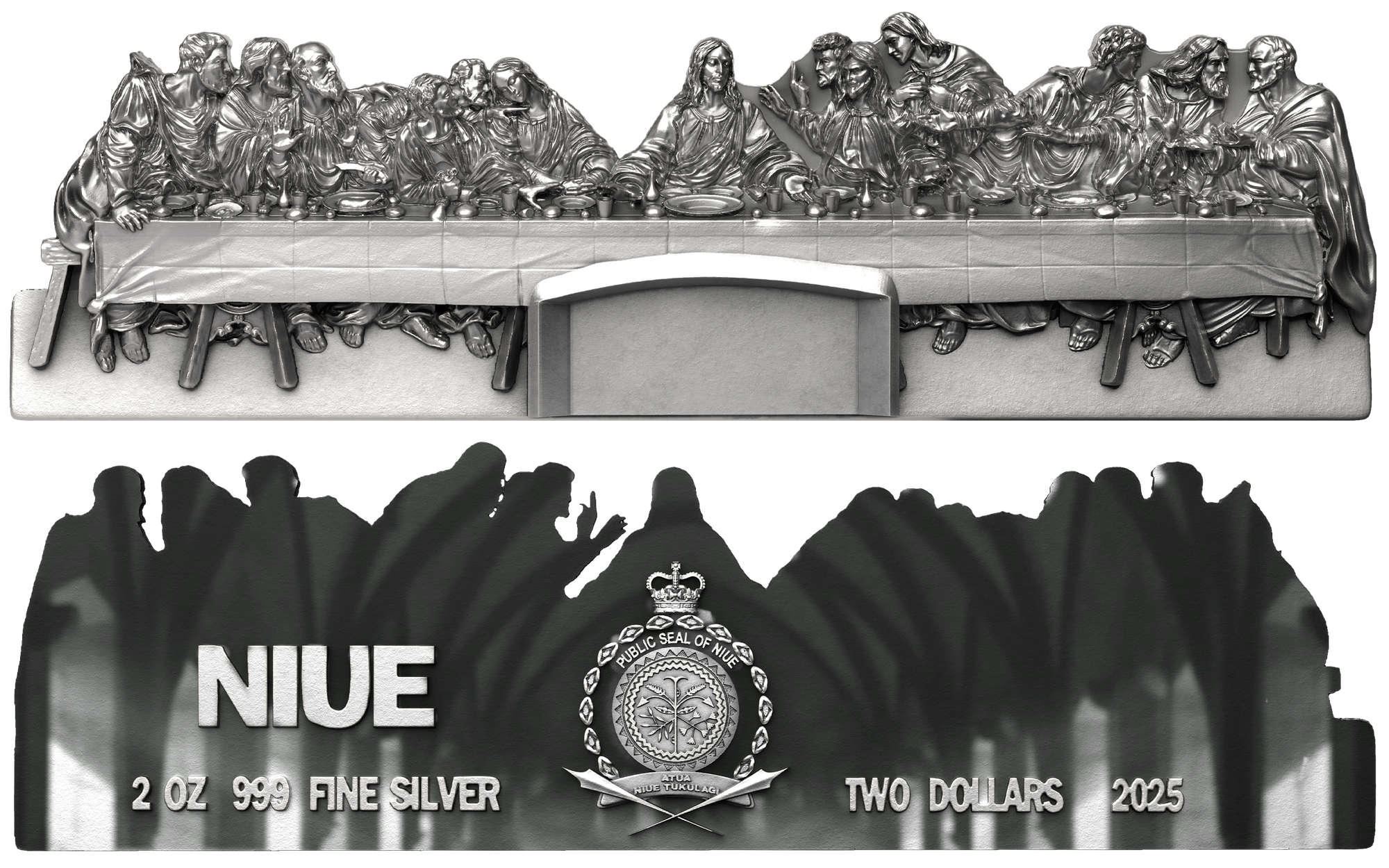
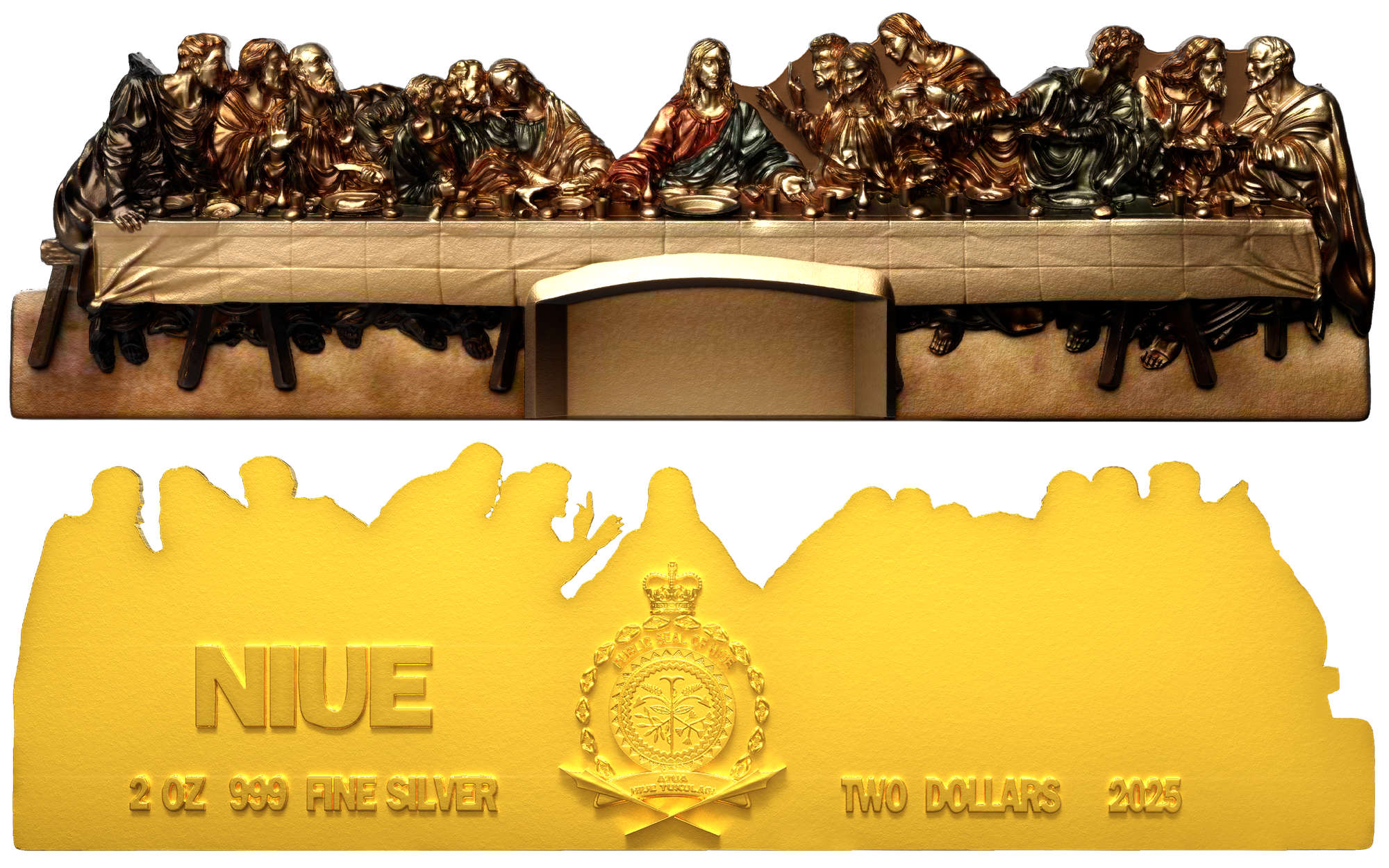
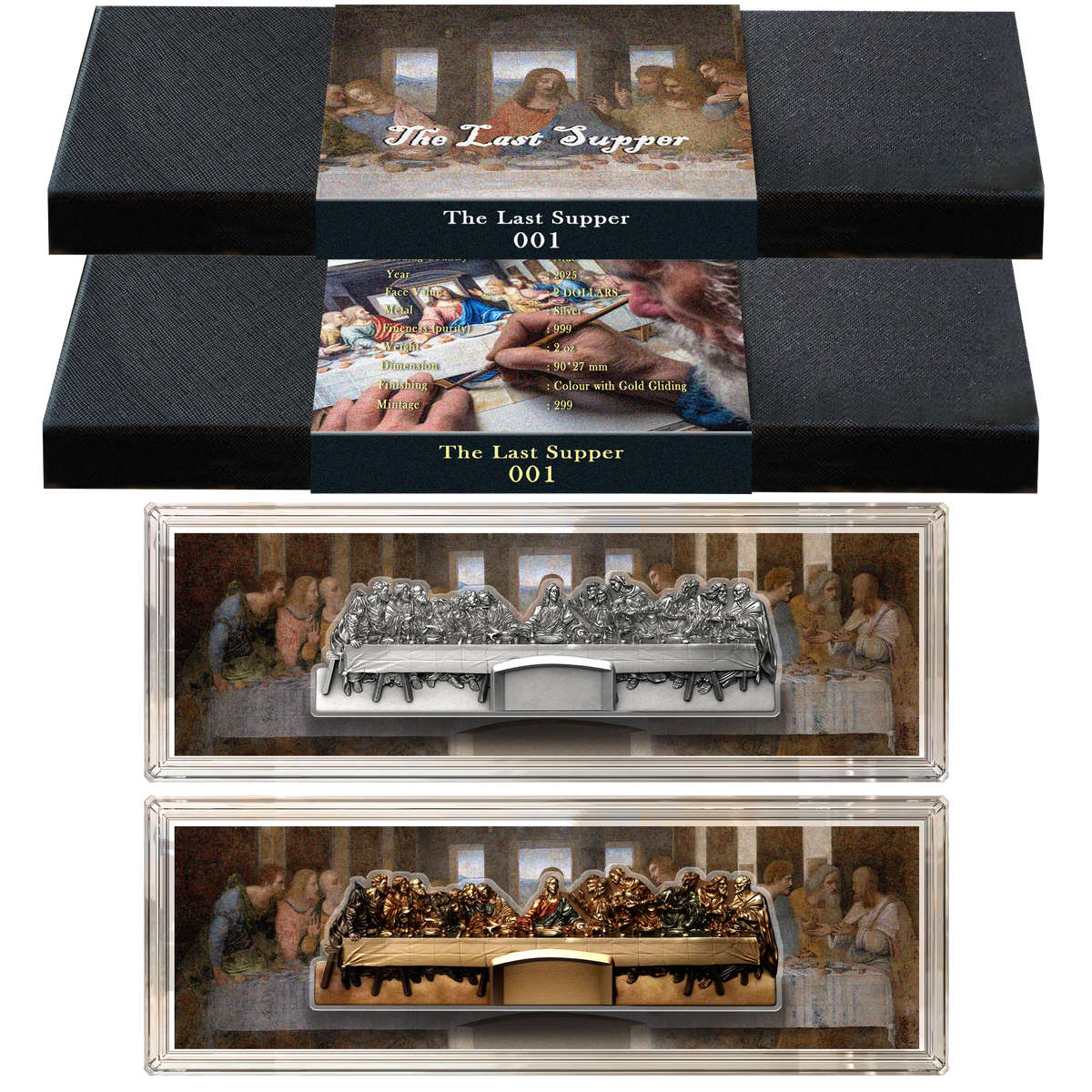
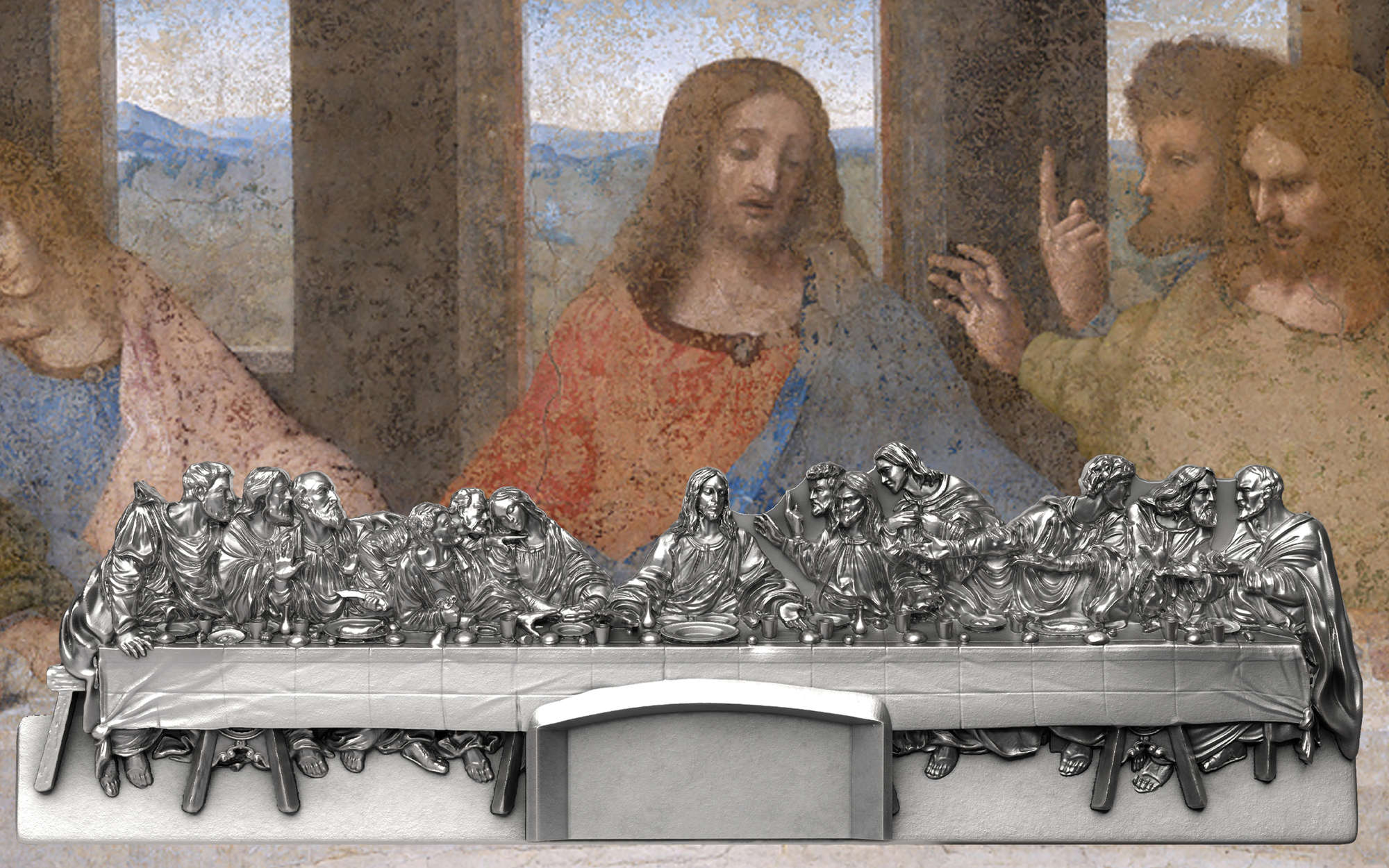
Painted in the latter part of the last decade of the 15th century, ‘The Last Supper’ was part of a restoration plan for the Convent of Santa Maria delle Grazie in Milan, Italy. Commissioned by Leonardo’s patron Ludovico Sforza, Duke of Milan, the painting represents the scene of the Last Supper of Jesus with his apostles, as it is told in the Gospel of John, 13:21. Measuring 460 cm × 880 cm (180 in × 350 in) it still sits in the monastery, occupying a wall in the dining room. Sadly, due to a combination of poor materials, environmental issues, intentional damage and a succession of restorations of varying competence, very little remains of the original work.
It’s a popular subject in coins, but what they’ve done here is take the essence of the work, which is the table and its occupants, and recreate it in a three-dimensional form. It’s a clever interpretation of the seminal work, reducing it to its core. The two-ounce coin is available in a choice of two finishes, with an antiqued version, and a gilded one with colour highlights. It comes in a big capsule, themed with a wider view of the painting.
| DENOMINATION | COMPOSITION | DIAMETER | FINISH | MINTAGE |
| $2 NZD (Niue) | 62.2 g of 0.999 silver | 90.0 x 27.0 mm | Antique | 299 |
| $2 NZD (Niue) | 62.2 g of 0.999 silver | 90.0 x 27.0 mm | Gilding, Colour | 299 |
Leave A Comment