

Great Engravers returns for a seventh dive into Britain’s extensive numismatic past with the William IV Crown
One of the Royal Mint’s premier series, Great Engravers draws from this aged organisation’s extensive history to reproduce some of the finest designs, from its most talented artists, that have graced its portfolio. With such names as Benedetto Pistrucci, William Wyon, and Thomas Simon, it’s a veritable who’s who of brilliance, and now we can add Jean Baptiste Merlen to the range.
Merlen started his career at the Paris Mint, but left France after Napoleon’s defeat at the Battle of Waterloo. In 1820, he was recruited by William Wellesley Pole (the elder brother of the Duke of Wellington) to work at The Royal Mint alongside Benedetto Pistrucci, who’d been tasked with designing the coinage for the new king, George IV. He created the 1820 half-crown, and the 1822 Maundy Money, and his shield design remained on The Sovereign until 1887.
His 1831 Crown was never circulated in silver, and they remain very rare, as only around 225 proof specimen sets were ever struck. Gold versions are exceptionally scarce, and one a couple of years ago realised almost £450,000 at auction. The design is a quartered heraldic shield, at the centre of which is the coat-of-arms of the House of Hanover. It is surrounded by the Order of the Garter, topped by a crown, and with an ermine mantle as a backdrop. At the bottom is Pistrucci’s St. George & the Dragon. Like previous entrants in the Great Engravers collection, the design remains the same, but with modernised dies creating an exceptional strike of great definition. The inscription below the shield was on the obverse of the original, and means “The Insignia of William IV, King of Britain”.
We’ve always admired this series for its historical significance, but have never been fans of the choice of formats that comprise it. Both gold and silver start at two-ounces, and especially in light of the metal prices at the moment, effectively kill this series for the overwhelming majority of collectors. Just two silver coins come in under £1,000, and gold just scrapes in sub-£10,000. The 5kg gold coin is currently £735,000, which is a significant rise from last year. We can’t blame the mint for the current metal price, but the lack of options for most is a real shame for a series like this. I mentioned a copper version before, perhaps in the 2-5kg weight class, and I remain a fan of the idea. All variants should be available in a few hours direct from the mint. If you’re buying, please click the banner below, as we get a small commission at no cost to you.
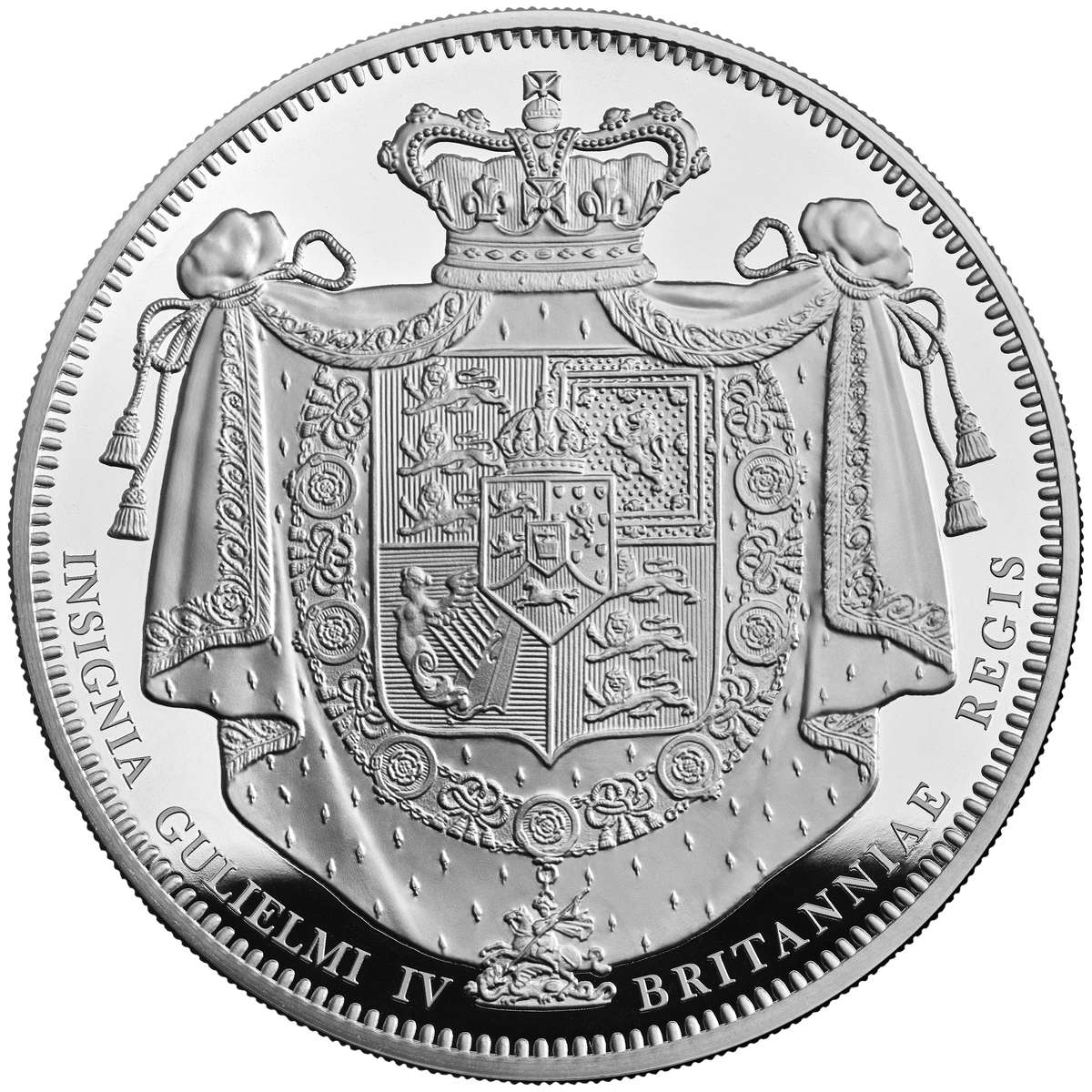
Proof Silver
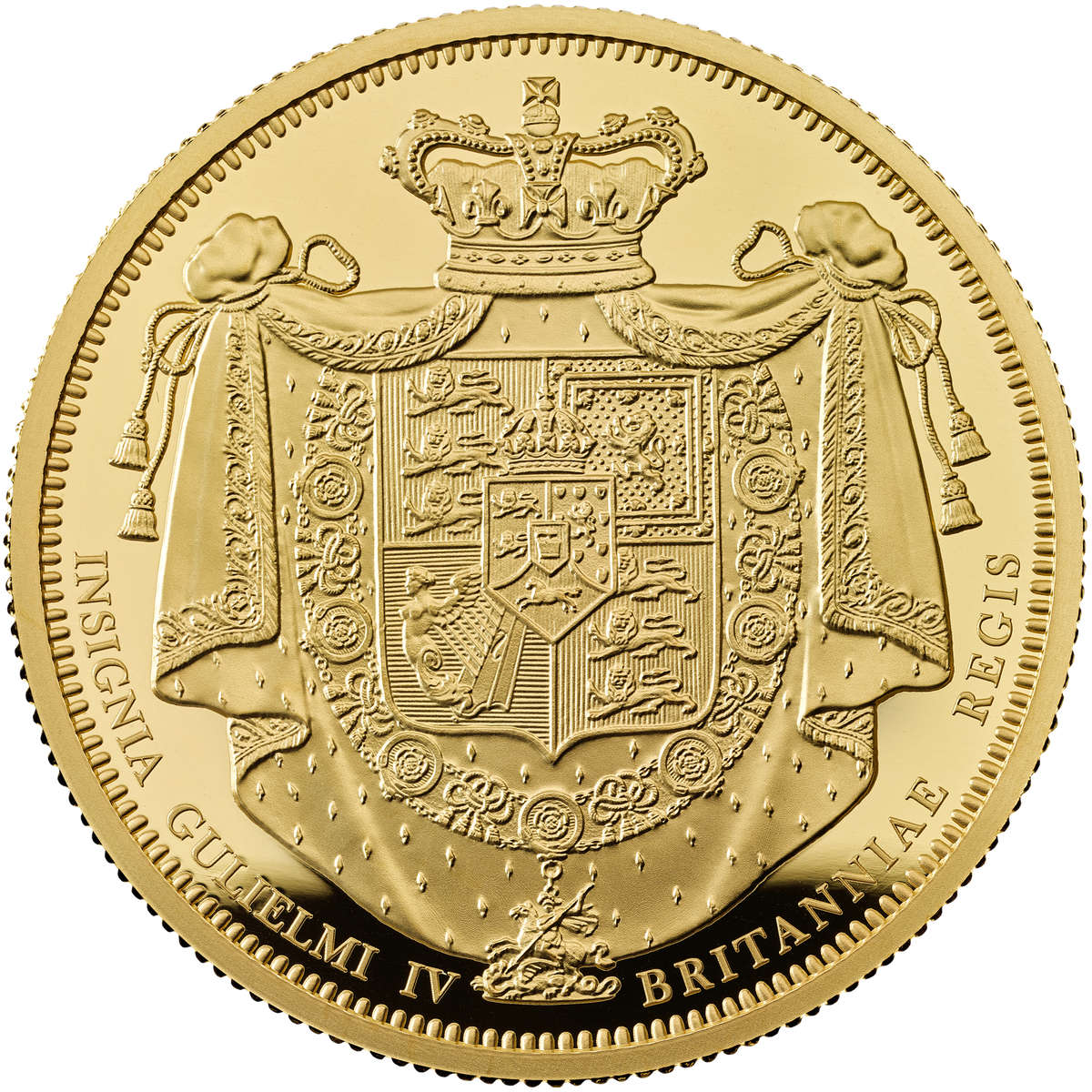
Proof Gold
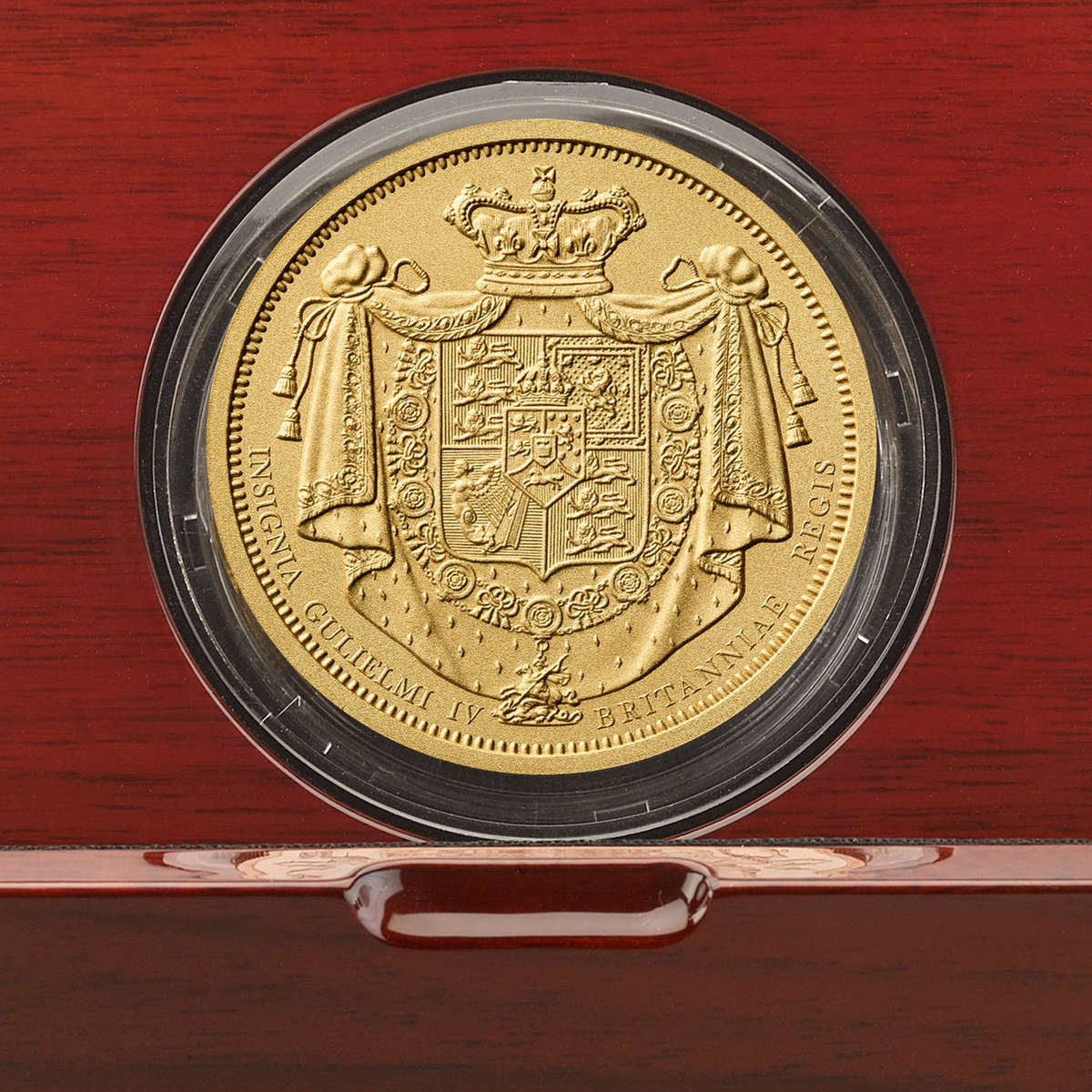
Proof Gold with the matt finish
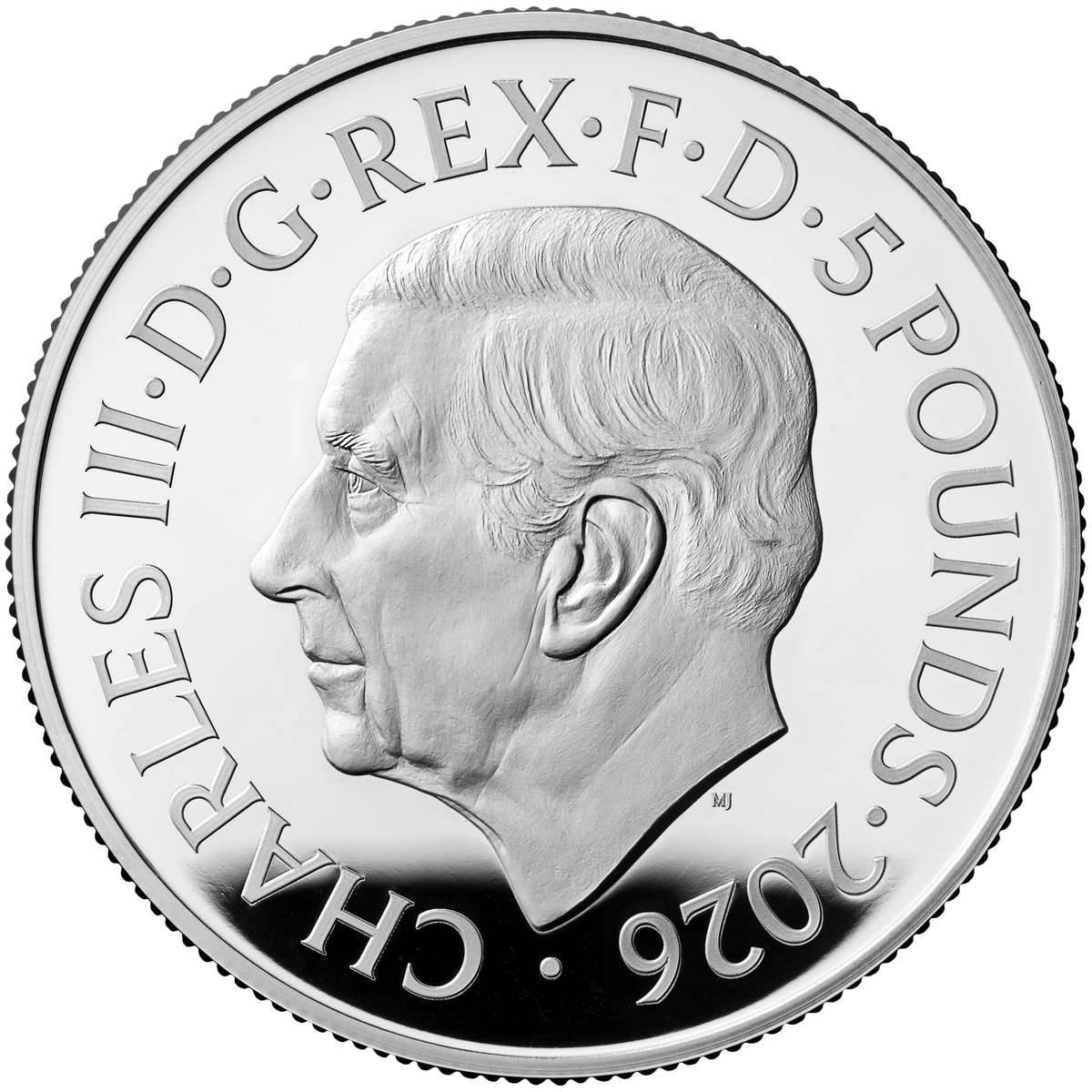
Obverse
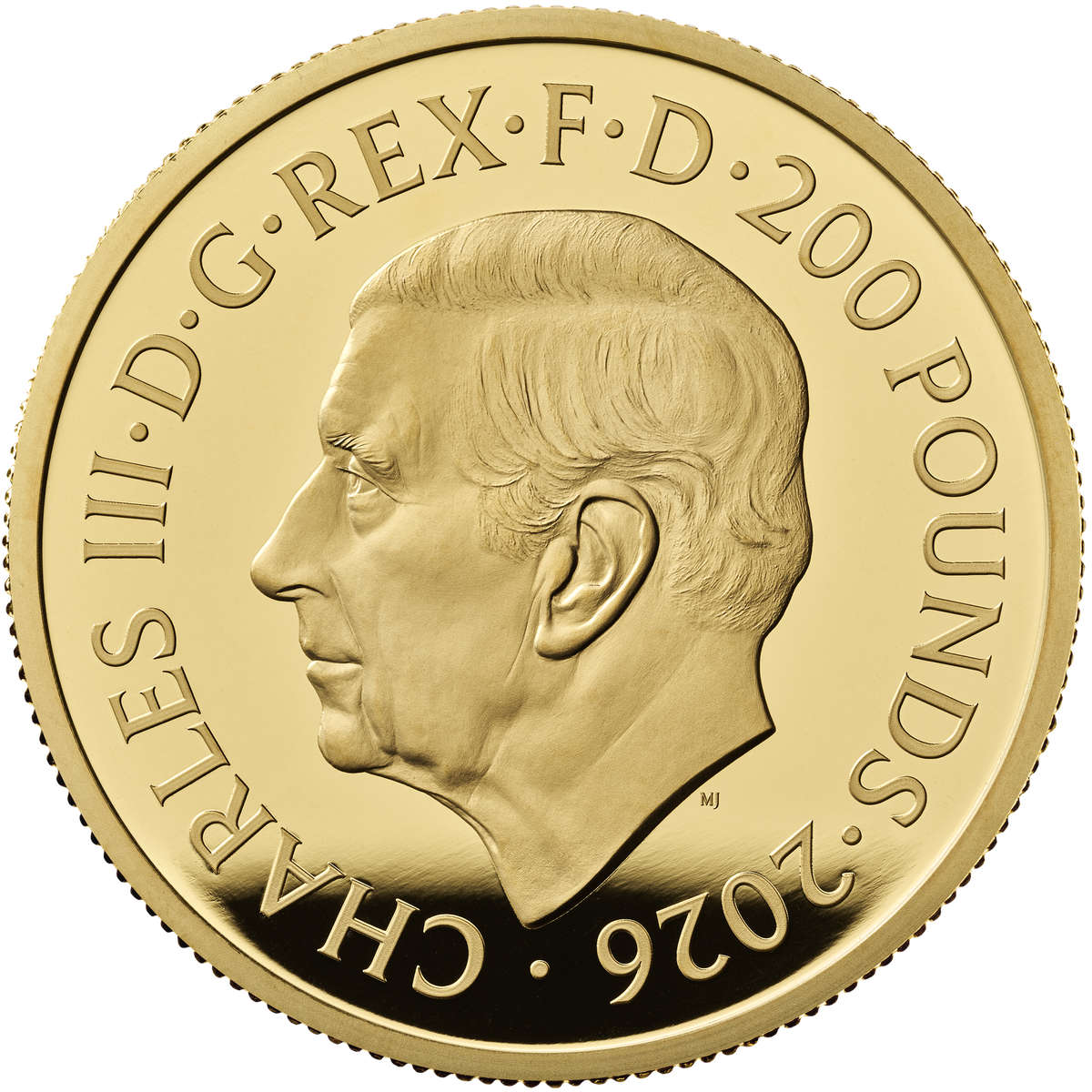
Obverse (50p 22kt)
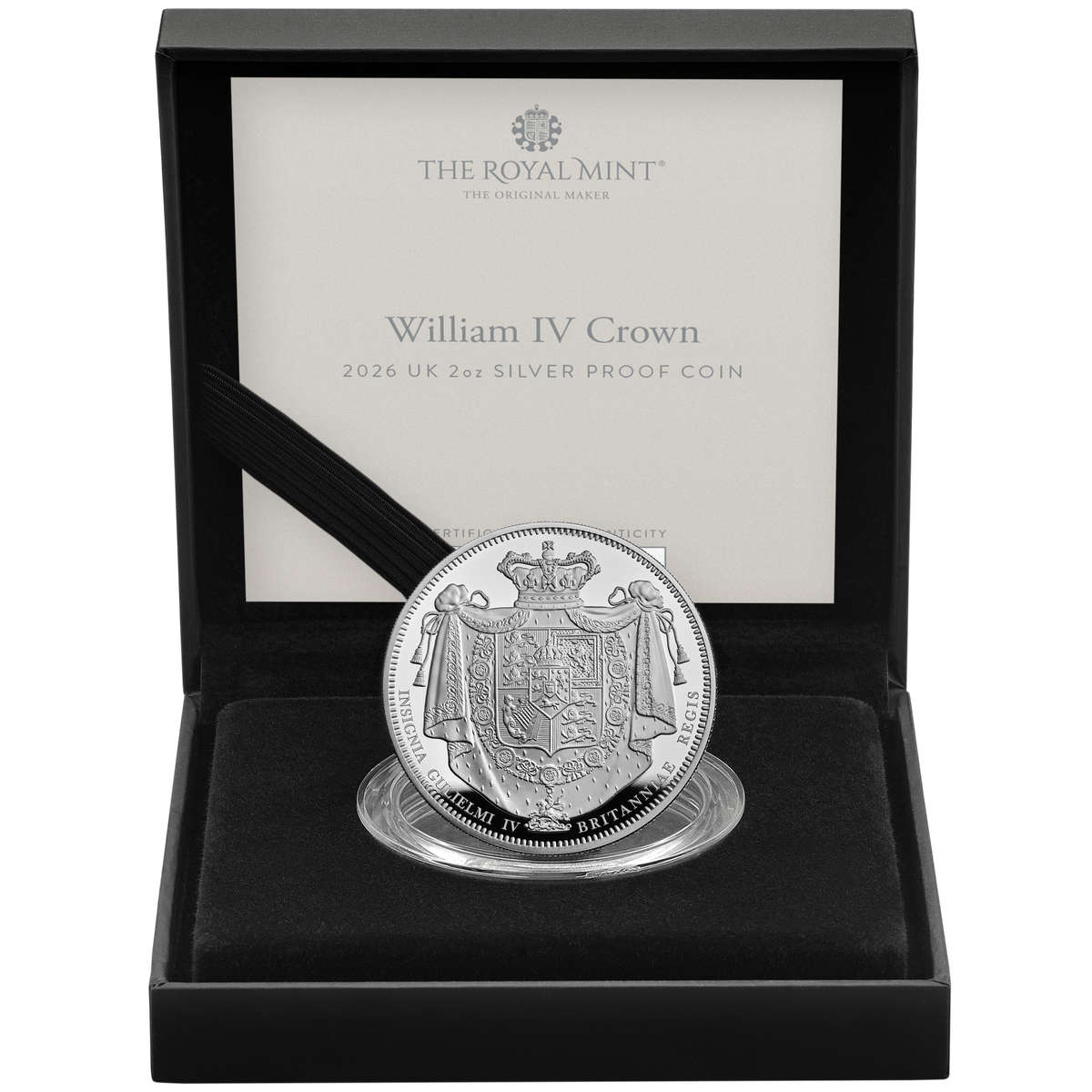
Box for 2oz silver proof
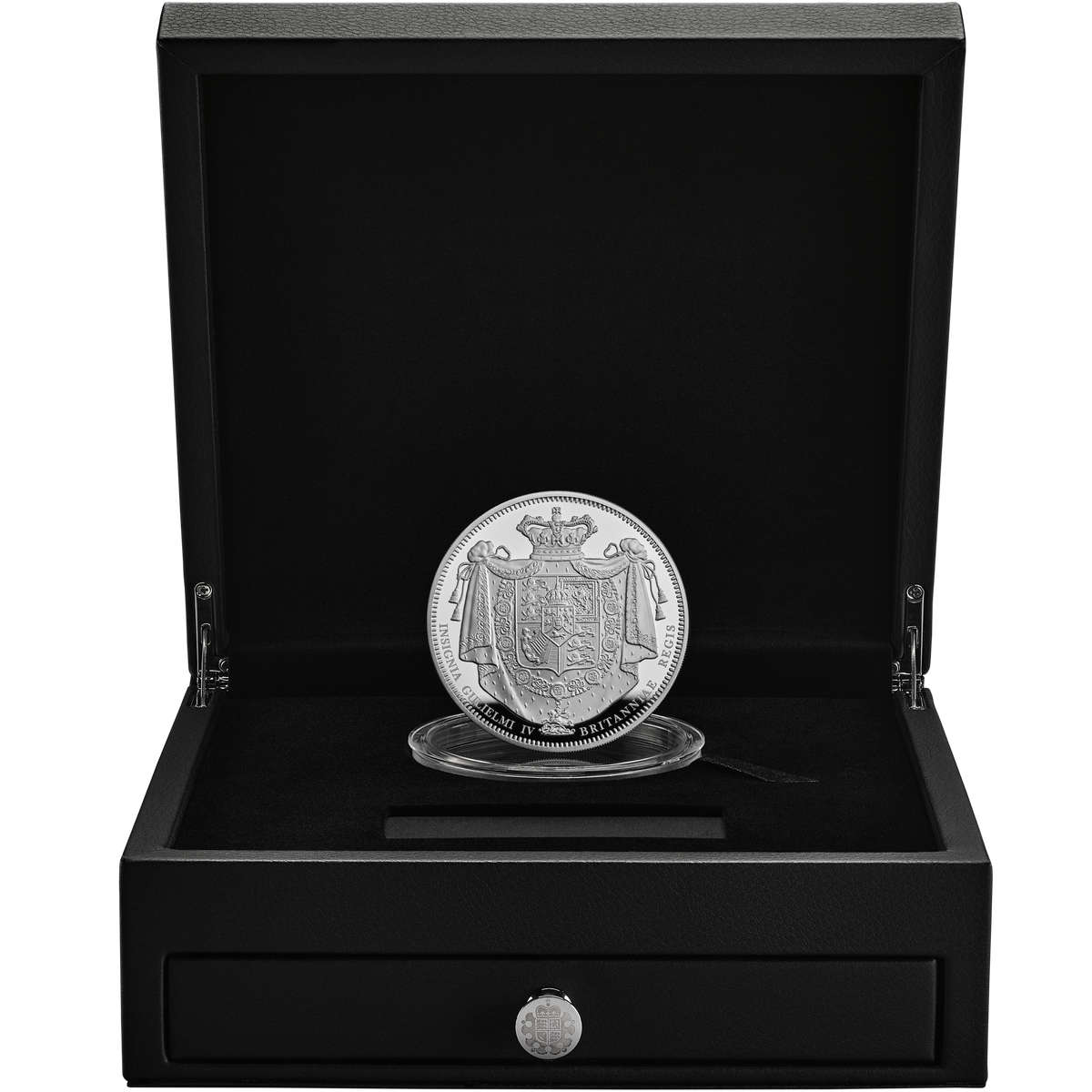
Box for 10oz silver proof
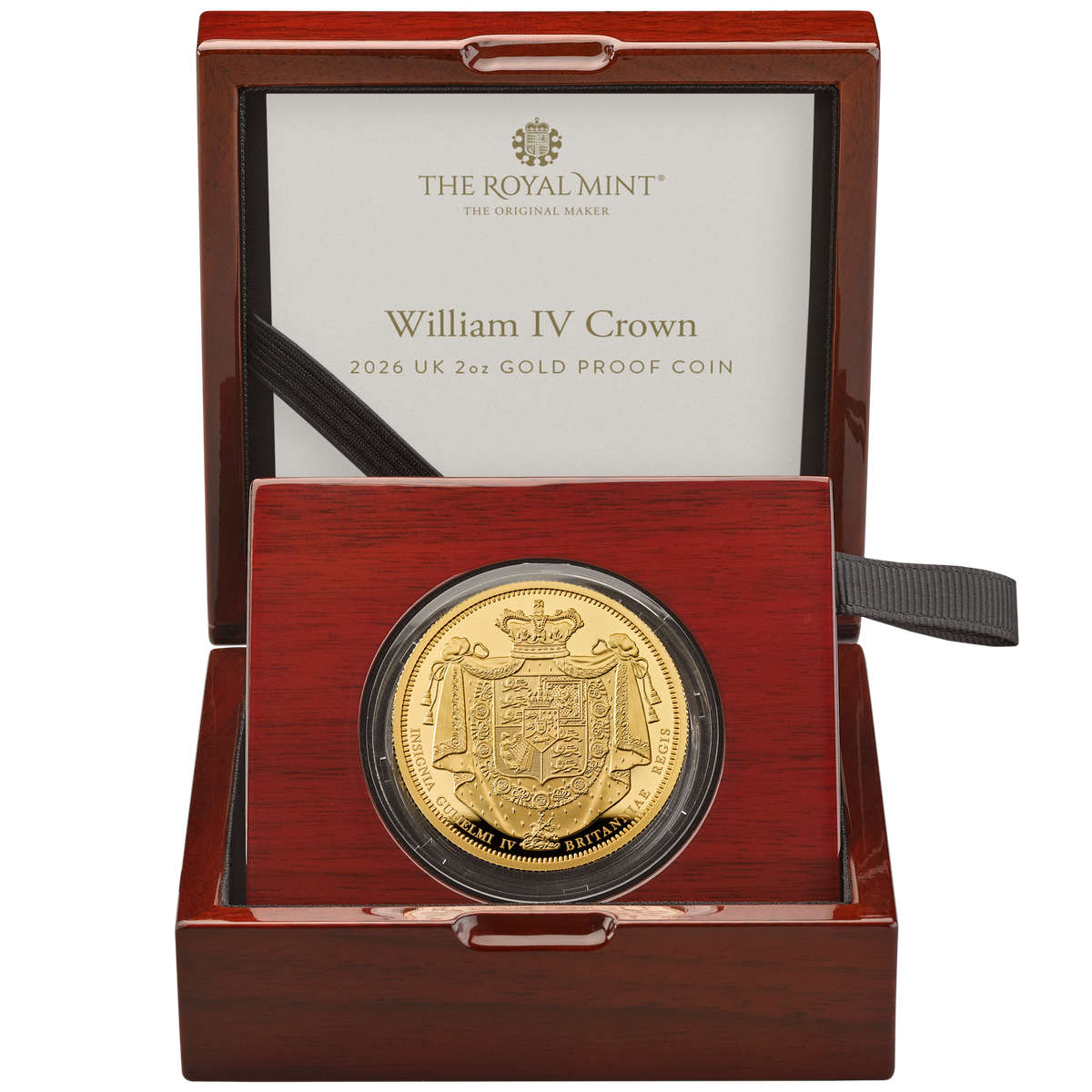
Box for 2oz gold proof
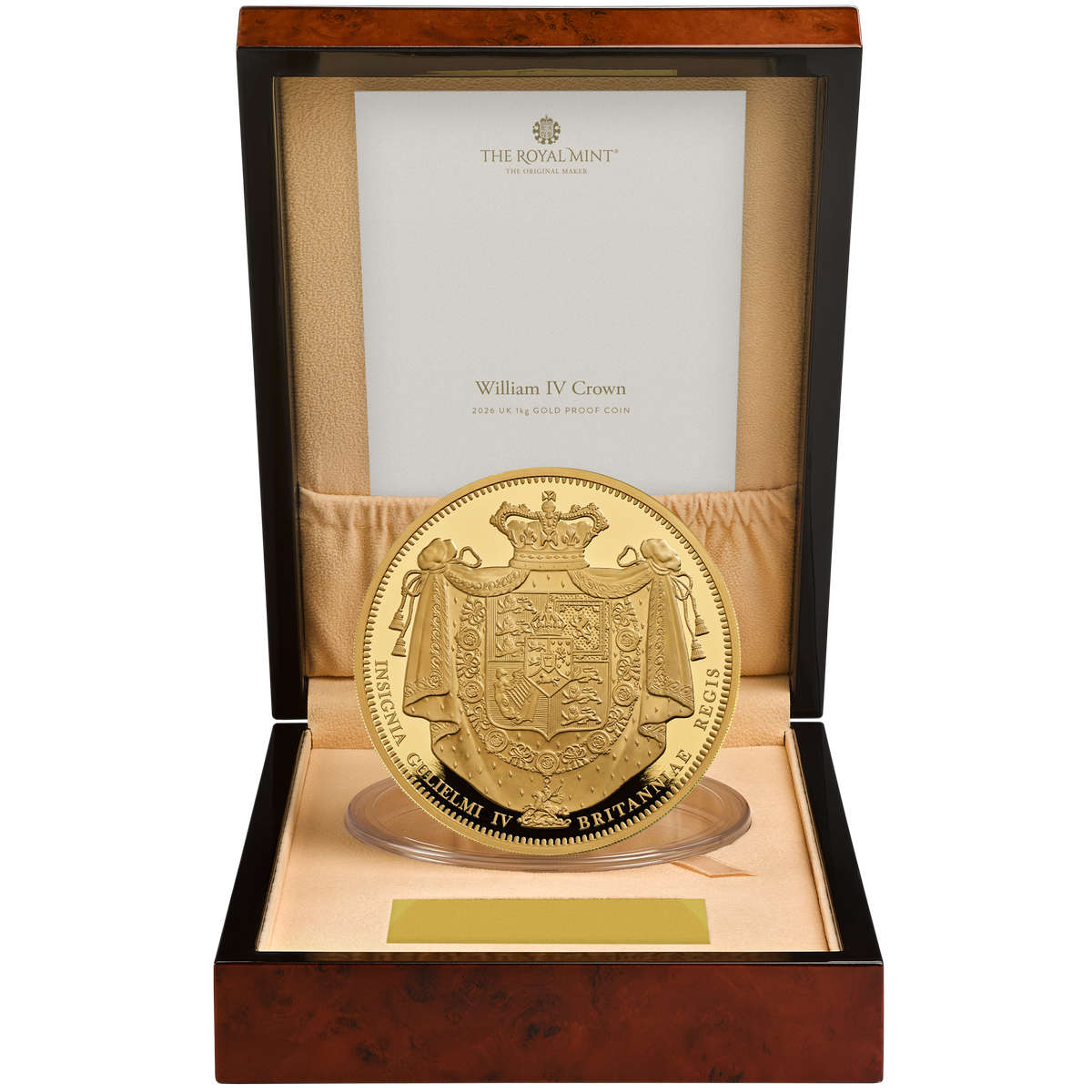
Box for one-kilo gold proof
SPECIFICATIONS
| DENOMINATION | COMPOSITION | DIAMETER | FINISH | MINTAGE | R.R.P. |
| £10 UKP | 312.59 g of 0.999 silver | 65.60 mm | Proof | 100 | £1,395.00 |
| £10 UKP | 156.30 g of 0.999 silver | 65.60 mm | Proof | 360 | £750.00 |
| £5 UKP | 62.86 g of 0.999 silver | 40.60 mm | Proof | 3,110 | £350.00 |
| £5,000 UKP | 5015.00 g of 0.999 gold | 175.00 mm | Proof | 1 | £735,000.00 |
| £1,000 UKP | 1005.00 g of 0.999 gold | 100.00 mm | Proof | 7 | £141,500.00 |
| £500 UKP | 156.30 g of 0.9999 gold | 50.00 mm | Proof | 35 | £22,950.00 |
| £200 UKP | 62.42 g of 0.9999 gold | 40.00 mm | Proof | 175 | £9,250.00 |
| £200 UKP | 62.42 g of 0.9999 gold | 40.00 mm | Proof (Matt) | 60 | £9,250.00 |
Leave A Comment