

William Marshall, the ‘Greatest Knight who ever lived’ inspires CIT’s numismatic look at the chivalric arts
William Marshall’s career was a true rags to riches story. He was born in 1147, the fourth son of a minor Anglo-Norman nobleman, who made the mistake of supporting Empress Matilda in what became known as ‘The Anarchy’, a 15-year civil war against King Stephen. At one point, during a siege, William was almost launched at his fathers castle on a trebuchet, but Stephen took a liking to the boy and spared him. He was raised and trained in Normandy, and in 1166, was knighted on the battlefield.
He found his calling in the tournaments, becoming highly skilled in the chivalric fighting that marked the age. From 1170 to 1182, he served the son of Henry II until his death, and Marshall then went on crusade to Jerusalem, even joining the Knight’s Templar. After returning to Henry IIs service, a war broke out with Richard I, and after Henry’s death, he joined the court of Richard, defending his interests while the ‘Lionheart’ went off on the Third Crusade. After Richard’s death, he became one of King John’s most loyal defenders, even during the conflict with the Barons that led to Magna Carta.
He became the regent of Henry II upon that kings ascension, and went to war with the invading French, successfully, even leading at the pivotal Battle of Lincoln in 1217 at the age of 70. He reissued Magna Carta, was a signatory to it, and set in place administrative changes that ultimately led to trial by jury, and the stabilisation of the realm. He died in 1219 and was lauded in death, as he had been in life. He was ancestor to monarchs up to Queen Elizabeth I, and left an incredible legacy with his noble actions. The basis for rule which he set out still resonate in much of the world today. His life was documented in 1226, a work rediscovered in 1861. Truly a legend of any age.
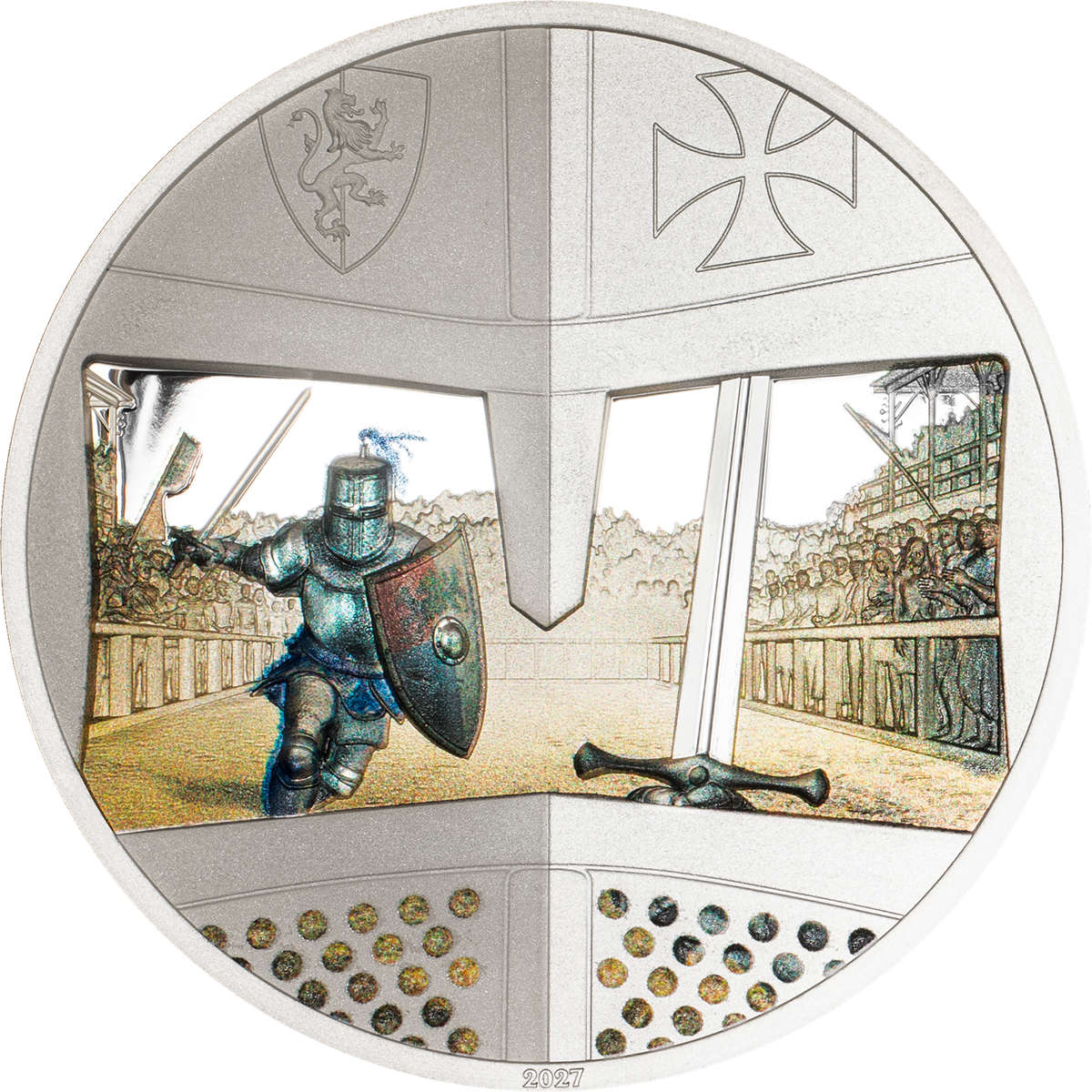
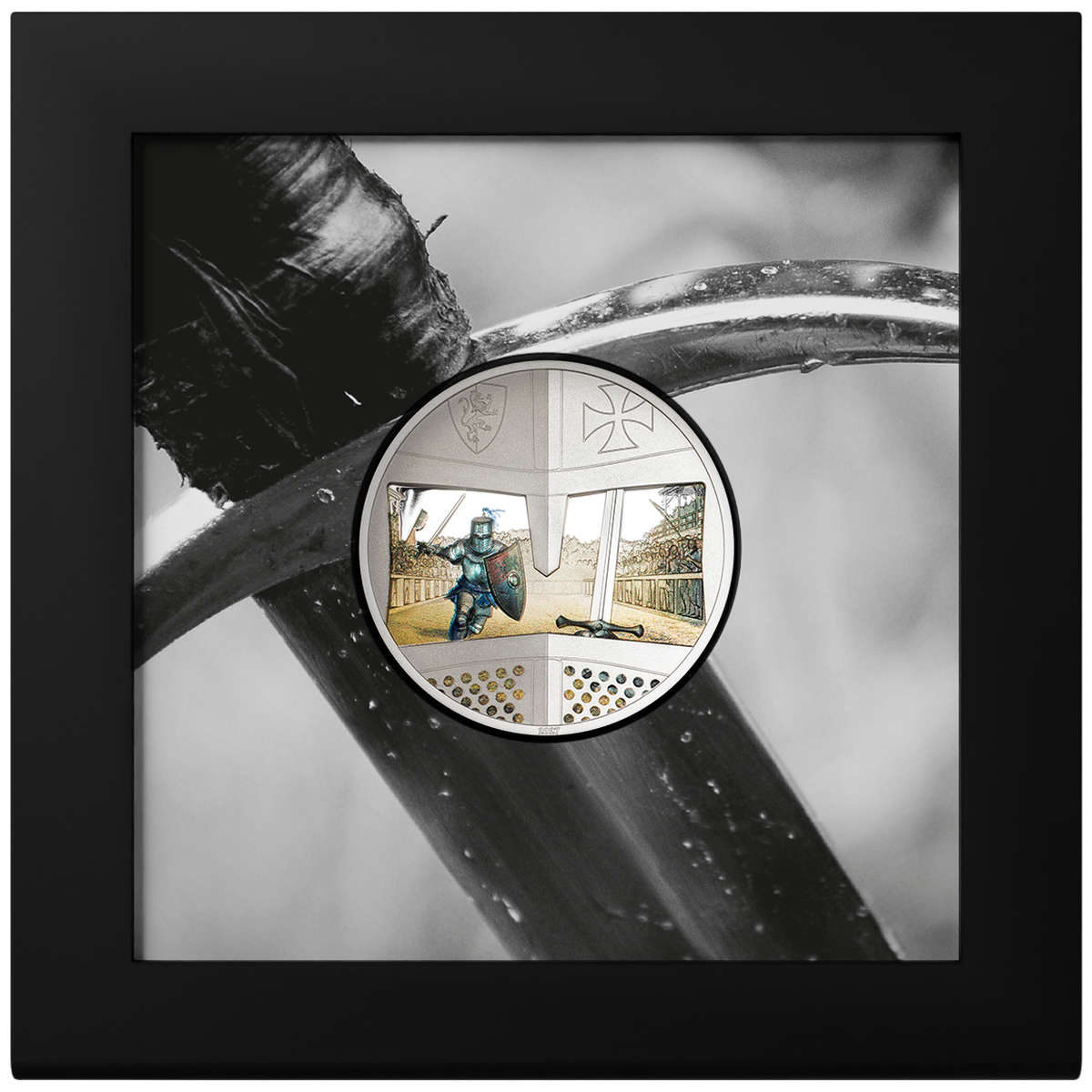
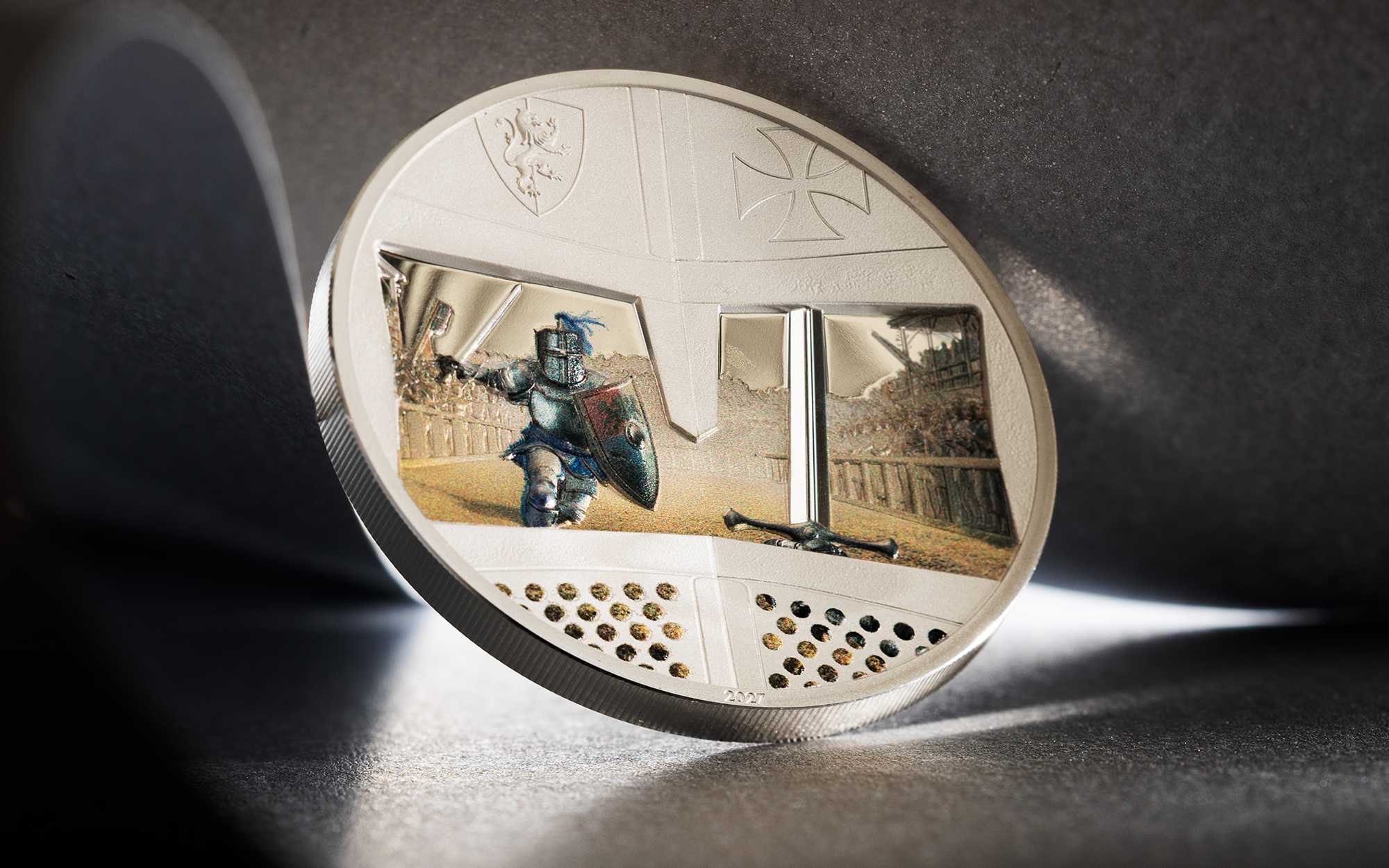
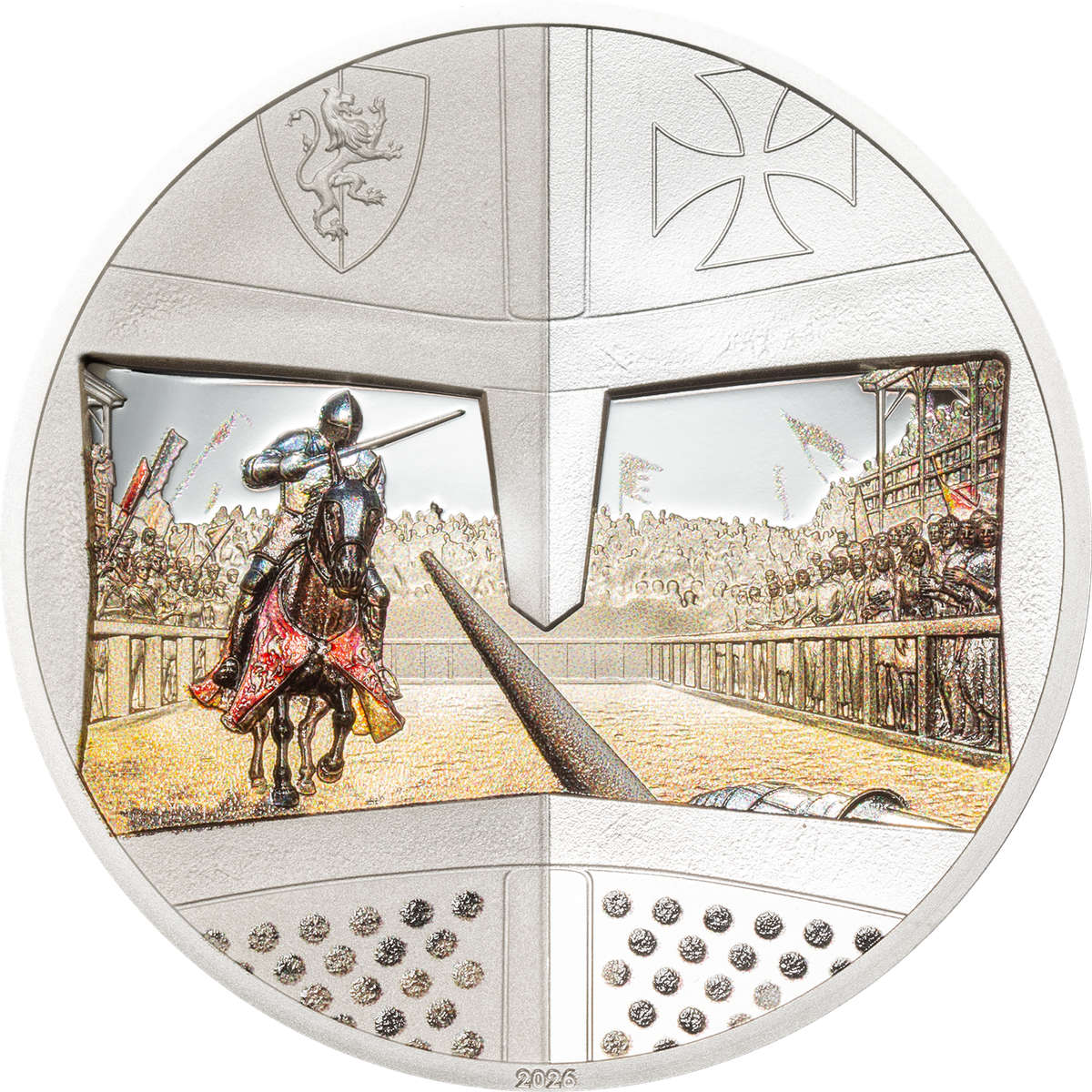
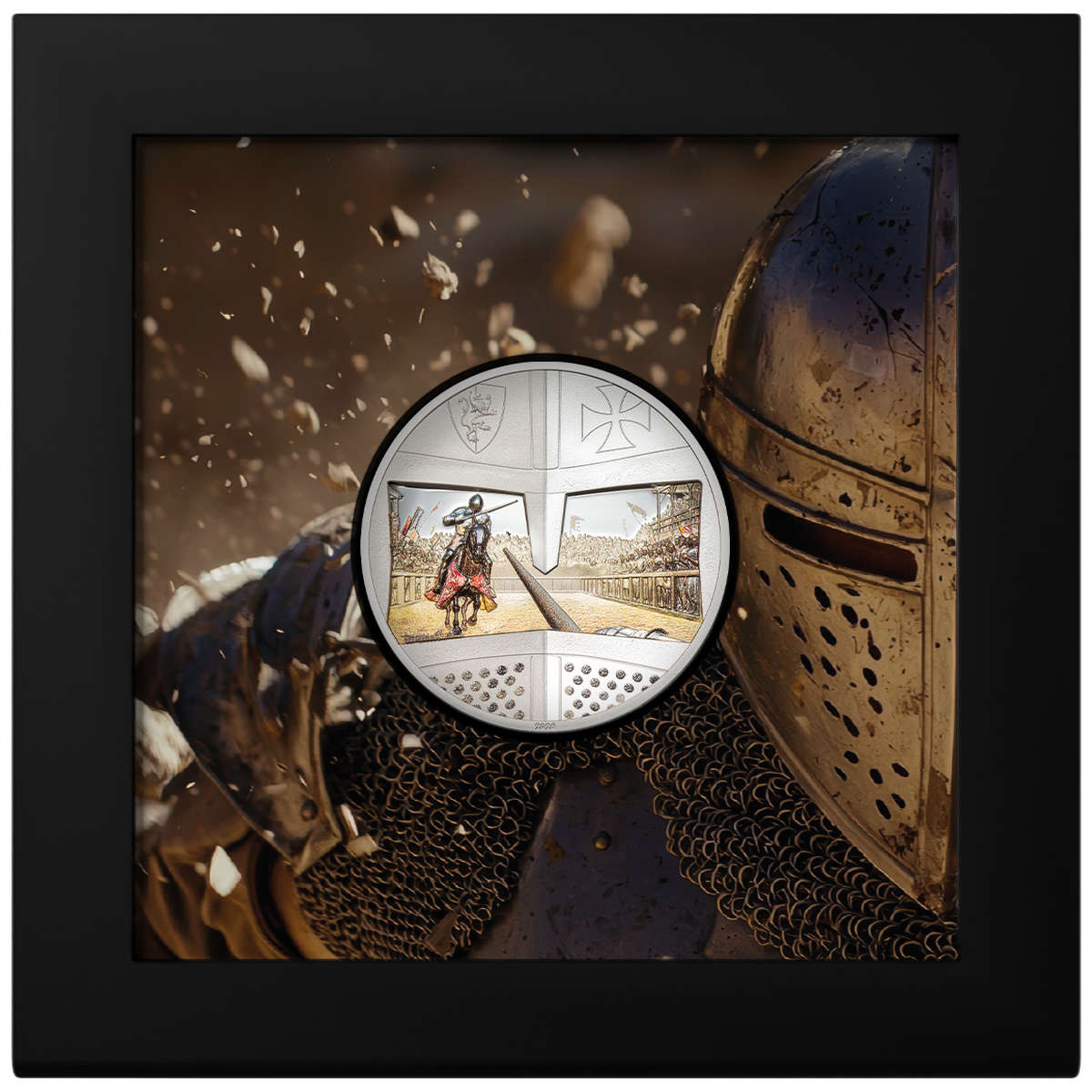
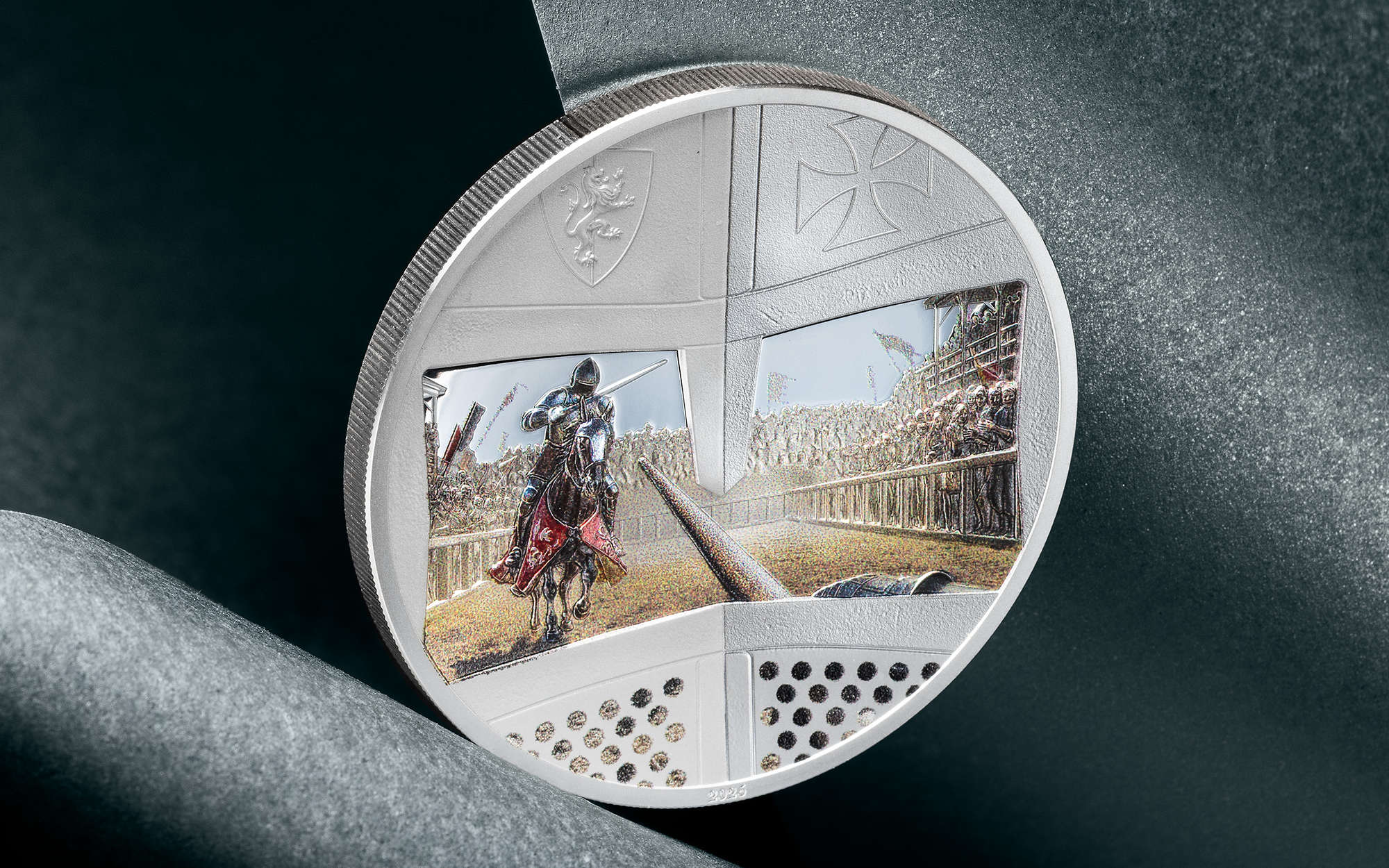
The coin is part of a three-issue series that depict the tournament combats William Marshall, 1st Earl of Pembroke undertook. They do so with a clever common reverse design, based on the view he would have had from inside his helmet. This second release has him sword fighting during a tournament, following the debut coins jousting. The view out, cleverly including the small vents in the chinguard, is coloured. At the top is inscribed the coat-of-arms of William, and the Templar cross.
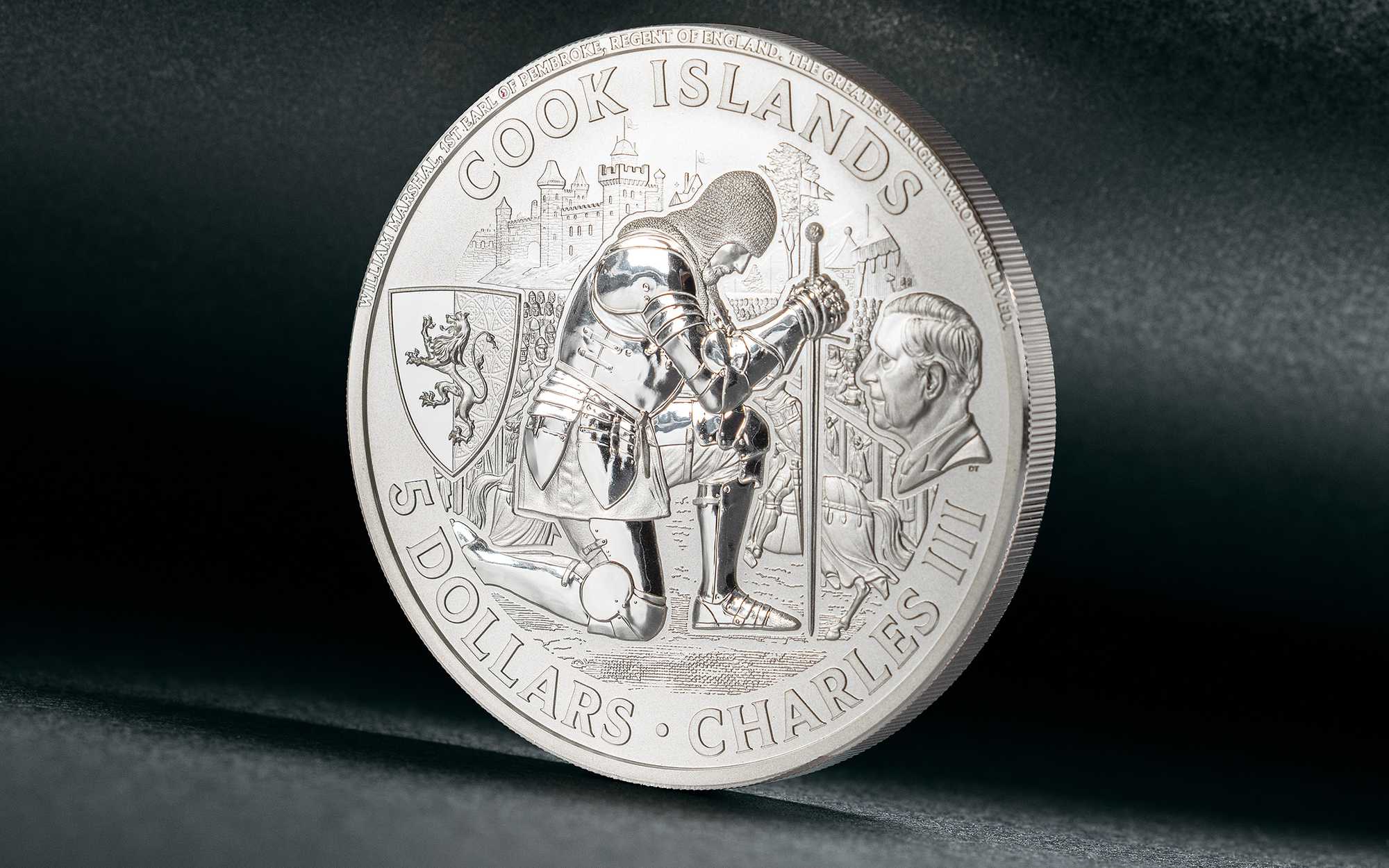
My favourite of these coins, however, is that superb common obverse, featuring a smartminted kneeling William paying fealty after winning yet another tournament. Armoured, and in front of a tournament scene, it captures the essence of the man perfectly. His titles are micro-engraves around the rim. A terrific design. There is just one more design to come, but it’s a concept we’d like to see returned to in the future. You can see images of both of the current releases below, and they’re available to pre-order now.
Gallery
SPECIFICATIONS
| DENOMINATION | COMPOSITION | DIMENSIONS | FINISH | MINTAGE |
| $5 CID (Cook Islands) | 31.1 g of 0.9999 silver | 38.61 mm | Proof, Colour | 750 |
Leave A Comment