


2014-2020 SHENGXIAO LUNARS by the Royal Mint
One of the most eagerly awaited bullion coins for some years have been the Perth Mint’s perennially popular Lunar Series. The Lunar market is exceptionally diverse and well liked so it should’ve come as no surprise that other mints would look to emulate that success. In 2014, one of the industries biggest players decided it wanted a slice of the pie, the Royal Mint.
The mint employed British-Chinese artist Wuon-Gean Ho to design a coin range called Shengxiao Lunars. The 2014 Year of the Horse coin was the first. Wuon-Gean has produced some fine, if controversial stylistic designs. The Shengxiao Lunars have smaller mintages and a tighter, more traditional proof range, unlike the Perth Mint, which offers a huge variety of bullion sizes and specials. However, for the 2019 coin the lead artist has been changed to Harry Brockway. His style is less stylistic and leans a little more to the Perth Mint style than Wuon-Gean’s work. It’s equally divisive. As of 2021, this series is dead, abandoned by the Royal Mint with just 7 of the 12 issues released. The proof range continues.
Available in gold and silver, just a single size is available in each, that being the ever in demand one-ounce format. For the 2015 Year of the Sheep, the mint did produce 5,000 ¼ ounce gold coins, but that hasn’t reappeared and can’t be considered a regular part of the range. A 1/10 ounce coin in a similar finish is available every year, but sold as a boxed numismatic like the proof range and thus priced accordingly. To all intents and purposes, the one-ounce format is the bullion range.
One worth keeping an eye out for is the 2014 Year of the Horse ‘mule’. In 2014 the mint accidentally struck 38,000 coins with the crenelated Britannia obverse and 17,000 Britannia coins with the lunar obverse. These are selling for decent premiums above the normal coins and make an interesting addition for the committed collector. The Britannia in our image above is an annual special, having a lunar privy mark struck into the edge at approximately 45º intervals. Made for a US dealer, they’re fairly easy to pick up.
2014 YEAR OF THE HORSE
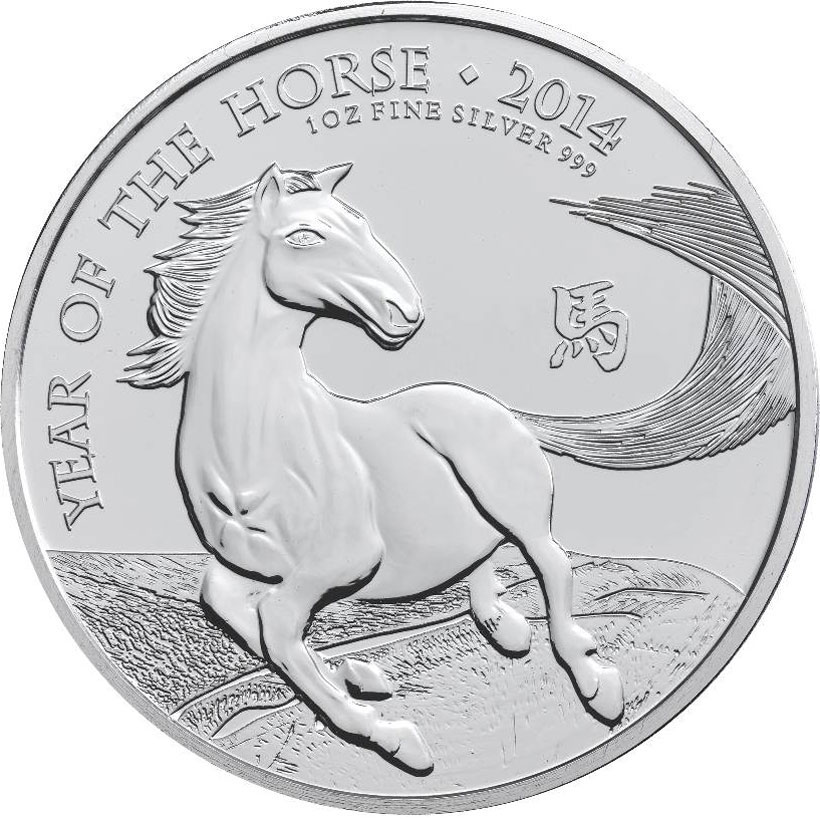
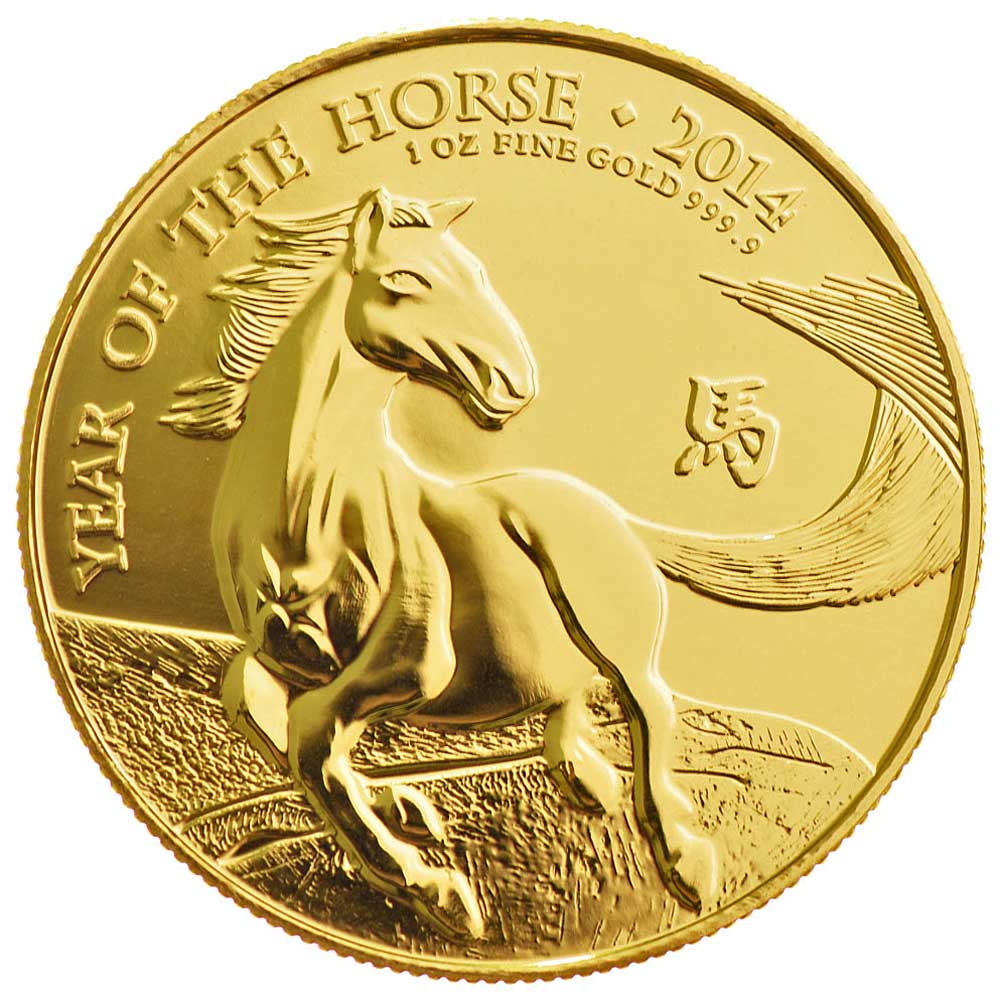
DESIGN: Depicts a leaping horse under which is a depiction of the Uffington Horse in Oxfordshire. At the top is the inscription YEAR OF THE HORSE 2014 and the Chinese character for horse.
2015 YEAR OF THE SHEEP
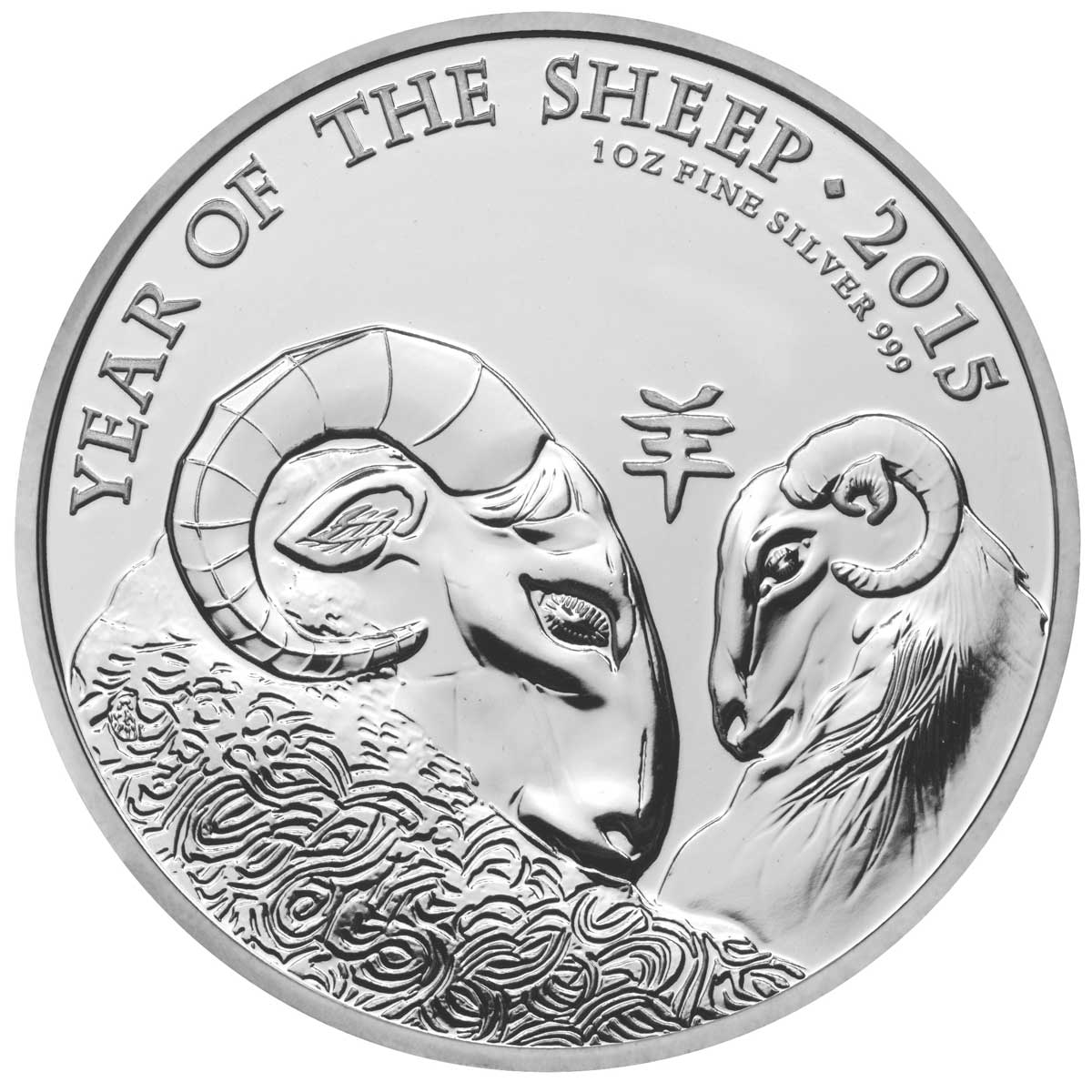
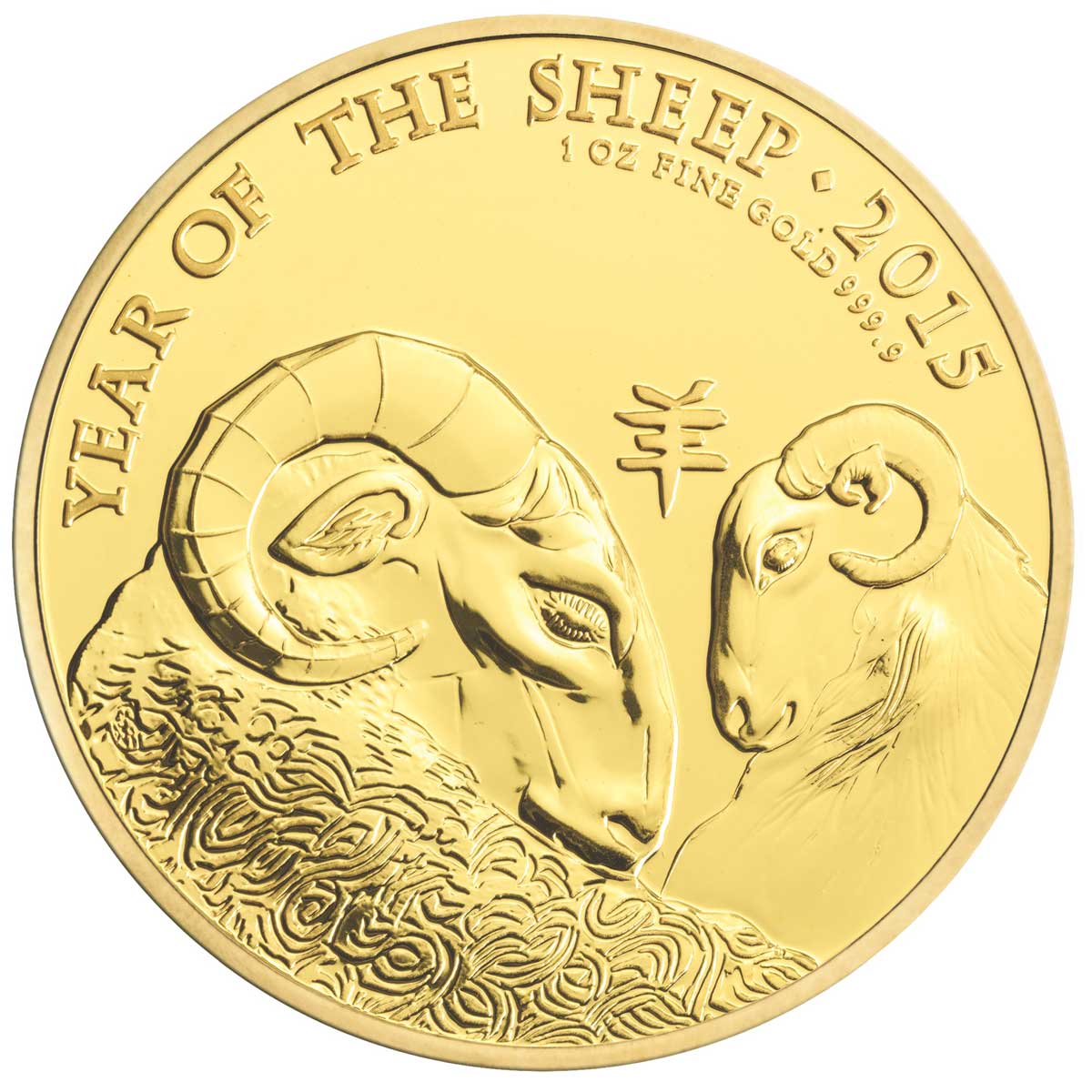
DESIGN: For the Lunar Year of the Sheep design, Wuon-Gean was inspired by her veterinary experience and memories of the lambing season. She worked in shifts with hours of waiting before periods of busy and rewarding work, seeing new lambs come into the world and watching the mother and child bond. She recalls observing sheep as part of the British landscape – in the grounds of Blenheim Palace, on the hillsides of the Peak district and in the rolling Brecon Beacons – their presence part of British life.
2016 YEAR OF THE MONKEY

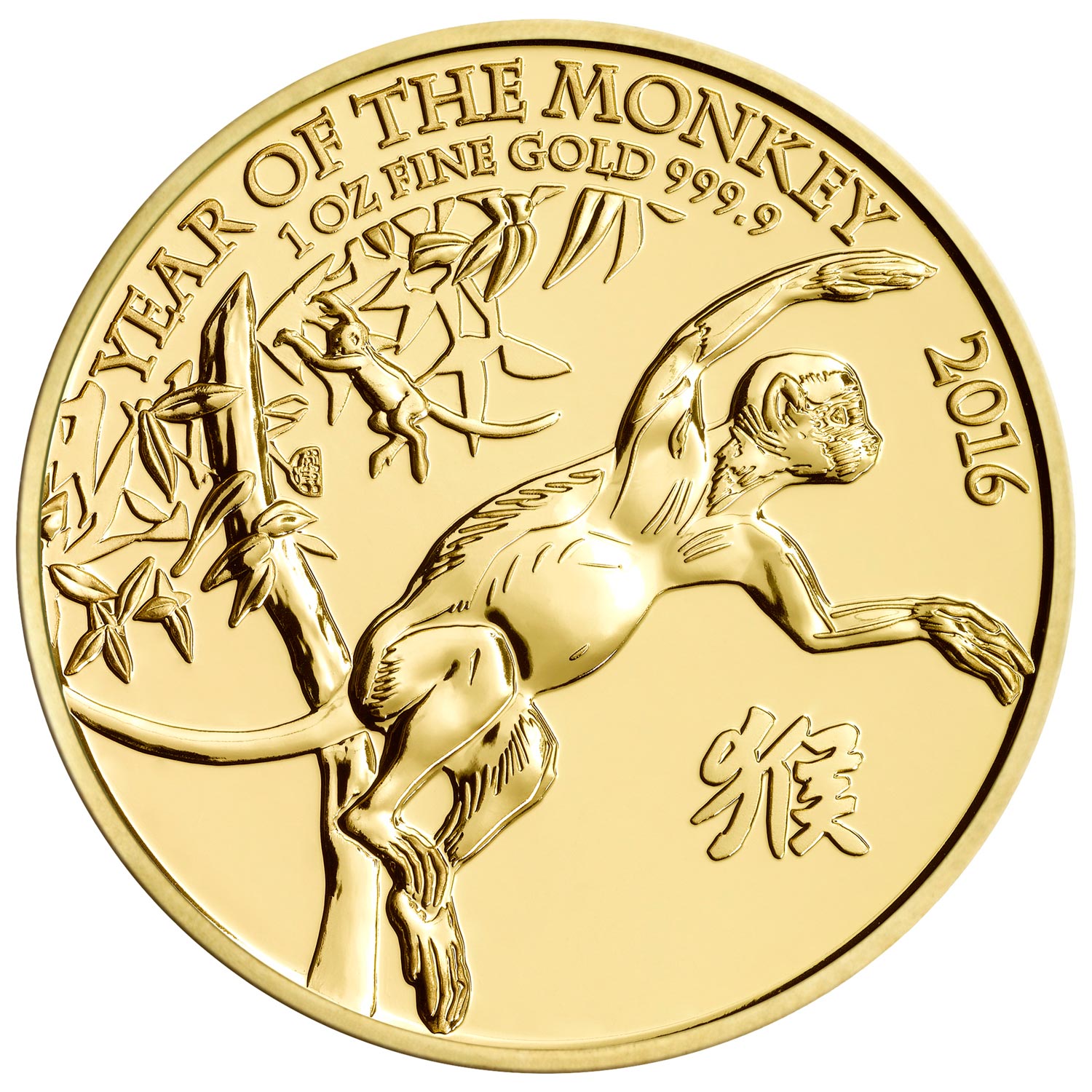
DESIGN: Wuon-Gean has depicted two rhesus monkeys in her composition, part of the ‘Old World’ family of monkeys originating in Europe, Africa and Asia. Wuon-Gean explains: “Rhesus monkeys and humans shared a common ancestor about 25 million years ago. They are extremely intelligent, sociable and family oriented, and are equally good at climbing and swimming.”
2017 YEAR OF THE ROOSTER
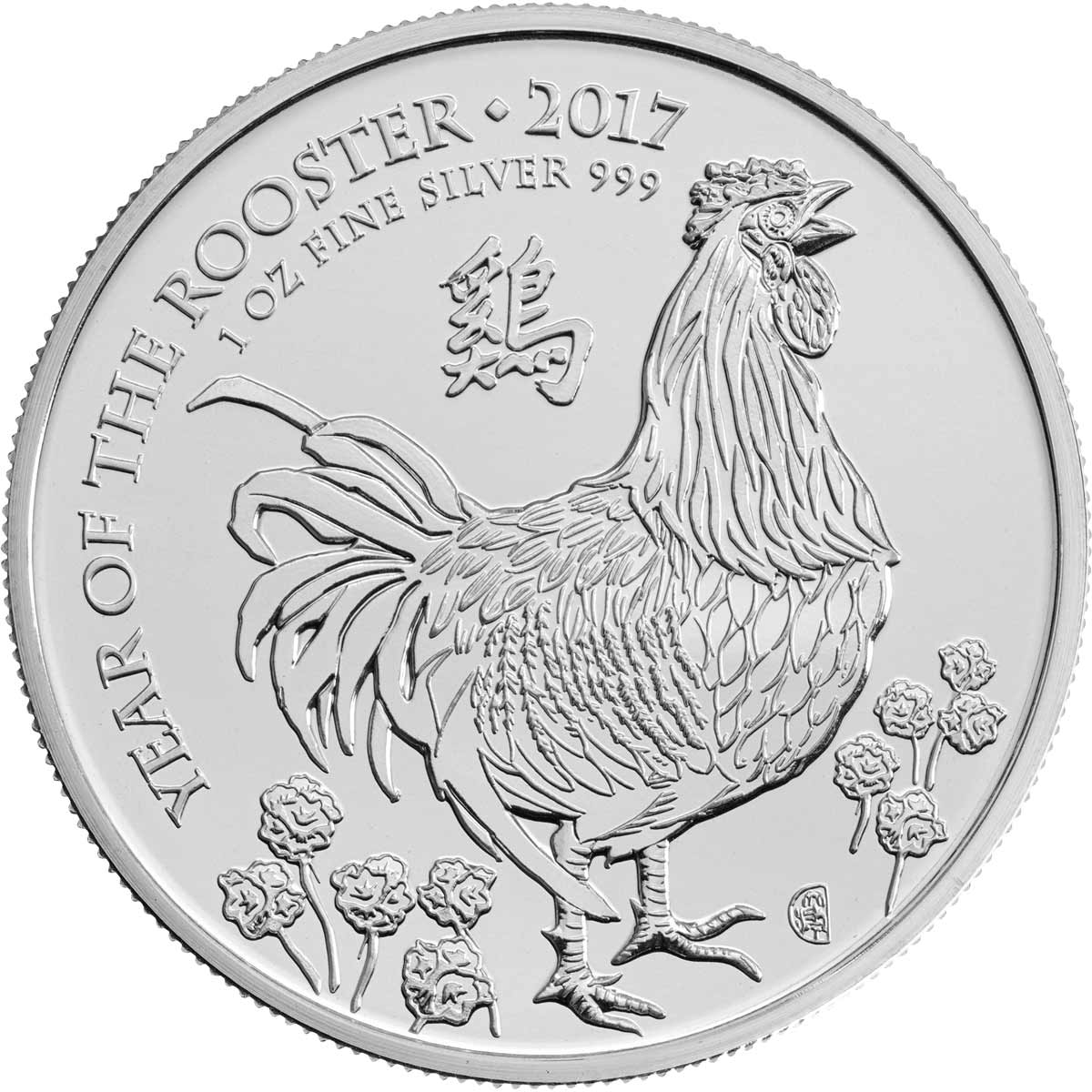
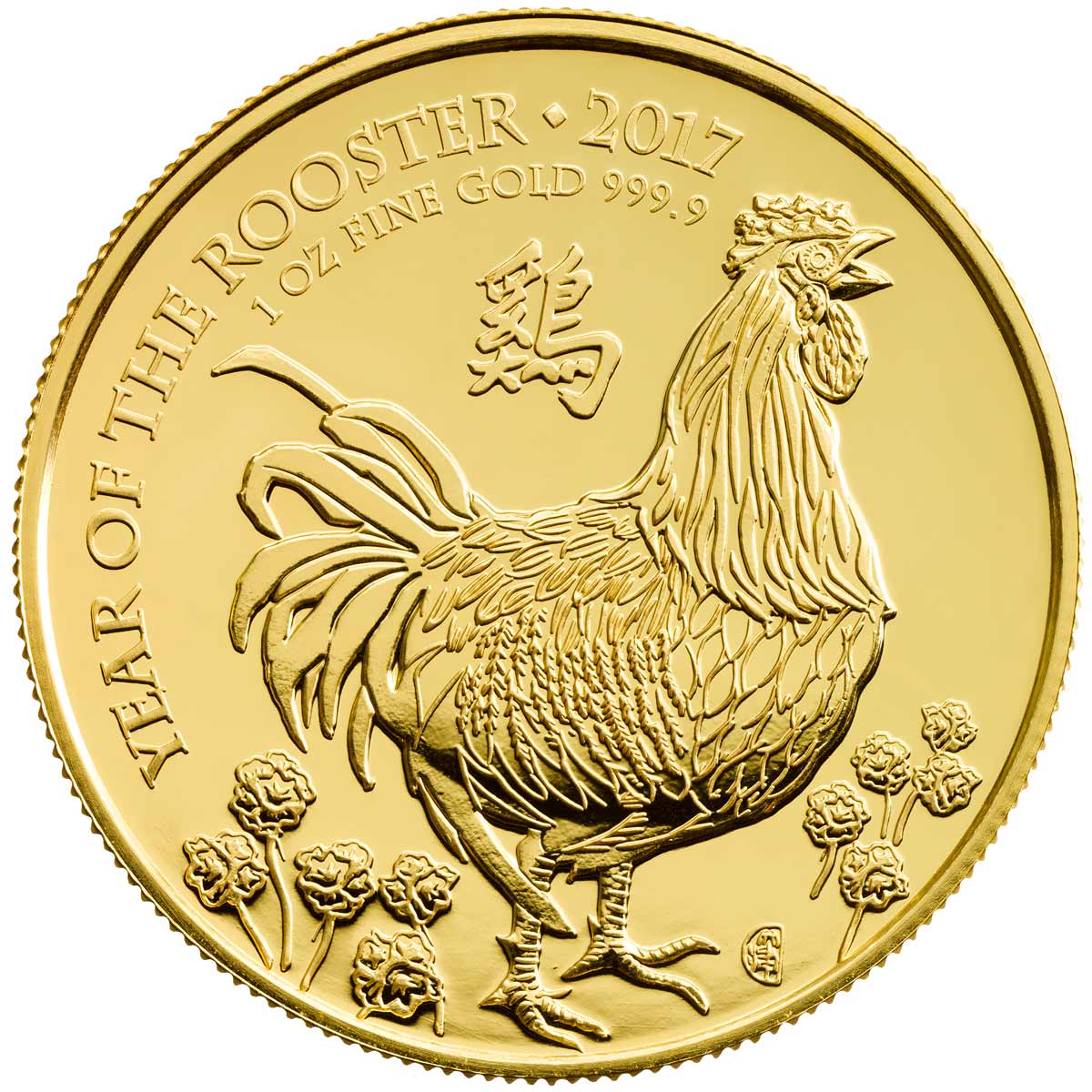
DESIGN: During her research process Wuon-Gean made detailed observations of roosters and hens to capture a real sense of their personality and movement. “The breed I have depicted on the coin is a Marsh Daisy from the Lancashire/Liverpool area of the UK – I wanted to root the design firmly in a real place. The Marsh Daisy is a gentle and friendly breed, well-adapted to sandy marshland. They are beautiful birds with a very flat, pillow-like comb called a rose-comb.”
“The flowers in the design are also called Marsh Daisies, an affectionate name for the flower also called sea-thrift, common to the areas where the birds live.”
2018 YEAR OF THE DOG
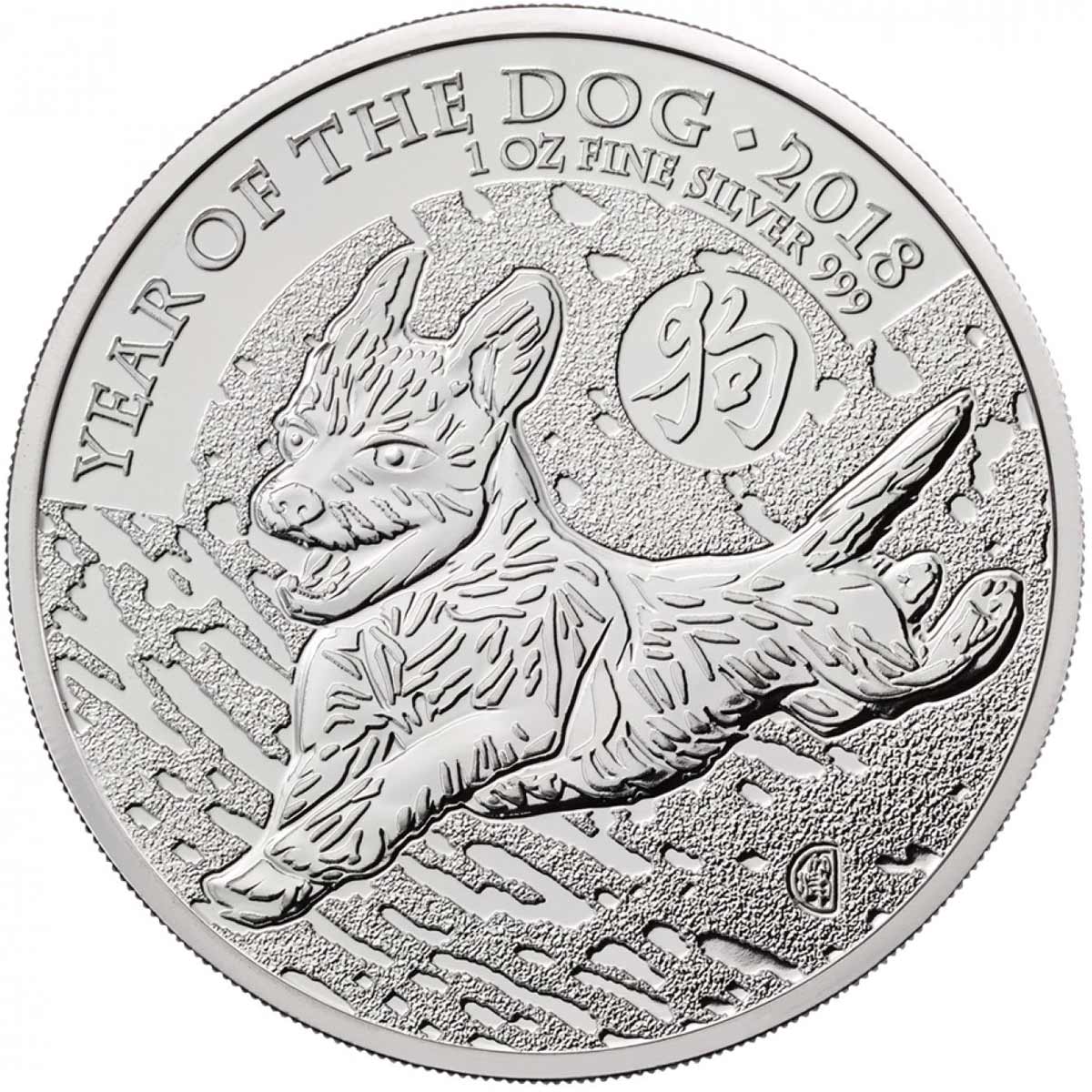
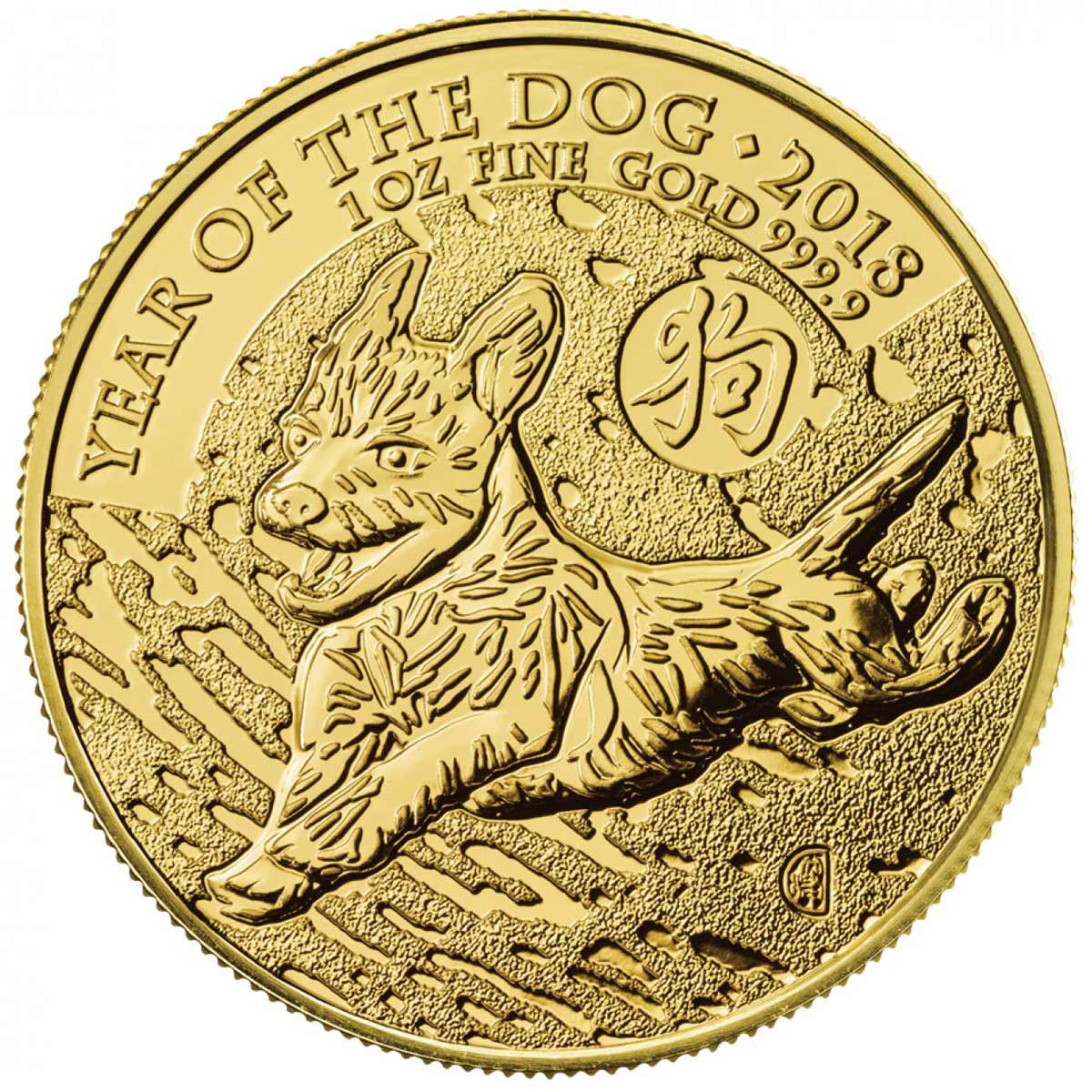
DESIGN: “The dog I have depicted is a mixed breed, like a West Highland White Terrier crossed with a Jack Russell. I wanted to show the energy and exuberance of a more compact dog. Bouncy, full of life and very playful, terriers have a quick intelligence, lots of loyalty and big personalities,” said Wuon-Gean.
The background design behind the leaping terrier on the coin design is biometric nose print of a greyhound belonging to Wuon Gean’s friend. “In a similar way to fingerprints in people, dogs each have their own unique nose prints. The nose print ties into the British regard for dogs as individuals and refers to the tradition of dog portraiture. The pixelated nature of the nose print is a contemporary take on the digitised information that surrounds us in the twenty-first century.”said Wuon Gean.
2019 YEAR OF THE PIG
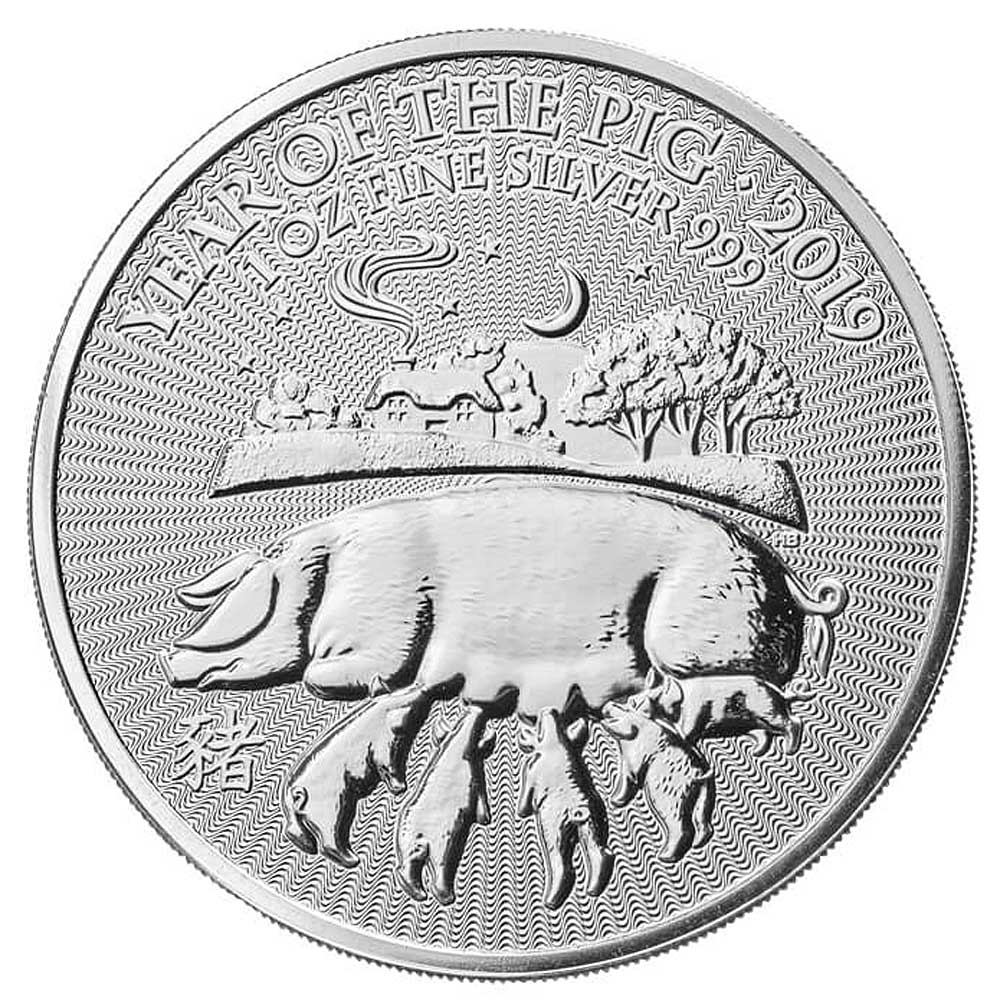
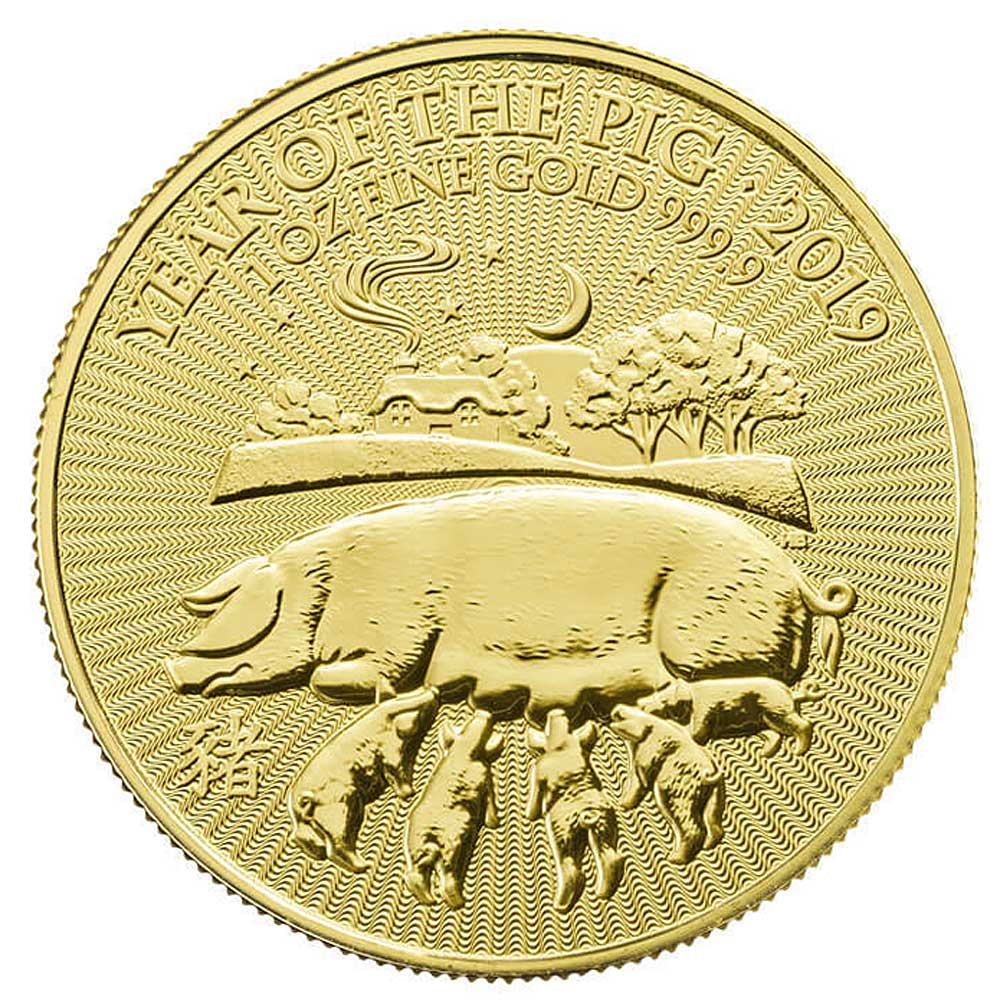
DESIGN: The pig is the sixth design in the series, and is the twelfth and final sign of the Chinese zodiac, appearing once every 12 years. Harry Brockway, the coin’s designer, has ensured qualities of people born in the Year of the Pig are evident in his design.
Behind the sow, who is lying comfortably with her children who are feeding, is a countryside landscape at night, featuring a traditional country home. This design shows the generosity, compassion and diligence associated with people born in the Year of the Pig, and defines their relationships with those close to them. The country home signifies the trait of feeling calm, through the drowsy night sky and smoke emanating from the warm fire within the home
2020 YEAR OF THE RAT
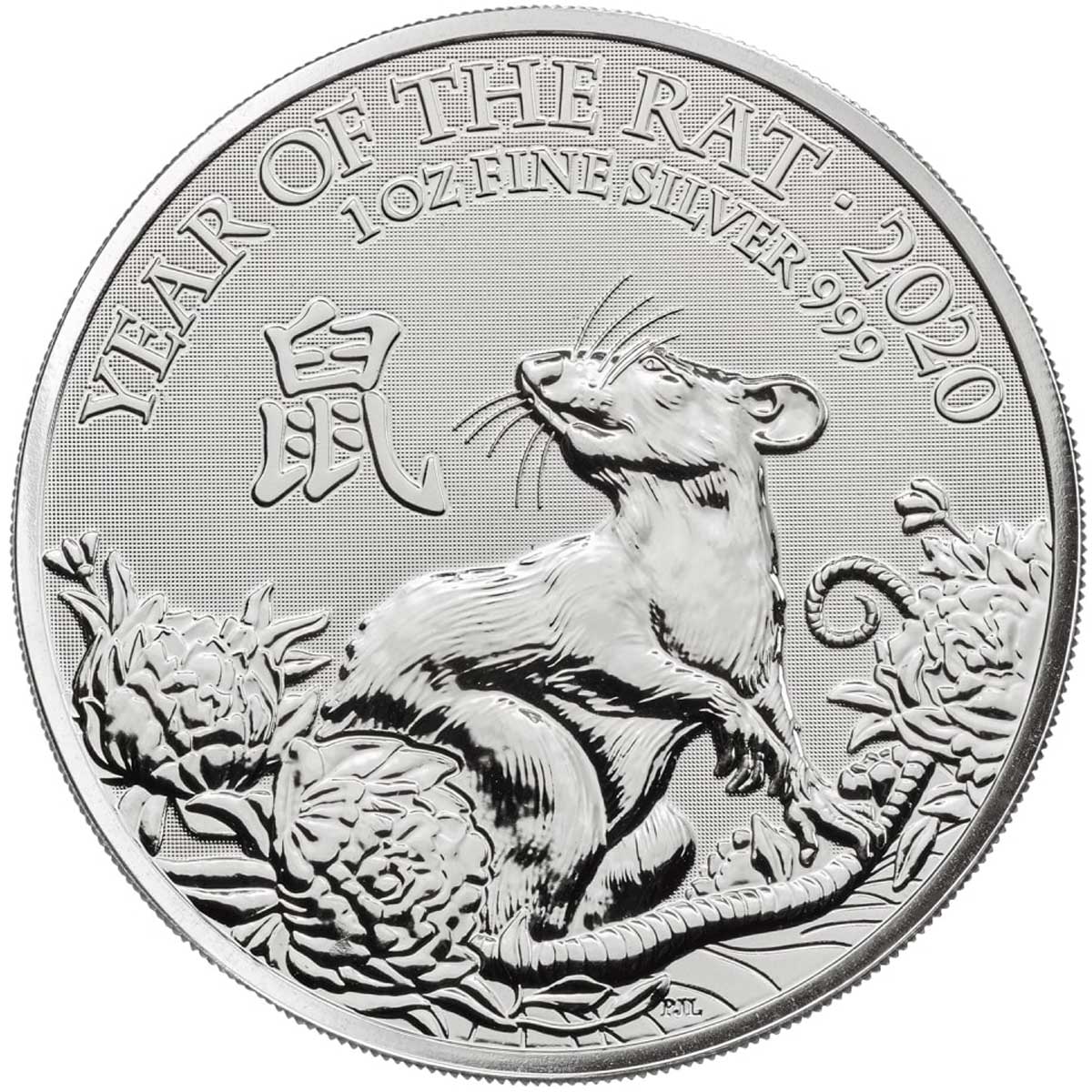
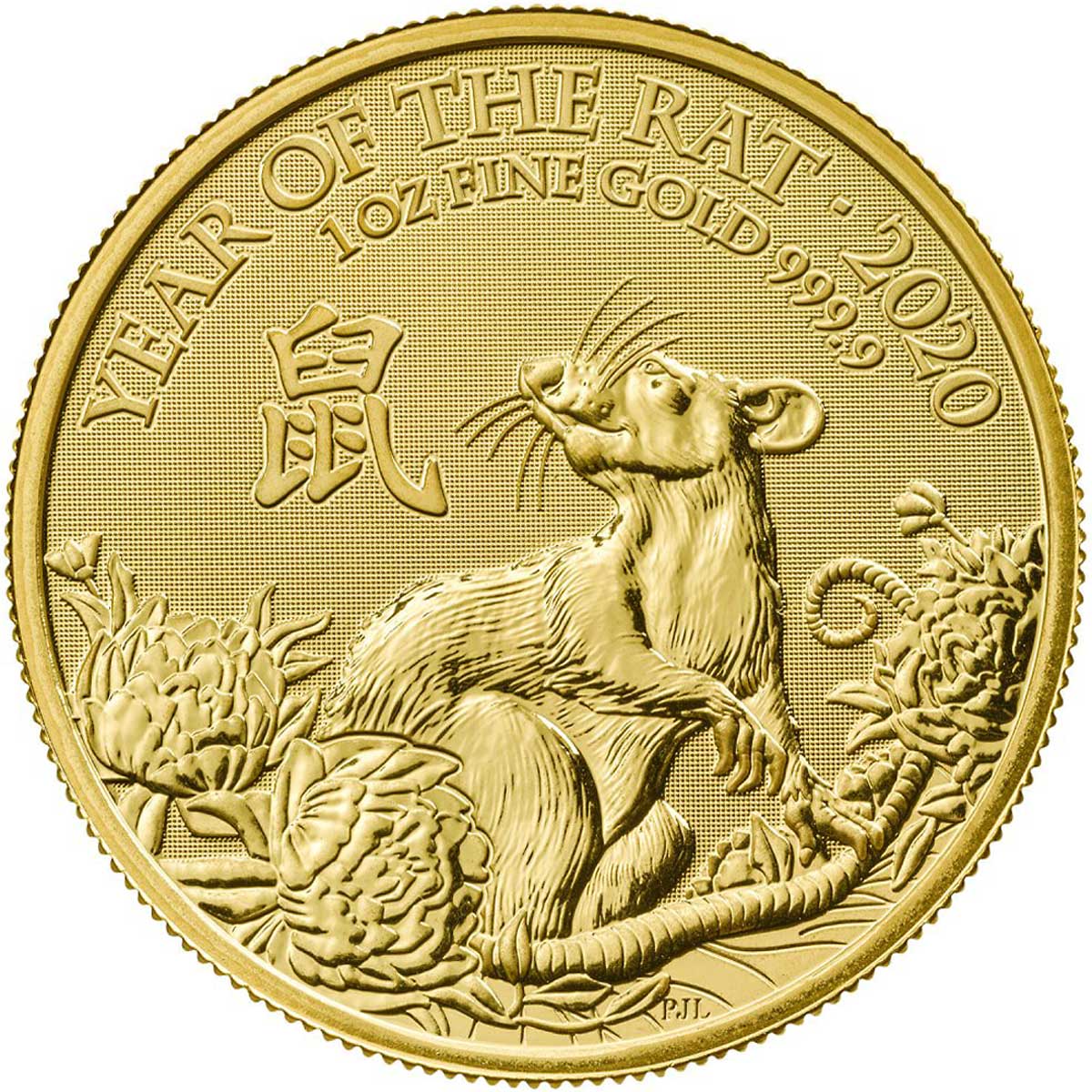
The Rat is considered the first animal in the actual lunar cycle, so the Royal Mint have seemingly taken the opportunity to abandon the divisive ‘stylistic’ approach of the first few coins in their series to start afresh with a more realistic approach. Ironically, the Perth Mint has taken the same route, perhaps a reflection of the increasing awareness of the natural world brought about by the intense climate debate.
In our view, the new style is beautiful and a clear improvement, just as the Perth Mint coins are.
OBVERSE EVOLUTION
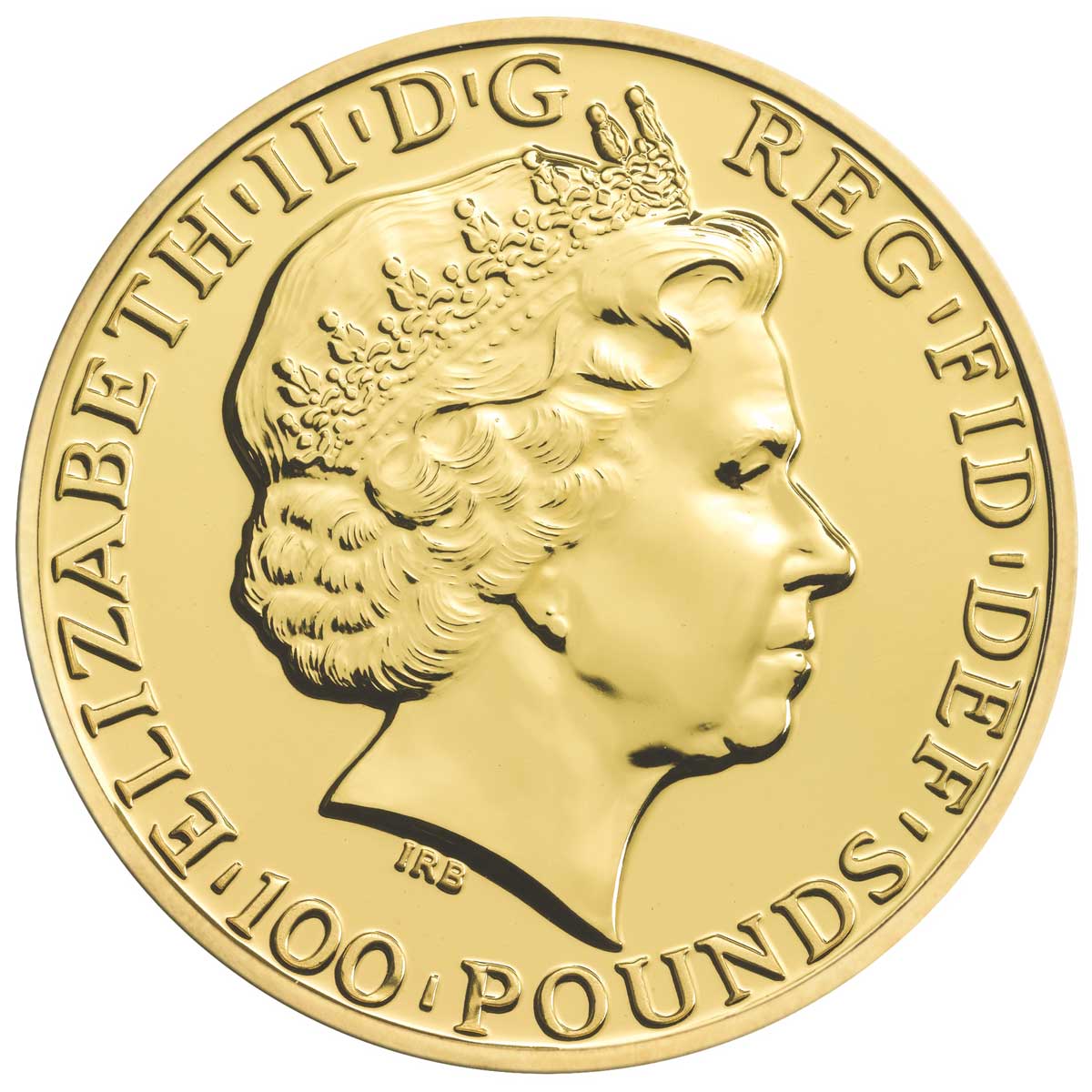
As a British release, plainly the obverse will carry the obligatory effigy of Queen Elizabeth II and that is indeed the case. The first two annual issues, in 2014 and 2015, used the widespread Ian Rank Broadley effigy, one that the Commonwealth countries also use, with the notable exception of Canada with its home-grown Susanna Blunt effort.
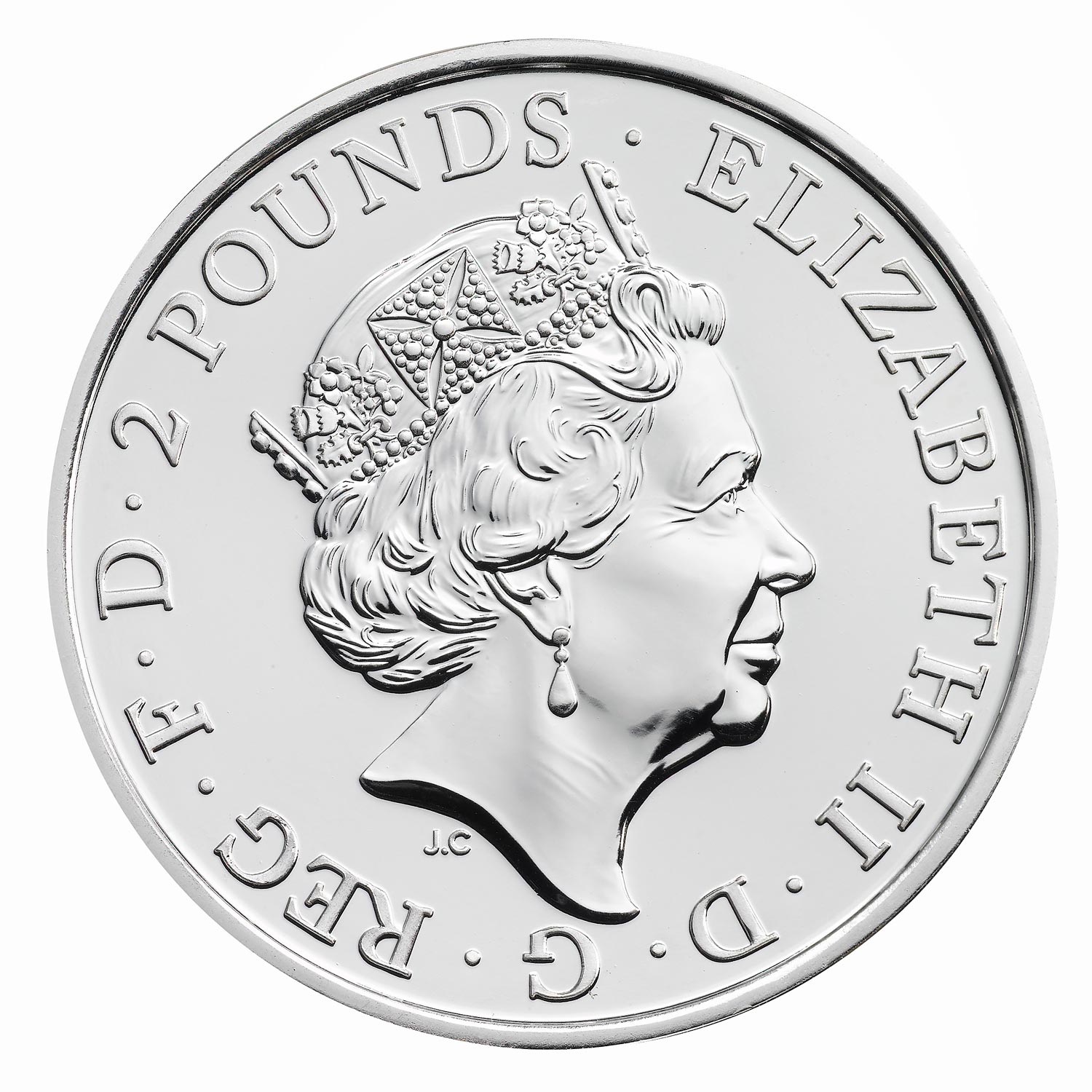
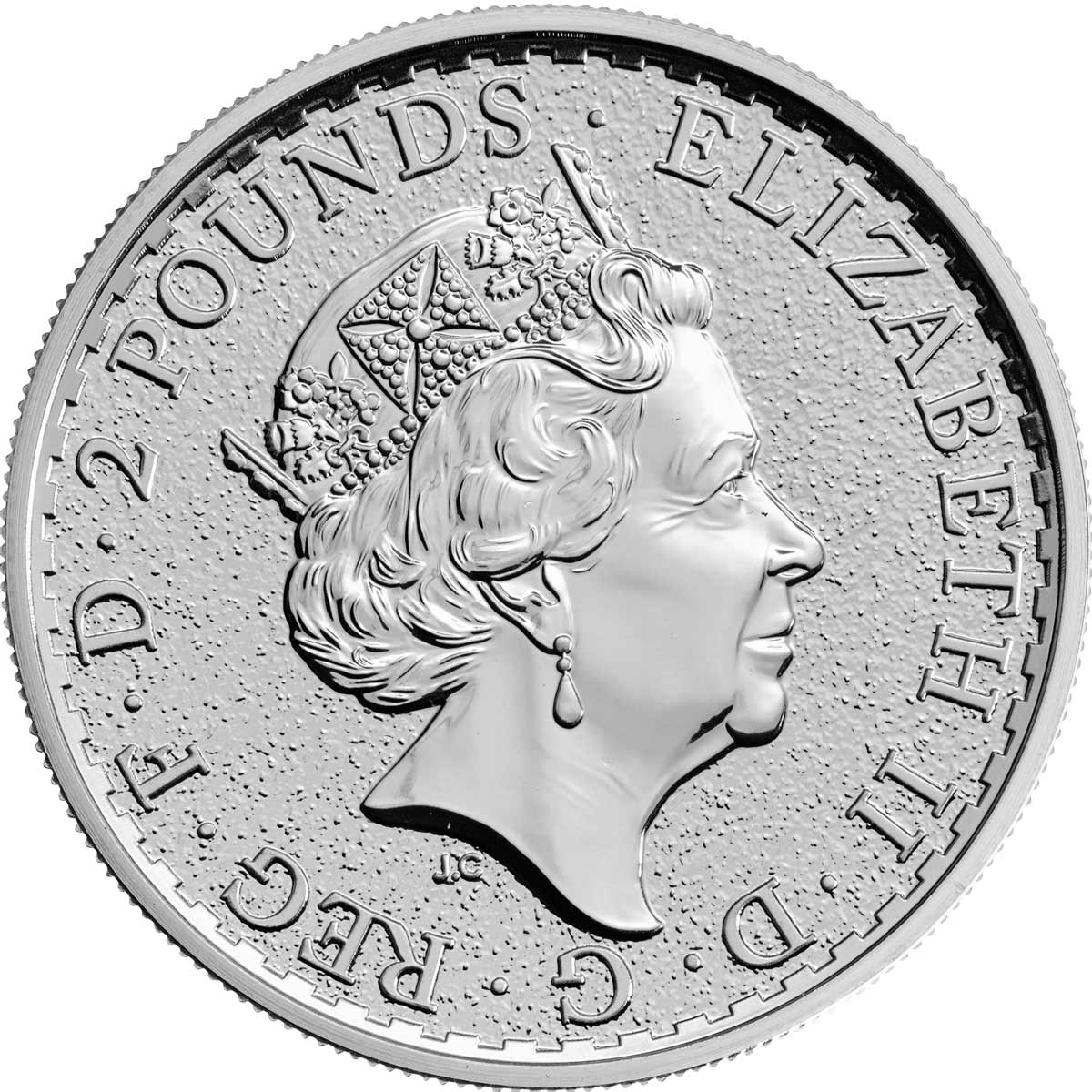
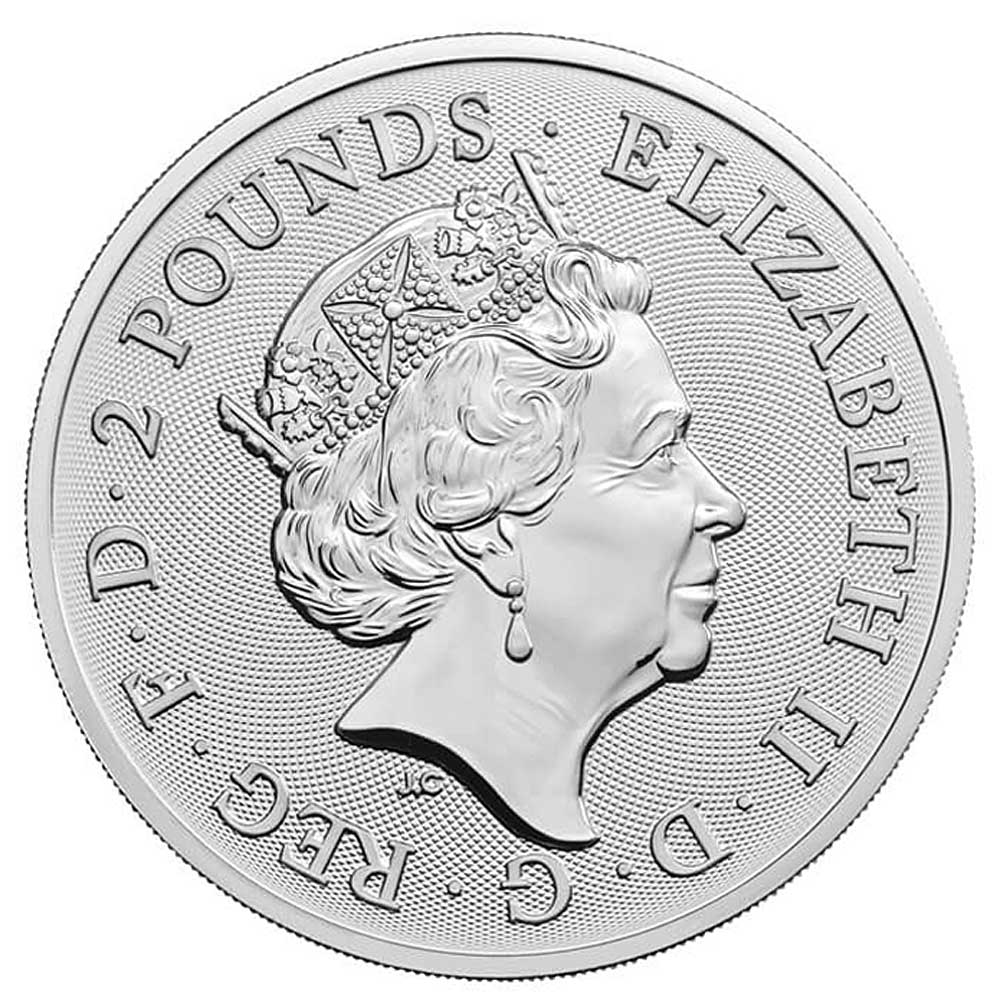
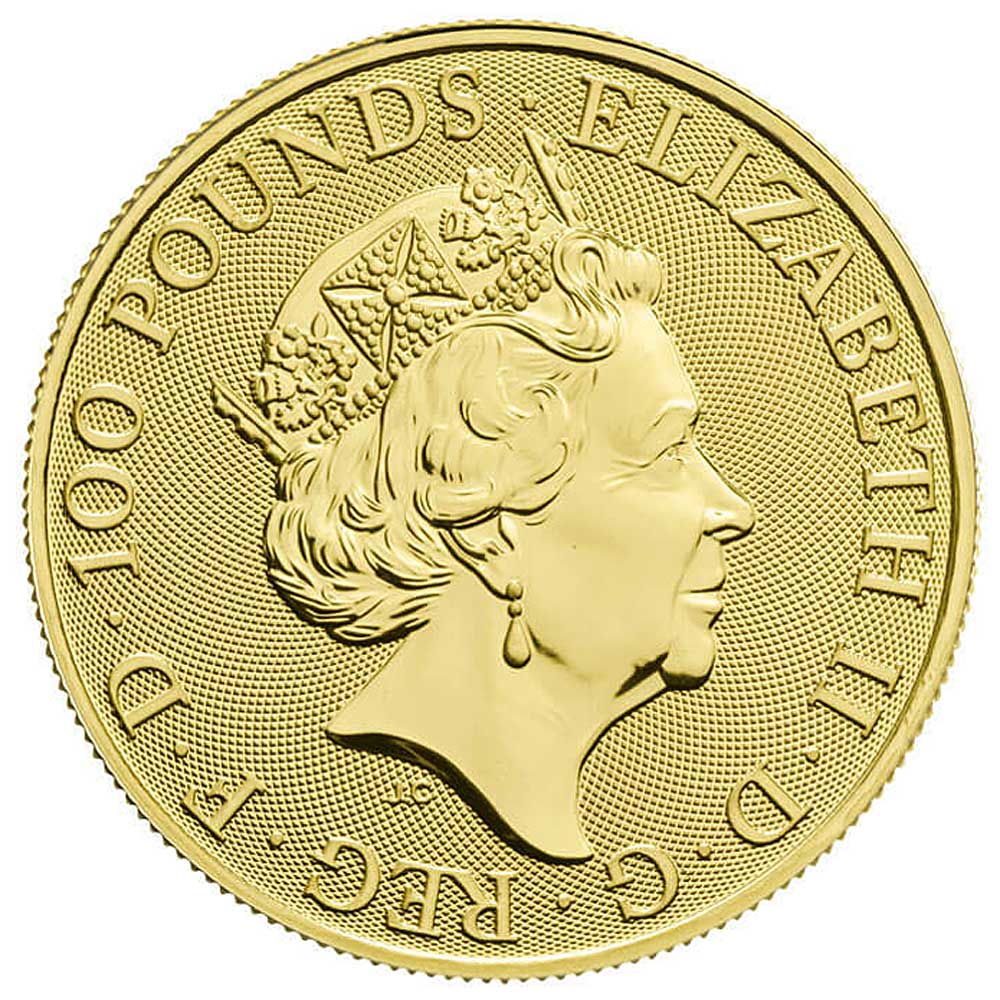
In 2016, the Royal Mint debuted a new effigy designed by the artist responsible for the sublime 2014 Britannia, Jody Clark, and it will no doubt remain on the back of this series until the accession of Charles to the throne. Inscribed on the obverse are the denomination, ‘ELIZABETH II’, and ‘D G REG F D’ The latter stands for “Dei Gratia Regina Fidei Defensor”, which means ‘By the Grace of God, Queen, Defender of the Faith’. The word Regina would change to Rex should there be a King instead of a Queen. The rim is reeded.
Another change occurred in 2017 when the clean polished background finish changed to the ‘crinkled’ finish that had appeared on the Britannia shortly before. Around the edge of this new obverse is a ring of crenellations previously found on the Britannia (and the Lunar Horse mule). Possibly a response to complaints about the quality of the smooth finish, we expected this to be the norm going forward, but we were wrong. For the 2019 coin there was yet another change. The crenelations are gone, as is the crinkled finish, to be replaced by a geometric guilloche pattern. It’s unusual to see a bullion coin series from a major mint have more than one or two obverse layouts in its history. Four obverse designs in six years is almost comical.
2014/15

2016
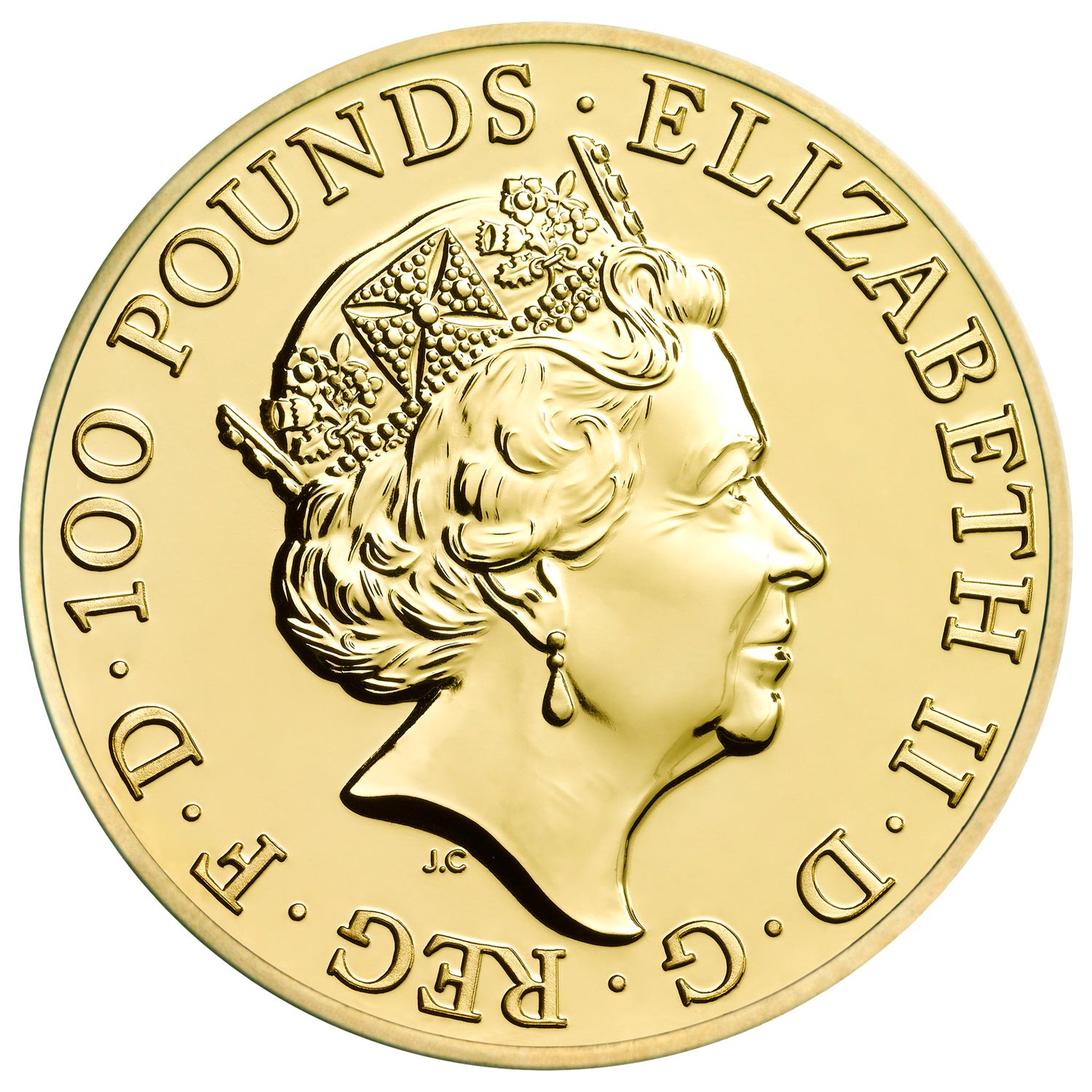
2017/18

2019/20

Leave A Comment